
In Short
- Most hydraulic faults trace back to the oil. How do you read what condition your oil is in, and when should you step in?
- Topics covered in this article: Oil Is the System's Blood, Reading the Condition of Your Oil, Water Contamination: The Sneakiest Problem, Filtration: Invisible Protection, When Should Oil Be Changed?.
- Our services related to this topic: Hidrolik Güç Ünitesi Tamiri, Hidrolik Silindir Tamiri ve Revizyonu, Hidrolik Pres ve Enjeksiyon Tamiri.
- On-site inspection is free within and around Izmir; a firm quote follows measurement.
In This Article9 sections
Oil Is the System's Blood
Hydraulic oil's job isn't just transmitting power. It does five things at once:
- Power transmission: carries pressure from pump to cylinder.
- Lubrication: forms a film between moving parts.
- Cooling: carries heat away from the system to the tank.
- Sealing: fills clearances, reducing leaks.
- Protection: protects metal surfaces from corrosion.
When any one of these five jobs falters, the system reports it to you as a fault. That's why oil maintenance in hydraulics isn't "something you do now and then" — it's core maintenance for the whole system.
Reading the Condition of Your Oil
You can tell a lot about oil without expensive analysis equipment. Four things to check for:
| Observation | What It Means | What to Do |
|---|---|---|
| Clear, light colour | Oil is healthy | Continue routine monitoring |
| Darkened colour | Heat damage, oxidation | Plan a change; look for the heat source |
| Burnt smell | Severe overheating occurred | Change + find the overheating cause |
| Milky/cloudy | Water has mixed in | Urgent action: find the water source |
| Foaming | Air is mixing in | Check the suction line and oil level |
| Sediment at tank bottom | Long-term neglect | Tank cleaning + line flush |
| Sticky coating (varnish) | Heat + oxidation byproduct | System cleaning; check valves |
These observations are free and take a few minutes. Done regularly, most major faults get caught while they're still small.
Water Contamination: The Sneakiest Problem
Water mixing into oil is a common but late-discovered problem in industry. The symptom is telltale: the oil turns milky.
How does water get in?
- Condensation through tank breathing (especially in environments with large temperature swings)
- Ambient moisture carried in through a worn rod wiper
- A leaking heat exchanger in water-cooled systems
- Direct splashing on washdown lines
- Dirty filling equipment
The damage water does: it lowers the oil's lubricating power, starts corrosion on metal surfaces, breaks down the additive package, and creates a freezing risk at low temperature. It also sharply shortens oil life.
If water is detected, changing the oil alone isn't enough — the entry point has to be found. Otherwise the new oil ends up in the same state in short order.
Filtration: Invisible Protection
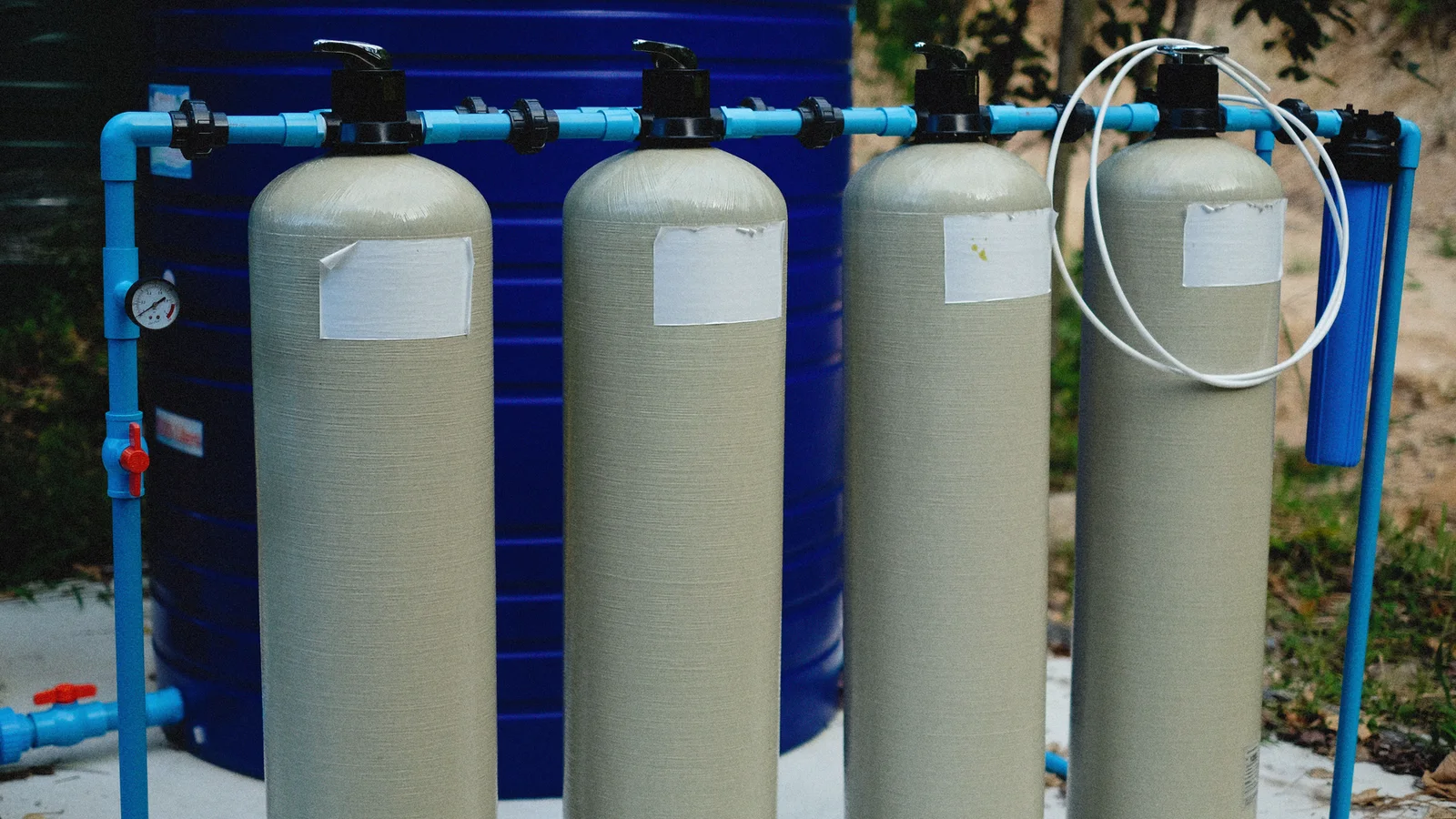
Most wear in a hydraulic system comes from particles too small to see. Filters catch these particles — but only while they're sound and clean.
What you need to know about filters:
- Bypass: when a filter clogs, the system doesn't stop; the filter is bypassed and contaminated oil passes through. The filter is there, but it's not protecting.
- Contamination indicator: read it if you have one; if not, set a change interval on a calendar.
- Suction filter: when it clogs, it drives the pump into cavitation — directly affecting pump life.
- Return filter: catches dirt coming back from the system; it's the filter that gets changed most often.
- Breather filter: keeps dust and moisture out as the tank breathes; it's forgotten in most plants.

When Should Oil Be Changed?
Giving a fixed schedule isn't accurate, because change intervals vary widely with operating conditions. What shortens oil life:
- High operating temperature (the most decisive factor)
- Heavy duty cycle, high cycle count
- A dirty environment (foundry, marble, agriculture)
- Contact with water or chemicals
- Inadequate filtration
The right approach is deciding by condition, not by calendar: oil whose colour, smell or clarity has degraded should be changed. On critical, expensive systems, oil analysis is also worth doing.
One warning: putting clean oil into a dirty system contaminates it again quickly. If there's sediment at the bottom of the tank or residue in the lines, a tank cleaning and line flush is needed. It looks like an extra cost, but considering pump and valve life, it's the most profitable expense you can make.
Choosing the Right Oil
Two core criteria drive oil selection: viscosity and the additive package.
- Too thick oil: increases flow resistance, strains the pump, raises cavitation risk on cold starts.
- Too thin oil: weakens the oil film, increases internal leaks, and lowers efficiency.
The right viscosity is set by pump type, working pressure and ambient temperature. A plant running at 40 degrees in summer and a system in a cold winter warehouse don't have the same needs.
The additive package consists of anti-wear, anti-corrosion, anti-foam and anti-oxidation components. Different brands' additive packages aren't always compatible — which is why you shouldn't mix different oils. "We topped it up with whatever we had on hand" is an expensive habit in hydraulics.
Symptoms of Oil-Related Faults
Oil problems usually present themselves as a different fault altogether. When you see the symptoms below, it's worth checking the oil side as well:
| Symptom | Possible Oil-Related Cause | What to Check |
|---|---|---|
| Pump running noisy | Cavitation — oil can't be drawn in | Oil level, viscosity, suction filter |
| System slower than expected | Oil too thick or filter clogged | Viscosity fit, filter condition |
| Valves sticking | Varnish formation, contamination | Oil age, tank sediment |
| Jerky motion | Air or foam in the oil | Suction line sealing, oil level |
| Early seal failures | Particles in the oil cutting the seal | Filtration level, filling cleanliness |
| System heats up fast | Thin oil, rising internal leaks | Viscosity, oil temperature |
| Rust on metal surfaces | Water mixed into the oil | Oil clarity, breather filter |
This table makes one thing clear: oil touches every part of the system. That's why oil condition is one of the first things we look at during a fault diagnosis — it's often where we get the fastest clue.
When an oil-related problem is found, the fix may not be just an oil change: putting clean oil into a dirty system contaminates it again quickly. We determine whether a tank cleaning and line flush is needed through measurement and observation.
Practical Rules for Oil Maintenance
Rules that work in the field and are easy to apply:
- Clean filling: add oil with a clean funnel or pump. A dirty funnel undoes months of work by the filter in one go.
- Don't leave the tank cap open: an open tank is an invitation for dust and moisture.
- Track the level: a dropping level means a leak — both an oil loss and a heat problem.
- Don't forget the breather filter: the tank breathes; that breath needs to be filtered.
- Store oil drums closed and dry: an open drum sitting in storage is already contaminated before it reaches the system.
- Keep records: which oil was added when, when the filter was changed — even a simple logbook makes fault tracking easier.
These six rules require no investment and noticeably extend system life.
Frequently Asked Questions
How often should I change the oil?
Giving a fixed interval wouldn't be accurate — duty intensity, temperature and ambient contamination are the determining factors. We recommend going by the oil's condition instead of a calendar: change it once its colour has darkened, smell has changed, or it's gone cloudy.
Can I mix different brands of hydraulic oil?
Not recommended. Additive packages aren't always compatible; mixing can lead to foaming, sedimentation and reduced protective properties. If you must, use the same type and viscosity, and do a full change at the first opportunity.
My oil turned milky — what should I do?
That indicates water has mixed in and needs urgent attention. An oil change alone isn't enough — the entry point has to be found (condensation, a worn wiper, a leaking heat exchanger). Otherwise the new oil ends up in the same state in short order.
Can I clean and reuse a filter?
Most hydraulic filter elements can't be cleaned and reused; washing damages the pore structure. Washable types are specified by the manufacturer. If you're not sure, replacing it is always the safer choice.
Should I get an oil analysis done?
It's worthwhile on critical, expensive systems: measuring wear metals, water content and contamination level gives you a warning before a fault occurs. On small, simple systems, visual checks and regular changes are usually enough.
Our Services on This Topic
More From the Guide



İsmail Çevik is the founding partner of ÇevikSan. This content was prepared based on our workshop's hands-on manufacturing, repair and overhaul experience with hydraulic and pneumatic cylinders.
Last updated: August 27, 2026