
Summary
- Our Hydraulic Press & Injection Machine Repair service covers Izmir and the surrounding region; site surveys and fault diagnosis are free.
- We provide a firm quote after removal and measurement; no work starts without your approval.
- Manufacturing and repair are done in the same workshop — we produce equivalent replacements for parts that are no longer available.
- Every part is pressure-tested before delivery; workmanship is guaranteed.
- Topics covered on this page: Hydraulic Press Overhaul, Injection Machine and Pump Repair in Izmir, Hydraulic Press Overhaul, Hydraulic Repair for Plastic Injection Machines, Heavy-Equipment Hydraulic Pump Repair, Common Problems by Press Type.
Table of Contents19 sections
- Hydraulic Press Overhaul, Injection Machine and Pump Repair in Izmir
- Hydraulic Press Overhaul
- Hydraulic Repair for Plastic Injection Machines
- Heavy-Equipment Hydraulic Pump Repair
- Common Problems by Press Type
- Hydraulic Causes of Quality Problems in Injection Machines
- The Accumulator: An Overlooked Component
- Our Service Process
- Heavy-Equipment Hydraulics: What Field Conditions Bring
- Hydraulic Modernisation: New Life for an Old Machine
- Safety in Presses: A Subject That Can't Wait
- The Cost of Downtime and Maintenance Planning
- Reducing Downtime: Planned Maintenance
- Repair, Overhaul, or Modernisation?
- Diagnostic Guide: From Symptom to Cause
- Before You Call for Service: Press and Injection Checks
- Terms in Press and Injection Hydraulics
- Machine Hydraulics Service Across Izmir
- Frequently Asked Questions
Hydraulic Press Overhaul, Injection Machine and Pump Repair in Izmir
Hydraulic presses, plastic injection machines and heavy equipment work in completely different industries, but they fail for the same reasons: high pressure, continuous cycling and a system with zero tolerance for guesswork. At ÇevikSan we handle hydraulic press overhaul, hydraulic repair for plastic injection machines and hydraulic pump repair for heavy equipment, all in Izmir. We don't charge for the survey — our team comes to your machine, takes measurements, and gives you a firm quote. Every hour a machine sits idle is lost production, so we prioritise urgent jobs.
What these machines have in common is that the fault is rarely down to a single part. If a press platen is dropping, the culprit could be a valve or a cylinder; if an injection machine won't fully close its mould, the cause could be pump flow or a pressure setting just as easily. That's why we start by measuring the system, not by swapping parts. For more on the cylinder side of things, see our hydraulic cylinder repair page, and for the power source, our hydraulic power unit repair page.
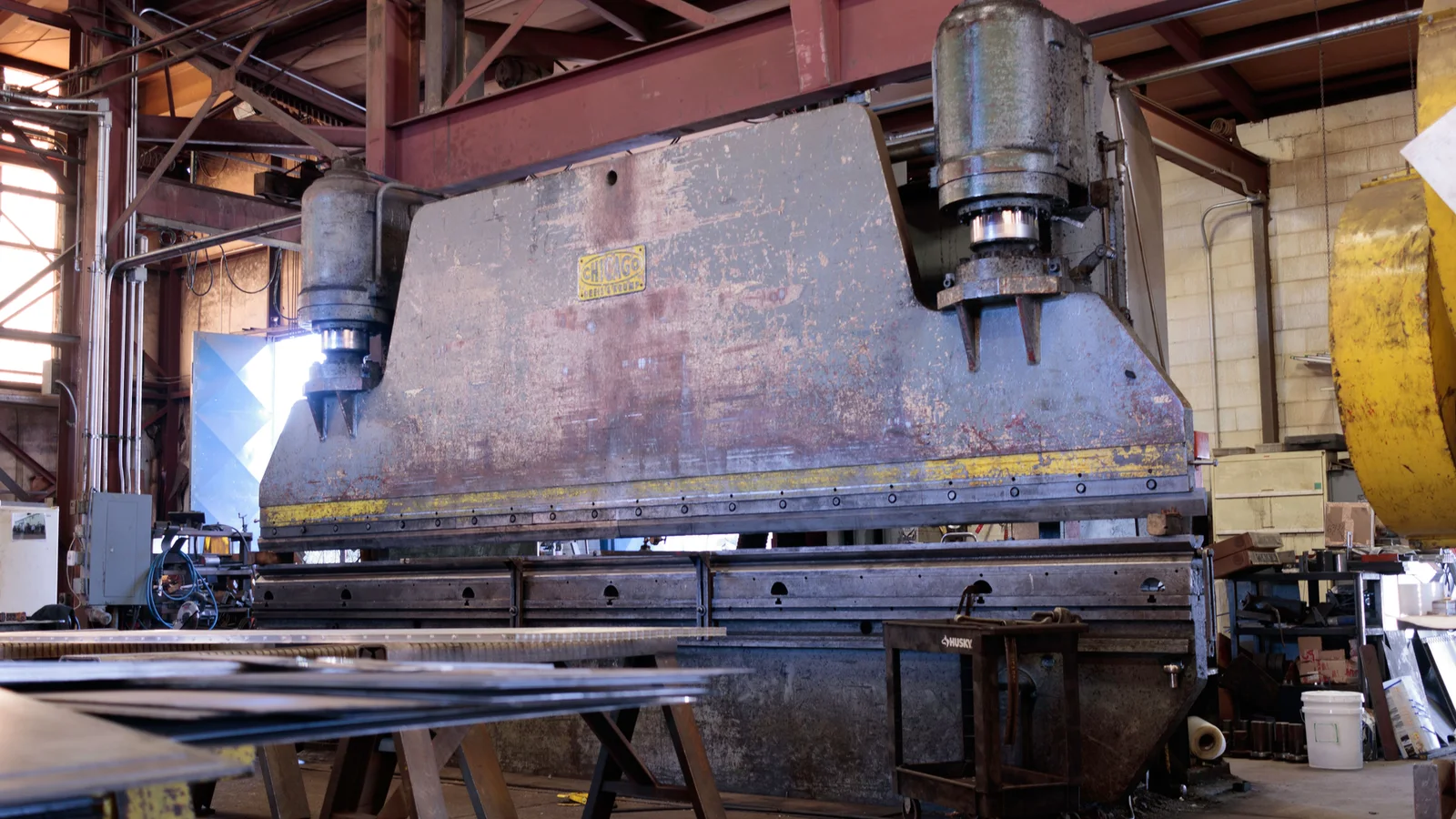
Hydraulic Press Overhaul
Hydraulic presses run throughout Izmir industry, from metalworking to packaging, furniture-making to recycling. The press problems we see most often, and how we solve them:
| Symptom | Likely Cause | Our Fix |
|---|---|---|
| Press won't reach full force | Internal leak, worn pump, relief valve out of adjustment | Pressure measurement, cylinder and pump inspection |
| Platen moves up/down slowly | Lost flow, dirty oil, valve fault | Filter and oil check, pump efficiency test |
| Platen drops on its own | Internal leak past the piston seal, holding-valve fault | Cylinder overhaul, valve renewal — safety comes first |
| Oil overheating | Continuous unloaded running, internal leak, insufficient cooling | System survey, cooler addition or servicing |
| Noise and vibration | Pump cavitation, coupling misalignment | Suction-line check, coupling and mount renewal |
| Oil leak | Cylinder seal, hose, fitting | Leak survey, line and seal renewal |
| Irregular motion | Air in the system, sticking valve | Bleeding the system, valve cleaning/replacement |
Safety gets a separate line item in every press overhaul: a platen that drops on its own under load is a serious accident risk. We stress this point specifically — don't keep operating a press showing this symptom. As part of the overhaul we assess the holding valves, the safety components and the cylinder seals together. Whatever the age of the press, having its safety components in working order is not negotiable.
Hydraulic Repair for Plastic Injection Machines
Plastic injection machines put more strain on a hydraulic system than almost any other application: continuous duty, fast cycling, high pressure and high temperature, all at once. On these machines a hydraulic fault shows up directly in product quality — flash, short shots, dimensional drift and similar defects usually trace back to a hydraulic cause.
The main areas we work on in injection machines:
- Mould clamping cylinder: Loss of clamping force, leaks, slowing down.
- Injection unit hydraulics: Pressure fluctuation and repeatability problems.
- Ejector system: Irregular part-ejection motion.
- Pump and motor group: Lost flow, noise, excessive current draw.
- Valves and proportional control: Sticking, drifting settings, erratic motion.
- Oil and filtration: The single most critical maintenance item under continuous duty.
- Cooling system: Overheating oil breaks down cycle repeatability.
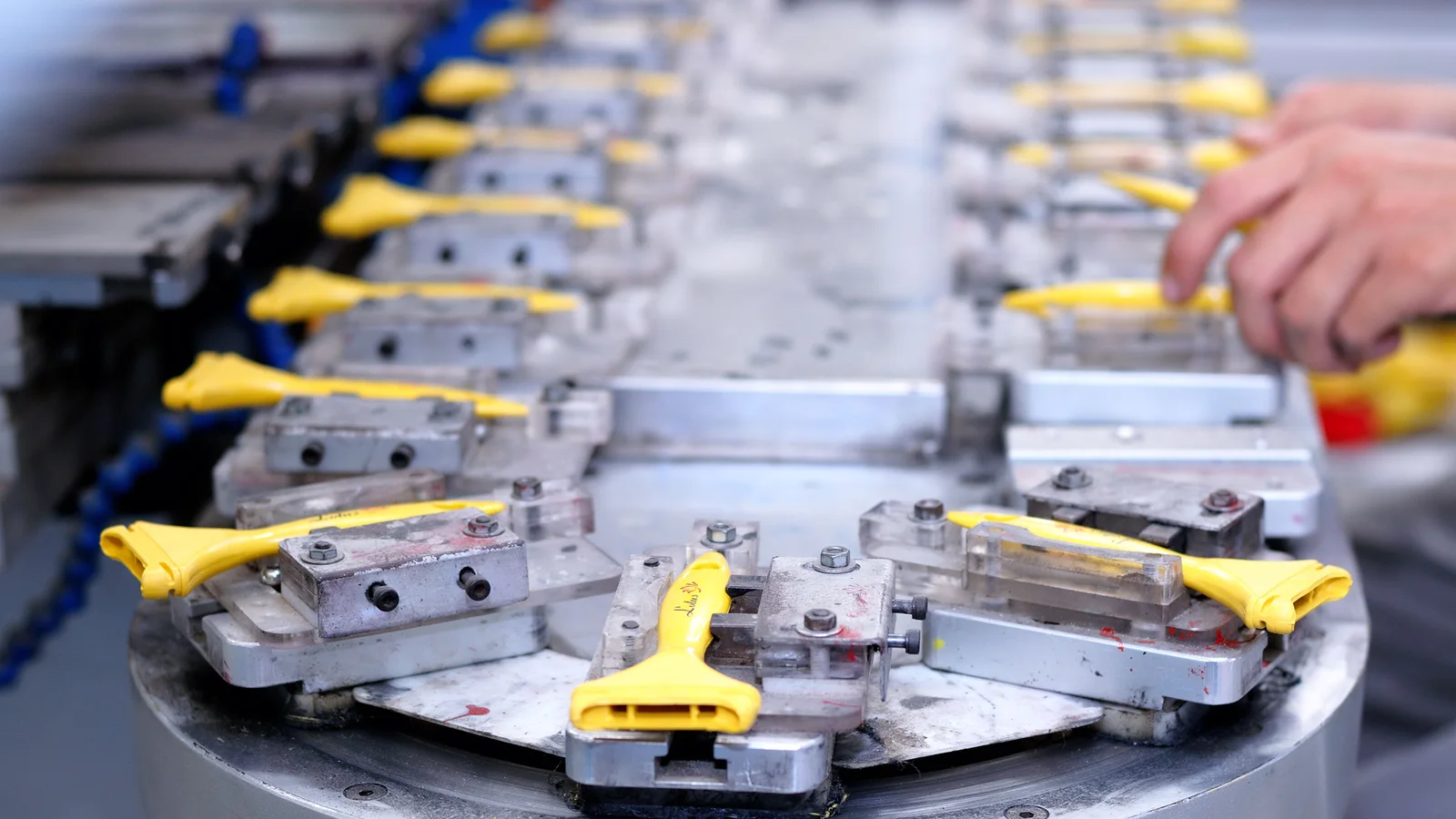
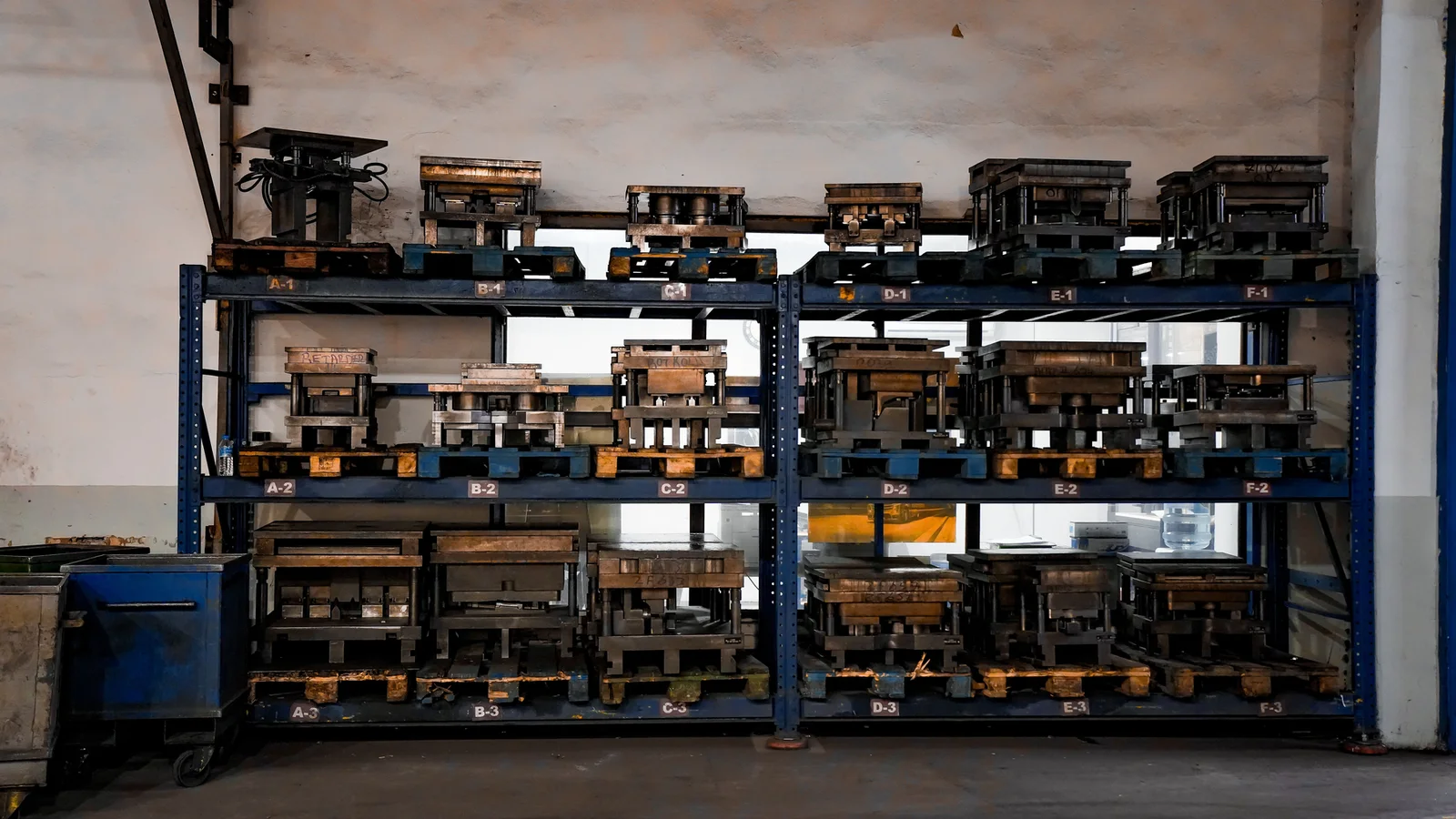
Repeatability is everything on an injection machine: the same cycle has to produce the same result every single time. Overheated oil, a worn pump or a sticking valve breaks that consistency and scrap rates climb. So on these machines we don't just ask "is it working?" — we ask "is it working the same way every time?" Few plants think to look at the hydraulic side when scrap rates creep up, yet once cycle repeatability breaks down, quality problems become inevitable.
Heavy-Equipment Hydraulic Pump Repair
On heavy equipment, the hydraulic pump feeds every movement the machine makes. When the pump weakens, the symptoms show up everywhere: the boom slows, the bucket loses power, the travel drive labours. We service the hydraulic pumps of excavators, loaders, forklifts, cranes, dump trucks and agricultural machinery across Izmir.
The most common causes of pump failure, and how we approach them:
- Cavitation: The pump can't draw enough oil — the suction filter is clogged, oil level is low, or air is entering through the suction line. If the cause isn't fixed, the replacement pump fails again just as quickly.
- Dirty oil: Particles wear away the pump's internal surfaces and flow drops. Cleaning the system is essential whenever a pump is renewed.
- Water contamination: Oil that looks milky causes corrosion and rapid wear.
- Excess pressure: If the relief valve is set too high, the pump is permanently overworked.
- Wrong oil: Oil with the wrong viscosity breaks down the lubricating film.
- Coupling and alignment: Vibration wears out the pump bearings.
Before repairing or replacing a pump, we always investigate the root cause first. A "pump's dead, let's swap it" approach brings the same bill back a few months later if the underlying cause is still there. When we renew a pump, cleaning the system, changing the filter and checking the suction line are standard practice for us.
Common Problems by Press Type
A hydraulic press isn't a single kind of machine — the type varies with the application, and so do its weak points. The types we service most often:
| Press Type | Application | Common Problem |
|---|---|---|
| C-frame (throat) press | Punching, bending, assembly | Frame deflection, side load on the cylinder, platen parallelism |
| H-frame (portal) press | Deep drawing, moulding | Internal leak, pressure loss, slowing down |
| Press brake | Sheet-metal bending | Loss of synchronisation, difference between the two cylinders, repeatability |
| Baling press | Recycling, scrap | Continuous heavy load, bearing wear, contamination |
| Deep-drawing press | Metal forming | Force drop, cushion-system faults |
| Mould/injection press | Plastic and rubber | Loss of clamping force, overheating, repeatability |
| Workshop hand press | Assembly, disassembly | Cylinder leak, pump wear, gauge fault |
The type of press changes the diagnostic path too. On a press brake we look first for synchronisation loss between the two cylinders; on an H-frame press, internal leaks and pressure loss are the first suspects. Telling us the type and make of your machine lets us arrive prepared.
We don't discriminate by brand — we service domestic and imported presses alike. On older machines where parts are no longer available, we manufacture the cylinder, the rod or the special fitting in our own workshop.
Hydraulic Causes of Quality Problems in Injection Machines
The link between product quality and the hydraulic system in plastic injection is often overlooked, yet a hydraulic cause sits behind many quality problems:
| Quality Issue | Possible Hydraulic Cause | What to Check |
|---|---|---|
| Flash formation | Insufficient clamping force, internal leak | Clamping cylinder, pressure value, holding system |
| Short shot | Low or fluctuating injection pressure | Pump flow, valve performance, accumulator |
| Dimensional drift | Loss of repeatability | Proportional valve, pressure stability, oil temperature |
| Variation between cycles | Overheated oil, viscosity change | Cooling system, oil condition |
| Ejection problems | Ejector hydraulics | Ejector cylinder, valve setting |
| Slowing cycle | Lost flow, clogged filter | Pump efficiency, filter condition |
| Sudden stops | Pressure switch, overheat protection | Temperature, pressure settings, electrical control |
The most critical concept on injection machines is repeatability: the same cycle producing the same result every time. Overheated oil, a worn pump or a sticking valve breaks that consistency and scrap goes up.
That's why on these machines we don't just check whether they're working — we check whether they're working the same way each time. If your scrap rate has risen without an obvious cause, having the hydraulic side checked is often a good place to start.
The Accumulator: An Overlooked Component
Most presses and injection machines include an accumulator. Its job is to store pressurised oil and release it quickly whenever the system needs a sudden burst of flow. It works silently, unnoticed — until it fails.
Signs of accumulator trouble:
- Power loss on fast movements: The system falls short at moments needing sudden flow.
- Pressure fluctuation: System pressure becomes unstable.
- Pump kicking in more often: The accumulator is no longer doing its storage job.
- More shock and noise: The component that damps pressure spikes is out of action.
The most common accumulator problem is falling gas pressure. It needs periodic checking and, if necessary, recharging — a simple maintenance item that gets skipped in most plants.
Safety warning: An accumulator is a pressure vessel and stores energy even after the system is shut down. It must be safely discharged before anyone works on the system. This takes experience — don't attempt it yourself if you're not sure how.
Accumulator checks are a standard part of our servicing. We measure the pressure, recharge it if needed, and note its condition in the report.
Our Service Process
The path we follow on press, injection and heavy-equipment jobs:
- On-site inspection: The machine is observed while running; pressure, temperature, noise and motion behaviour are recorded. The survey is free.
- Measurement and diagnosis: Pressure readings are taken, flow is checked if needed, oil condition is assessed.
- Reporting: The source of the fault and the required work are stated clearly; cost and lead time are given in writing. No work begins without your approval.
- Intervention: Whatever can be fixed on site is fixed there; if the cylinder, pump or power unit needs the workshop, it's removed and taken in.
- Sourcing and manufacturing: Standard parts are sourced; parts we can't find are manufactured in our workshop.
- Assembly, adjustment and testing: The system is reassembled, bled, its pressures set, and its cycles tested.
- Delivery: The machine is handed back working and tested; the root cause and our recommendations are reported.
A press or injection machine standing idle means a serious production loss every hour. We prioritise urgent jobs — tell us how urgent yours is: 0553 608 69 10
Heavy-Equipment Hydraulics: What Field Conditions Bring
The hydraulics on heavy equipment work in far harsher conditions than a press inside a factory: dust, mud, impacts, vibration, temperature swings and irregular maintenance. These conditions change the failure profile as well.
The problems we see most often on heavy equipment:
- Rod damage: Flying stone chips, impacts and dust score the chrome surface. Once the wiper seal is gone, the damage accelerates.
- Dirty oil: Soil and dust getting into the oil is common in field conditions, making filtration more critical here than elsewhere.
- Water contamination: Rain, washing and condensation — a particular problem on machines used seasonally.
- Hose wear: Friction, sun and mechanical strain age hoses far faster than in a factory environment.
- Pin and bushing wear: Impact and vibration create play at connection points, which then puts side load on the cylinder.
- Pump failures: Dirty oil and cavitation are the leading cause of failure in heavy-equipment pumps.
When overhauling these machines we look not just at the failed part but at the field conditions it operates in. On a machine with repeated rod damage, for example, the fix isn't renewing the rod every time — it's adding a protective shield or a bellows.
A separate recommendation for seasonally used machines: at season's end, protect the rods, retract them if possible, and have the oil condition checked. Corrosion can progress faster on an idle machine than on one that's running.
Hydraulic Modernisation: New Life for an Old Machine
On a machine whose frame and mechanical structure are still sound, a complete overhaul of the hydraulics can postpone a new-machine investment for years. What modernisation can include:
- Power unit renewal: An efficient pump and motor group; a noticeable drop in energy consumption.
- Valve group upgrade: Renewing worn valves, moving to proportional control where useful — repeatability improves, scrap falls.
- Cylinder renewal: Overhaul or remanufacture of ageing cylinders.
- Control modernisation: Renewing old control systems, adding safety components.
- Filtration upgrade: A better filter group and contamination indicator.
- Cooling addition: A cooler for systems suffering from overheating.
- Line renewal: Replacing aged hoses and pipes, rerouting where needed.
The result of this kind of work is a machine with an old frame but new hydraulics — often achieving comparable performance at a fraction of the cost of a new machine.
What we look at when deciding on modernisation is the machine's mechanical condition: if the frame is crack-free, the guides are sound and mechanical precision has held up, renewing the hydraulics makes sense. If the mechanical structure is also worn out, we say so honestly — and recommend you consider a new machine rather than spending money on this one.
Being able to postpone a new-machine purchase is also, for most businesses, a meaningful cash-flow advantage. We're happy to work through that assessment with you.
Safety in Presses: A Subject That Can't Wait
On a hydraulic press, a fault isn't only a production loss — it's a workplace safety matter. Work should not continue with any of the following symptoms:
- If the platen drops on its own under load: The piston seal or the holding valve isn't doing its job — a direct risk to the operator.
- If the relief-valve setting is unknown: The system may be running above its design pressure.
- If a pressure line shows cracking, bulging or chafing: A hose failure at high pressure causes serious injury.
- If the controls aren't repeatable: Unexpected motion is the most dangerous kind of fault.
- If an oil leak is spreading across the floor: That's a slip hazard and a fire risk.
We check and report on these points specifically during every overhaul. Getting a customer's machine "running" again while ignoring a safety issue is against how we do business — any risk we find, we report in writing without exception. Fixing the risk is your decision, but we won't turn a blind eye to you working with a danger you don't know about.
The Cost of Downtime and Maintenance Planning
Presses and injection machines are usually the most expensive and most critical equipment on a site. When they stop, the cost climbs fast:
- Direct production loss: An idle machine is a measurable loss every hour; in shift-based plants that figure multiplies.
- Delayed orders: Delivery commitments slip and customer relationships suffer.
- Idle staff: When the machine stops, the operation around it stops too.
- Rush parts and overtime: Everything costs more in an unplanned breakdown.
- Scrap and quality loss: Product made in the period leading up to the failure can be affected too.
Planned maintenance, by contrast, is predictable and inexpensive: a filter, some oil, a few hours of labour and a scheduled stoppage. Fitting maintenance into planned downtime, especially in shift-based plants, brings production loss close to zero.
Our recommended approach: rank your machines by criticality. Machines whose downtime stops production, that have no backup, and that take a long time to repair, go to the top of the maintenance list. Servicing everything at the same frequency wastes resources; focusing on what's critical pays off the most.
We offer a periodic maintenance programme to businesses across Izmir: visit intervals are set according to how intensively your plant operates, a checklist is applied at every visit, and system health is reported. Measurement records build into a valuable archive over time — seeing how pressure has changed over the years lets you catch wear before it becomes a failure.
Reducing Downtime: Planned Maintenance
Most failures on presses and injection machines are, in fact, foreseeable. The maintenance discipline we recommend:
- Oil and filter tracking: The most critical item on machines running continuous duty. Dirty oil wears out every component at once.
- Temperature monitoring: A system running hotter than normal is telling you something early.
- Logging pressure values: Pressure that falls over time is the clearest sign of wear.
- Hose and fitting inspection: Cracking, bulging and chafing marks are found before they turn into a failure.
- Cylinder seal checks: A leak caught early is a small seal job; left alone, it turns into rod and tube damage.
- Cycle-time tracking: A lengthening cycle is an early warning of lost flow.
We offer a periodic maintenance programme to businesses across Izmir: we visit at set intervals, apply a checklist and report system health. A planned stoppage always costs less than an unplanned one. In shift-based plants especially, fitting maintenance into planned downtime brings production loss close to zero.
Repair, Overhaul, or Modernisation?
An ageing press or injection machine has three paths open to it. The criteria we look at when deciding:
| Situation | Our Recommendation | Reasoning |
|---|---|---|
| Single component failed, system otherwise sound | Targeted repair | The fastest, most economical fix; the machine is back in production quickly |
| Several components worn out | Full overhaul | Reworking the whole system is cheaper and more lasting than replacing parts one by one |
| Frequent failures, rising downtime | System overhaul + root-cause analysis | Repairs done without fixing the cause just repeat |
| High energy consumption | Modernisation | An efficient pump and control system pay for themselves through savings |
| Control system outdated | Control and valve-group renewal | Repeatability improves, scrap falls |
| Machine frame sound, hydraulics worn out | Hydraulic renewal | Extends the machine's life; postpones a new-machine investment |
On a press whose frame and mechanical structure are still sound, fully renewing the hydraulics is often far more economical than buying new. In this kind of work we can rebuild the whole system, from cylinder to power unit, valve to hose; the result is a machine with an old frame but new hydraulics. The decision follows inspection and measurement — we put every option in front of you with its price and leave the choice to you. Postponing a new-machine investment is also, for most businesses, a meaningful cash-flow advantage.
Diagnostic Guide: From Symptom to Cause
On a hydraulic machine, the distance between symptom and cause can be long. Here's the diagnostic sequence we follow on site, so your own team can run the first checks too:
- Start with the oil and its level: A low level means the pump is sucking air; cloudy oil means water contamination; darkened oil means heat damage. Most faults leave their first trace here.
- Then the filter: A clogged filter restricts flow, causing overheating and slowdown. If there's a contamination indicator, always read it.
- Pressure measurement: The value read off a gauge is the only honest answer to "has system pressure dropped?" Guessing just wastes time.
- Unloaded vs. loaded comparison: If the machine is fine idle but weak under load, an internal leak is a strong possibility.
- Hot spots: Where is the system running hottest? That's usually where the leak is too. An overheated valve block is often the clearest sign of an internal leak.
- Sound character: A sharp whistle usually means restriction, a dull rumble means cavitation — each points somewhere different.
These steps narrow the problem down, but a firm diagnosis needs measurement. Don't start swapping parts if you're not sure — the wrong intervention often masks the real fault and raises the eventual cost. That's exactly what our free survey is for: the measurement takes a few minutes but saves you from unnecessary parts and repeat downtime.
Before You Call for Service: Press and Injection Checks
Some faults can be resolved, or at least narrowed down, with a few minutes' checking. What your own team can check:
- Gauge reading: Is system pressure at the expected value? Read it both idle and under load — the difference matters.
- Oil level and condition: Has the level dropped? Is the oil dark, burnt smelling, or cloudy?
- Filter indicator: Is the contamination indicator in the red?
- Temperature: Is the tank or the lines hotter than normal? Which area is hottest?
- Sound character: A dull rumble points to cavitation, a sharp whistle to restriction.
- Visible leaks: Check the cylinder rod, end caps, fittings, hoses and the floor.
- Load-holding test: Stop the press in a loaded position and watch it. Any drift means an internal leak or holding-valve fault — don't keep working with this symptom.
- Cycle time: Is the motion as fast as it used to be? A lengthening cycle is an early sign of lost flow.
- Relief-valve setting: Is the setting known — could it have changed?
These checks narrow down the source of most faults. If you don't get a result, reach out — telling us which checks you've already run shortens our diagnostic time.
Safety warning: Don't work on a pressurised hydraulic system. The system must be depressurised, the power isolated, any accumulator safely discharged, and the press platen mechanically supported. Skipping these steps can have serious consequences.
Terms in Press and Injection Hydraulics
Let's explain the terms that come up in our reports:
| Term | Meaning |
|---|---|
| Clamping force | The force keeping the mould closed during injection; too little causes flash |
| Holding valve | A safety valve that holds a load in position; prevents a press from dropping |
| Proportional valve | An electronically controlled valve that adjusts pressure/flow steplessly |
| Internal leak | Oil bypassing back inside the system without doing work; causes force loss |
| Cavitation | The pump failing to draw enough oil; causes noise and rapid wear |
| Cycle time | The duration of one complete operation; a lengthening cycle signals lost flow |
| Repeatability | Every cycle producing the same result; the foundation of quality |
| Flow rate (l/min) | Volume of oil delivered per minute; determines speed of motion |
| Relief valve | A valve that protects the system from excess pressure |
| Bypass | A clogged filter opening to let contaminated oil pass through anyway |
We write our quotes and reports with these terms explained — we don't want you paying for work you don't understand. You're welcome to ask what each line item on a quote solves; we provide that explanation in writing.
Machine Hydraulics Service Across Izmir
Our workshop is at Mersinli Mah. 2843 Sk. No:15, Konak / İzmir, in the Mersinli industrial area of Konak. We serve Işıkkent and Pınarbaşı, where metalworking and press workshops are concentrated; Kemalpaşa and Torbalı, home to plastic injection plants; the Çiğli organised industrial zone; Aliağa's heavy industry district; and Bornova, Menemen and the surrounding districts.
Because presses and injection machines aren't portable equipment, most of our work happens on site. Our team arrives with diagnostic equipment, takes measurements on the spot, and finishes whatever work can be done there. When the cylinder, pump or power unit needs the workshop, we manage the removal, transport and reinstallation ourselves — keeping the time your machine spends waiting to a minimum.
Once we've worked on a plant, we know the machine's history: which component was renewed when, which fault keeps recurring, which setting is critical. That familiarity shortens diagnosis time on every visit after the first. It's also why we deliberately focus on Izmir: remote support can't provide that continuity. For the same reason, we keep records of the past work done on the machines we service.
Frequently Asked Questions
My press isn't reaching full force — what could it be?
The most common causes are an internal leak past the cylinder's piston seal, a flow/pressure loss from a worn pump, or a relief valve that's drifted out of adjustment. The only way to tell them apart is measurement. During the survey we take pressure readings and show you exactly where the loss is.
My press platen drops on its own — is that dangerous?
Yes, it's a serious workplace safety risk. It's usually caused by an internal leak past the piston seal, or a holding valve that isn't doing its job. Work should not continue with this symptom — get it checked as soon as possible.
My injection machine is producing flash — could that be hydraulic?
It could. If insufficient clamping force is caused by an internal leak or a pressure setting, that's a hydraulic problem. Mould and process parameters play a role too — we measure the hydraulic side and tell you clearly whether the fault is on our end.
Do you service every make of press and injection machine?
Yes, we don't discriminate by brand. We service the hydraulic systems of both domestic and imported machines. On older machines where parts aren't available, we produce an equivalent, manufacturing the cylinder or special part in our own workshop if needed.
My pump is making noise — should I replace it right away?
No, the cause needs to be found first. The most common cause of noise is cavitation: the pump can't draw enough oil. A clogged suction filter, low oil level, or an air leak in the suction line could be responsible. If the cause isn't fixed, a new pump will fail again just as quickly.
Do you repair on site, or do you take the machine away?
Presses and injection machines aren't portable, so most of the work happens on site. If the cylinder, pump or power unit needs the workshop, it's removed, taken in, and refitted after overhaul. We manage the removal, transport and reinstallation.
How long does an overhaul take — how long will my machine be down?
It depends on the scope of the work. Valve and filter jobs are usually finished the same day; a cylinder or pump overhaul can take a few days. We give a firm timeline after measurement and diagnosis, and we can schedule it to line up with your planned downtime.
Does the accumulator need maintenance?
Yes, it's an item most plants skip. Gas pressure in an accumulator falls over time, which shows up as power loss and pressure fluctuation during movements that need a sudden burst of flow. It needs periodic checking and recharging if necessary. Warning: an accumulator stores energy even with the system shut down and must be safely discharged before anyone works on it.
The two sides of my press brake aren't synchronised — why?
This is usually caused by a performance difference between the two cylinders: one developing an internal leak, a valve setting drifting, or a fault in the synchronisation system. We measure to pin down exactly which side is losing performance.
Scrap has gone up on my injection machine — could it be hydraulic?
It could. Loss of clamping force causes flash, pressure fluctuation causes short shots and dimensional drift, overheated oil causes variation between cycles. We measure the hydraulic side and tell you clearly whether the fault is on our end.
Do you guarantee your work after service?
Our workmanship is guaranteed; the components we use carry their own manufacturer warranties. We also report the root cause of the fault, and any safety risks we find, in writing.
My machine is very old and parts aren't available — can it still be repaired?
Usually, yes. Machines with no parts available are among the jobs we solve most often: we manufacture an exact equivalent of the cylinder, rod, piston or special fitting in our own workshop. For components like valves and pumps, we find suitable equivalents. The age of the machine alone isn't a barrier.

İsmail Çevik is the founding partner of ÇevikSan. This content was prepared based on our workshop's hands-on manufacturing, repair and overhaul experience with hydraulic and pneumatic cylinders.
Last updated: August 27, 2026