
Summary
- Our Stainless Hydraulic Power Units service covers Izmir and the surrounding region; site surveys and fault diagnosis are free.
- We provide a firm quote after removal and measurement; no work starts without your approval.
- Manufacturing and repair are done in the same workshop — we produce equivalent replacements for parts that are no longer available.
- Every part is pressure-tested before delivery; workmanship is guaranteed.
- Topics covered on this page: Stainless Hydraulic Power Unit Manufacturing, Repair and Overhaul in Izmir, Why Is a Stainless Unit Necessary?, What's Different in a Stainless Unit?, Our Stainless Unit Manufacturing Process, Electrical Panel and Protection Class.
Table of Contents20 sections
- Stainless Hydraulic Power Unit Manufacturing, Repair and Overhaul in Izmir
- Why Is a Stainless Unit Necessary?
- What's Different in a Stainless Unit?
- Our Stainless Unit Manufacturing Process
- Electrical Panel and Protection Class
- Technical Differences in Stainless Tank Manufacturing
- Audits and Compliance in Food Facilities
- Stainless Hydraulic Unit Repair and Overhaul
- Special Notes for Food and Hygienic Facilities
- Stainless Unit Needs by Sector
- Cost and Payback Calculation
- What We Need From You During Ordering
- Maintaining a Stainless Unit
- Standard or Stainless? A Decision Table
- Managing Oil in a Humid Environment
- The Hidden Cost of Corrosion: Contaminated Oil
- A Stainless Unit Maintenance Programme
- Stainless Unit Glossary
- Stainless Hydraulic Unit Service in Izmir
- Frequently Asked Questions
Stainless Hydraulic Power Unit Manufacturing, Repair and Overhaul in Izmir
A stainless hydraulic power unit is the power source for systems working in corrosive environments. Daily washdown in food production facilities, constant humidity and chlorine in treatment plants, aggressive vapours in chemical plants, salt air on marine and port equipment — every one of these conditions wears out a standard painted-steel tank and carbon steel components in short order. At ÇevikSan we carry out stainless hydraulic unit manufacturing, repair and overhaul in Izmir.
Stainless hydraulic power unit manufacturing isn't just about making the tank out of stainless. From the tank's welds to its fasteners, from the pipework to the panel housing, the whole system needs the same treatment — because corrosion always starts at the weakest link. The same approach applies to the cylinders the unit feeds — stainless hydraulic cylinders are something we manufacture too.
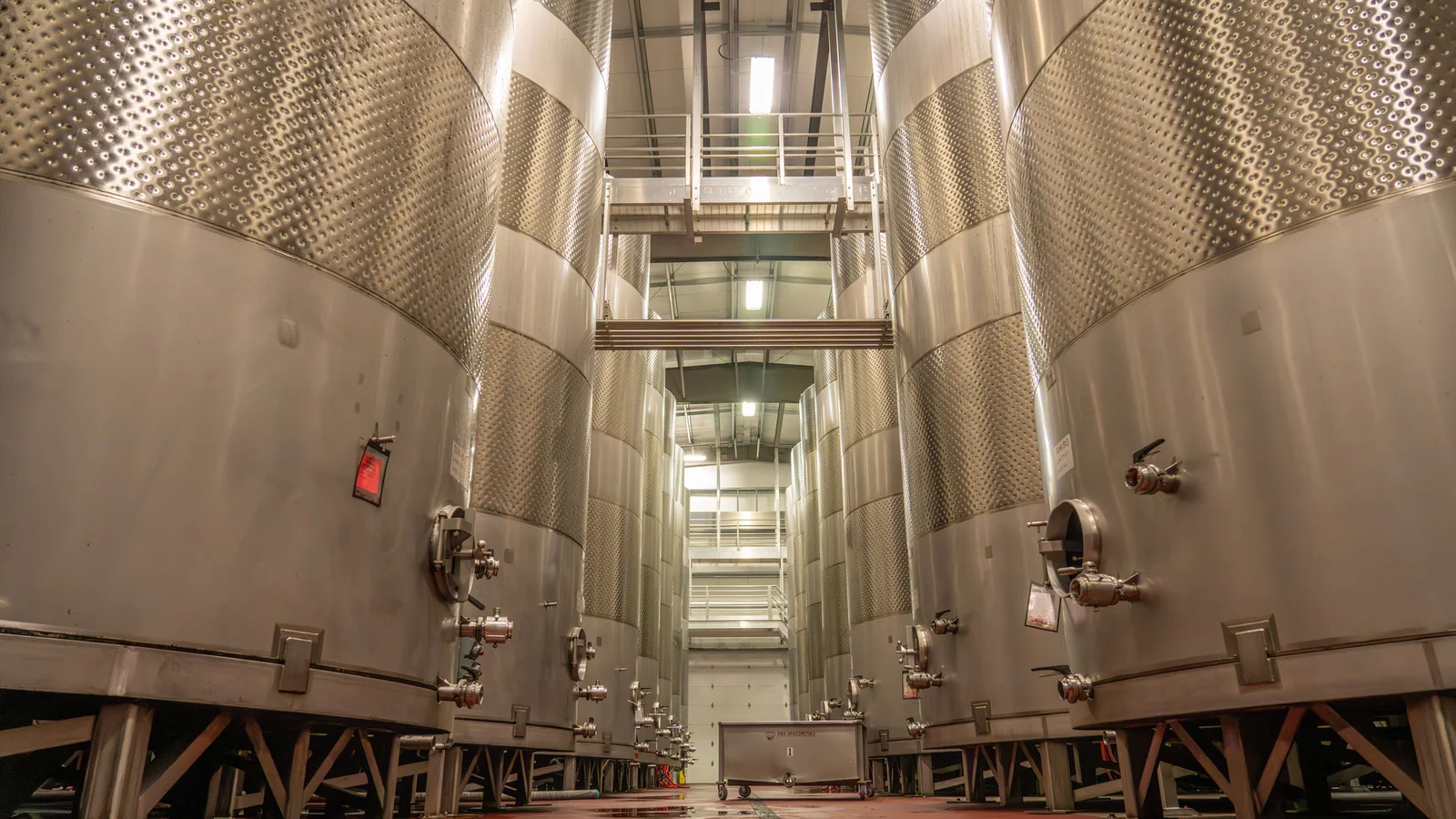
Why Is a Stainless Unit Necessary?
A standard power unit's tank is made of painted sheet steel. Paint is only a temporary barrier against corrosion: a scratch, an impact, or constant chemical contact breaks through it, and rust starts advancing from underneath. The result is a problem that goes beyond what you can see from outside — rust particles shedding from inside the tank mix into the oil, clog filters, and wear down the pump and valves.
Environments where a stainless unit becomes essential:
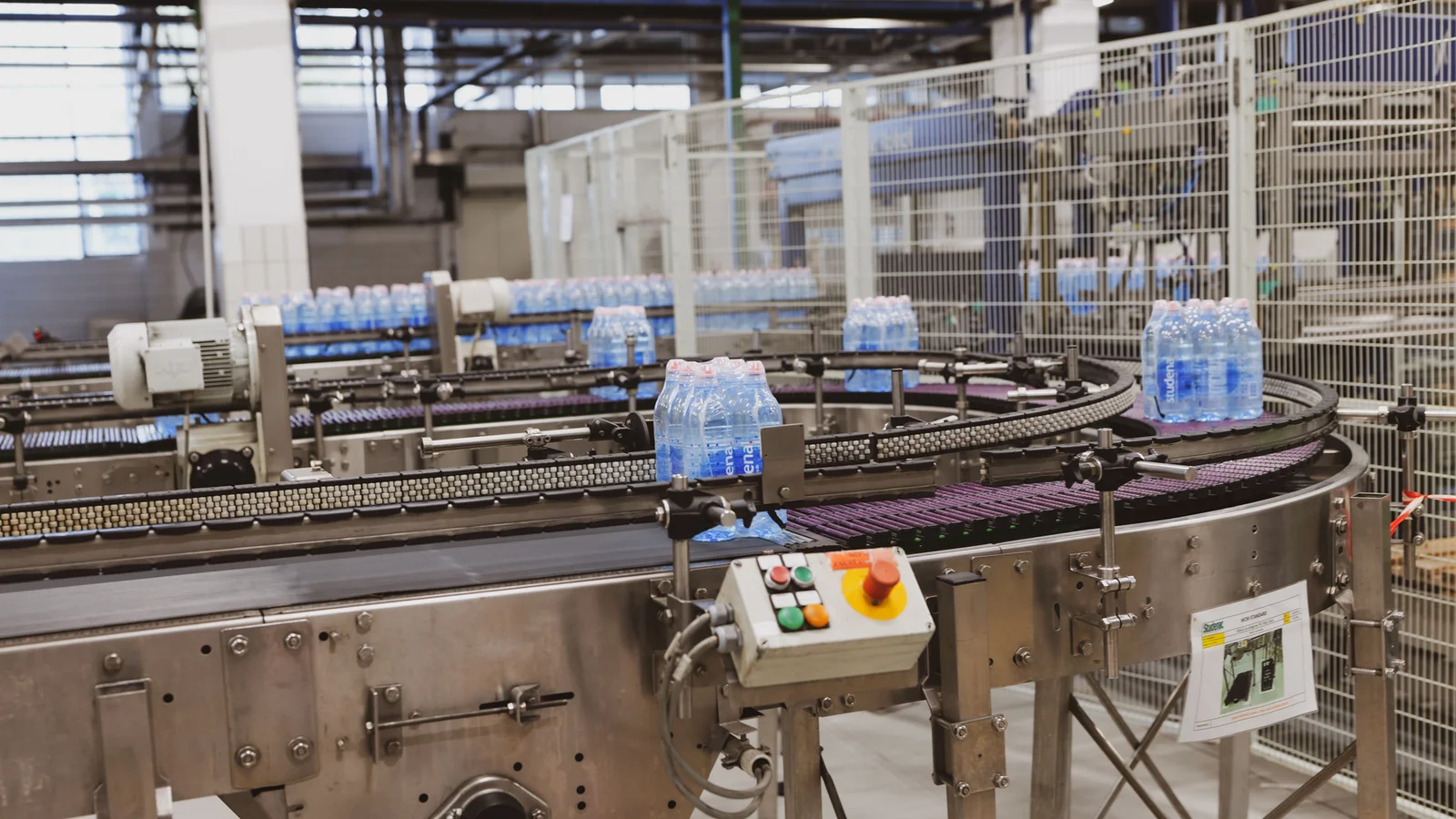
- Food and beverage facilities: Daily washdown, foam cleaning, steam and hygiene audits.
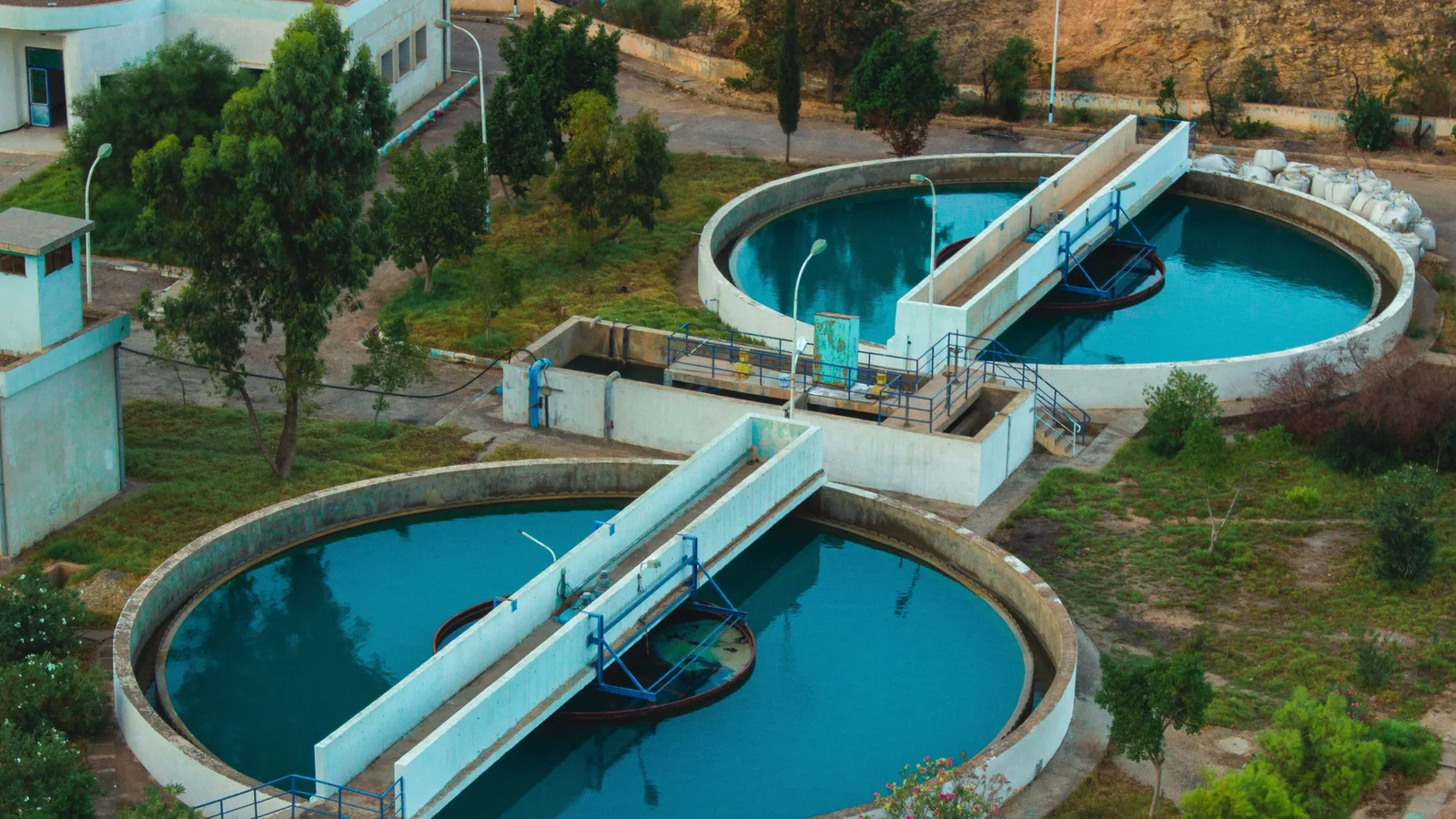
- Water and wastewater treatment: Constant high humidity, chlorine and a chemical-dosing environment.
- Chemical and pharmaceutical industry: Acid/base vapours and spill risk.
- Marine, shipyard and port settings: Salt air — where corrosion advances fastest.
- Textile finishing plants: Hot, humid, chemically laden air.
- Systems operating outdoors: Rain, humidity and temperature swings.
- Washdown lines and disinfection units: Contact with pressurised water and detergent.
Using a standard unit in these environments looks like a saving on the initial investment, but within two or three years it comes back, compounding, as tank renewal, frequent filter changes, pump faults and unplanned downtime. On lines with daily washdown especially, a painted tank's life falls well short of expectations — at first glance that looks like poor manufacturing quality, when the real issue is material choice.
What's Different in a Stainless Unit?
In a stainless unit, it's not just the tank that gets reviewed — every element exposed to corrosion does. The differences from a standard unit:
| Component | In a Standard Unit | In a Stainless Unit |
|---|---|---|
| Oil tank | Painted sheet steel | AISI 304 or 316 stainless sheet |
| Tank lids and hinges | Carbon steel | Stainless; surface cleaned after welding |
| Pipework | Steel pipe | Stainless pipe or an appropriately coated line |
| Fasteners | Galvanised bolts | Stainless bolts, nuts, washers |
| Chassis / legs | Painted profile | Stainless profile or protected structure |
| Motor | Standard housing | Appropriate protection class, stainless coating if needed |
| Electrical panel | Painted sheet panel | Stainless panel, high protection class |
| Level and temperature gauges | Standard | Chemical-resistant housing and seals |
| Sealing elements | General purpose | Material resistant to the environment's chemicals |
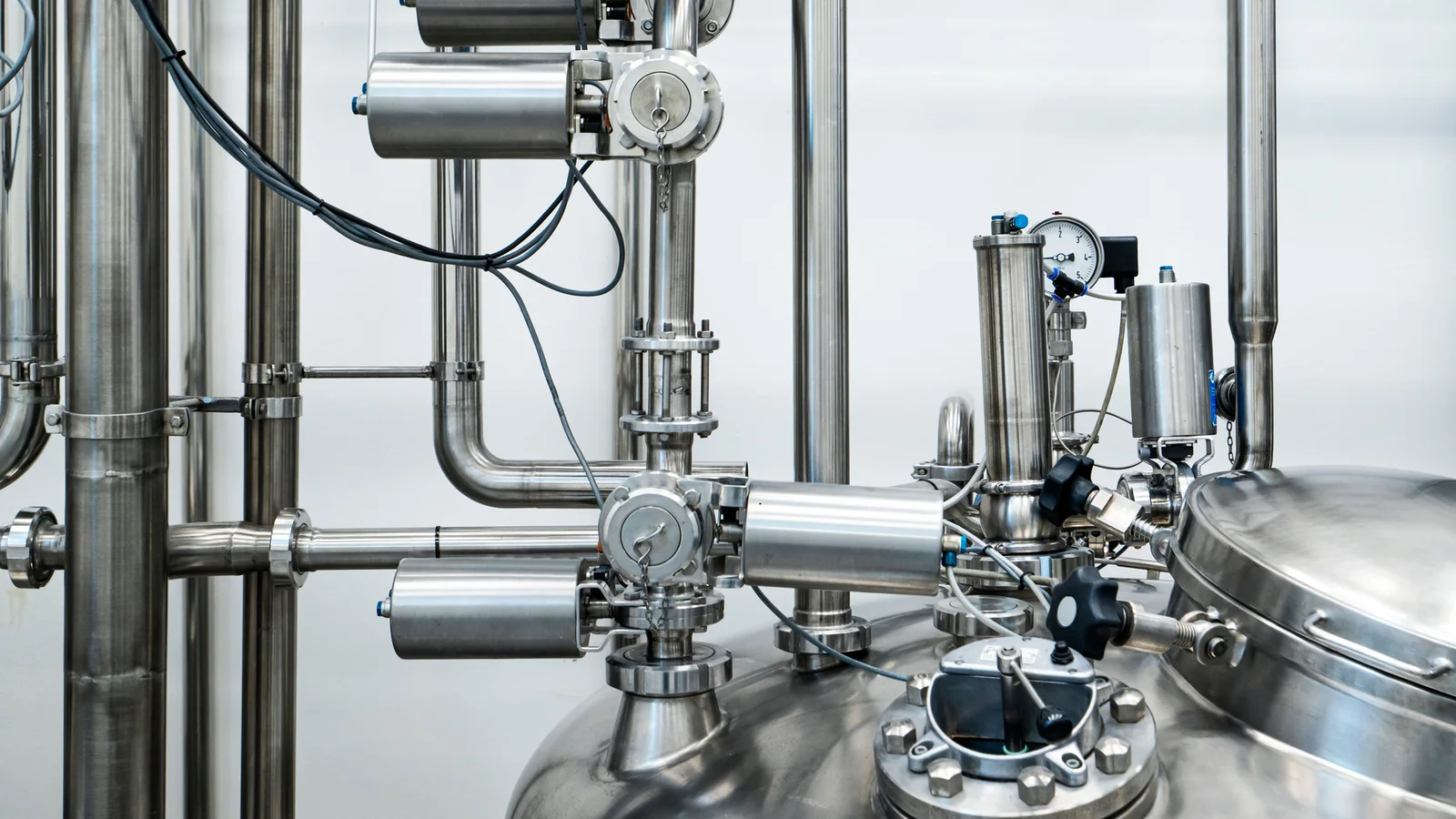
This table matters for clarifying what "stainless unit" actually means. A unit with only its tank made stainless, but with carbon steel bolts and a painted panel, still ends up covered in rust spots in short order. We state in writing in our quote which component is made from which material — so you know exactly what you're buying, and can make a fair comparison between different quotes.
Our Stainless Unit Manufacturing Process
Stainless hydraulic power unit manufacturing requires more care and a different technique than standard production:
- Needs and environment analysis: The system to be fed, its force/speed requirements, and the environment's chemical and cleaning regime are determined together.
- Material grade decision: If chlorides are present, 316 is chosen; for general humidity and food-grade cleaning, 304 — this decision is made jointly.
- Sizing: Flow, pressure, motor power and tank volume are calculated; heat balance is assessed.
- Tank fabrication: Stainless sheet is cut, formed and joined with the appropriate welding technique; weld zones are processed to preserve corrosion resistance.
- Tank internal cleaning: Weld slag and swarf residue are cleaned out — a critical step so no contamination enters the system from day one.
- Component assembly: Pump, motor, valve group and gauges are mounted using stainless fasteners.
- Testing and commissioning: Tested unloaded and under load; pressures are set, sealing and heating are observed.
- Delivery: The unit is installed on site, and we walk you through operation and maintenance points.
The step most often skipped in stainless manufacturing is cleaning the tank interior. A tank left with weld slag inside finishes off even the most expensive components in short order. In our production this step isn't negotiable.
Electrical Panel and Protection Class
The component most often overlooked in a stainless unit is the electrical panel. The tank gets made stainless, but if the panel is left as painted sheet, corrosion starts there, and electrical-fault risk follows.
What to watch for in washdown and humid environments:
- Panel housing: A stainless-sheet panel is preferred; painted sheet deteriorates quickly under pressurised water.
- Protection class (IP): Chosen to match the environment. Environments washed with pressurised water need a high protection class.
- Gasket and cover sealing: The panel door gasket should be checked regularly; an aged gasket lets water in.
- Cable glands: Cable entry points are the weakest spot; the right fitting and sealing must be used.
- Placement: The panel is positioned somewhere direct water spray can't reach.
- Internal humidity management: In environments with a large temperature swing, condensation can form inside the panel; measures are taken where needed.
At first glance these details seem unrelated to hydraulics, but a significant share of the faults that stop a system have electrical origins. Thinking through the entire unit is more meaningful than making just the tank stainless.
We also assess panel condition on your existing units. Sometimes, without needing to renew the tank at all, simply upgrading the panel and electrical connections noticeably extends the unit's life.
Technical Differences in Stainless Tank Manufacturing
Stainless tank fabrication differs from painted-sheet tank fabrication in several ways. If these differences are overlooked, the result is a tank that carries the "stainless" label but still loses out to corrosion:
- Cutting and forming: Stainless sheet picks up contamination if cut on equipment used for carbon steel. Dedicated equipment or cleaning is required.
- Welding technique: Heat input is controlled; an overheated zone changes structure and loses corrosion resistance. Shielding gas use matters.
- Post-weld cleaning: The oxide layer at the weld zone is cleaned and the protective layer is allowed to re-form. Skipping this step means corrosion shows up here first.
- Tank internal cleaning: Weld slag and swarf residue are cleaned out. Carbon steel swarf left inside a stainless tank means both contamination and system contamination.
- Interior surface condition: The tank interior needs to be smooth and cleanable to keep the oil clean.
- Port locations: Suction, return and drain ports must be stainless and correctly positioned.
All of these steps take time and care; they don't appear as separate line items on the quote, but they determine how many years the tank will last. A stainless tank being surprisingly cheap usually shows one of these steps was skipped.
Audits and Compliance in Food Facilities
In food production facilities, a hydraulic unit is an item that draws attention during audits. Any system carrying oil-leak risk is assessed from a hygiene standpoint. What we account for in the design at these facilities:
- Placement: The unit is positioned as far as practical from the product line and open product areas.
- Leak visibility: Layout and floor arrangement chosen so a possible leak is spotted early.
- Containment: A drip tray or collection basin planned where needed.
- Cleanability: Reducing corners that trap dirt, and slopes that prevent water pooling.
- Oil selection: Using an appropriate grade of oil in zones with product contact risk.
- Record-keeping accessibility: An accessible, labelled design so maintenance and cleaning records can be kept.
If you operate at an audited facility, knowing what points the auditor has flagged before directly improves the design. Sharing this information is one of the most valuable inputs you can give us.
On hygienic lines, an oil leak isn't just a maintenance issue — it's a non-conformance that can stop production. That's why we especially recommend planned maintenance at these facilities: catching a small leak early can mean saving an entire shift.
Stainless Hydraulic Unit Repair and Overhaul
Stainless hydraulic unit repair and stainless hydraulic power unit overhaul are the economical way to renew your existing system. Our scope:
- Fault diagnosis: The source of the problem is identified with pressure, flow and temperature measurements.
- Pump and valve service: Overhaul or replacement with an appropriate equivalent.
- Tank cleaning and inspection: Sludge, varnish and corrosion traces are cleaned; weld zones are examined.
- Corrosion repair: Local damage is fixed; advanced areas are renewed.
- Line and connection renewal: Worn hoses, pipes and fittings are replaced with stainless equivalents.
- Filter and oil renewal: Filter and oil selection matched to ambient conditions.
- Testing and commissioning: The system is tested and handed back running.
Stainless hydraulic unit overhaul is, in most cases, more economical than building a new unit — especially where the tank and chassis are sound, renewing the internal components is the wisest route. The decision is made after inspection, and both options are presented with their price. Where corrosion has advanced and tank wall thickness has reduced, though, we don't insist on repair — safety in a pressurised system always comes before cost.
Special Notes for Food and Hygienic Facilities
In food production, a hydraulic unit's job isn't just generating power — it also has to keep pace with the hygiene regime. Points we pay attention to for these facilities:
- Cleanable surface and layout: Reducing corners that trap dirt, and slopes that prevent water pooling.
- Washdown durability: Protection classes suited to cleaning with pressurised water and detergent; special care on the panel and electrical connections.
- Leak visibility: Early detection of an oil leak is critical for hygiene; layout is planned accordingly.
- Product contact risk: The unit's location and protective measures are assessed to keep it away from the product line.
- Audit readiness: An accessible design so cleaning and maintenance records can be kept.
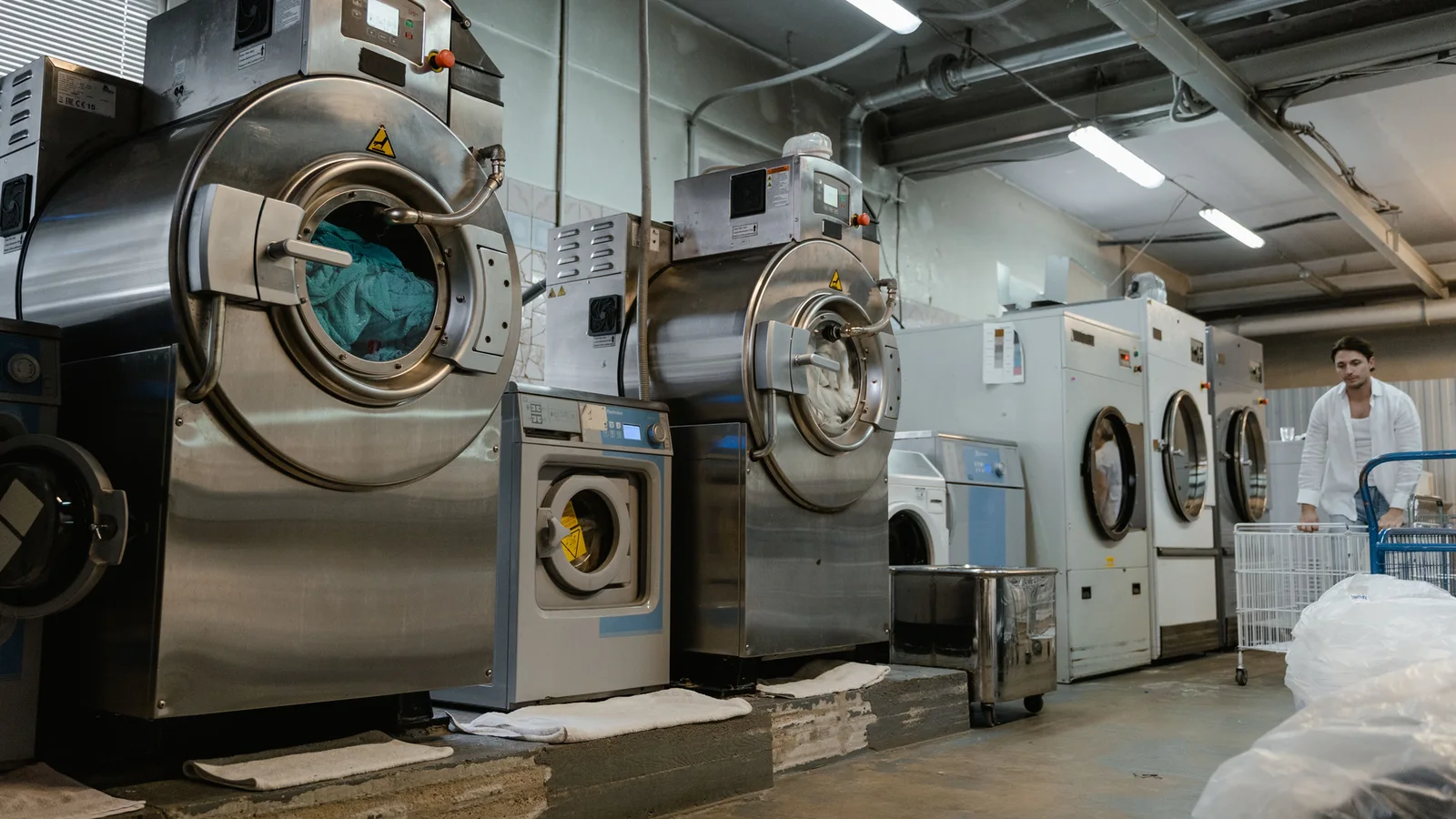
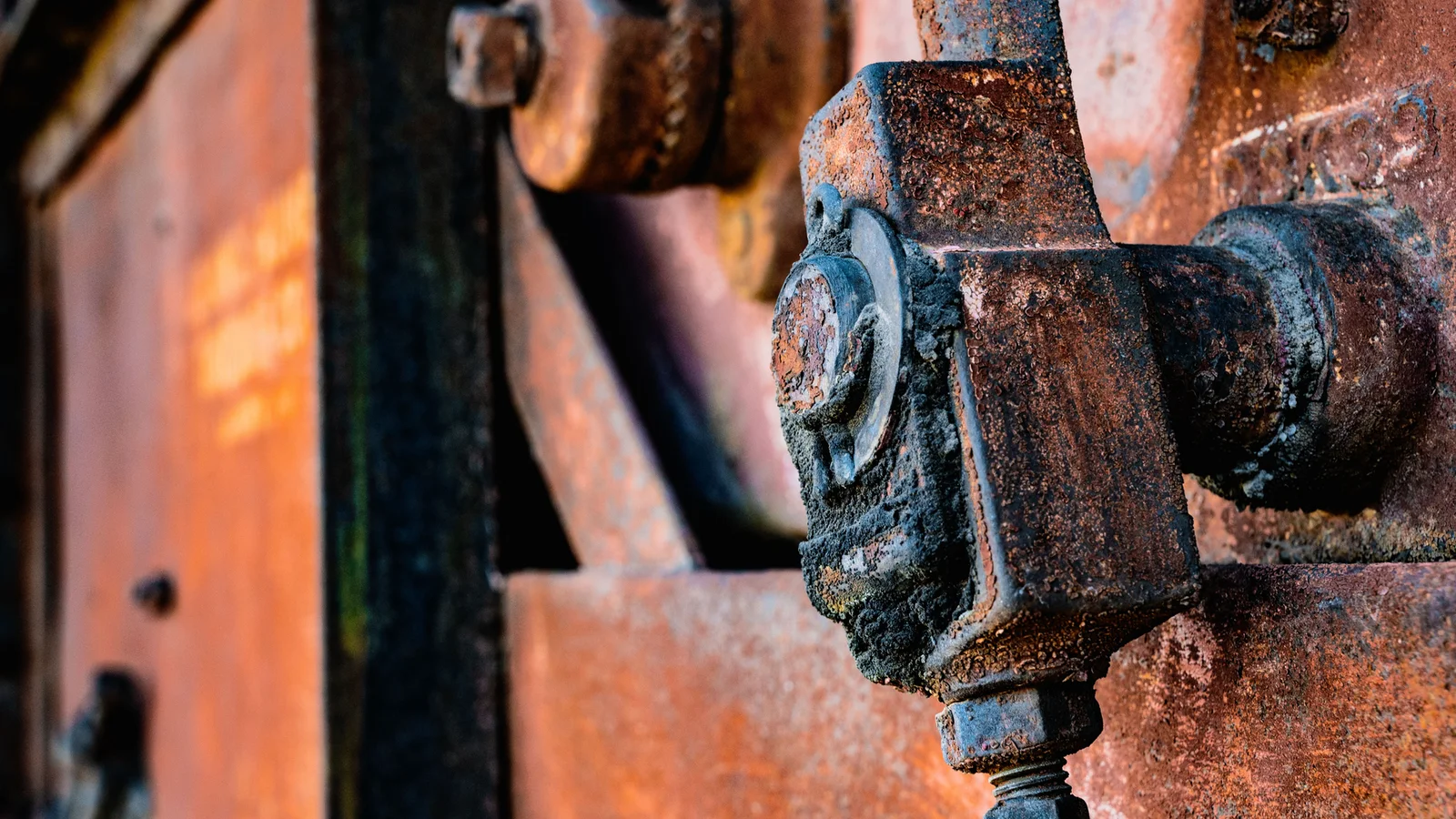
Describing your facility's cleaning procedure (chemical, temperature, frequency) is the most valuable information you can give us for the right design. It takes the guesswork out of material and protection-level selection. If you operate at an audited facility, knowing what points the auditor has flagged before also directly improves the design.
Stainless Unit Needs by Sector
Not every facility requesting a stainless unit has the same needs. Our main areas of manufacturing and their standout requirements:
| Sector | Environmental Challenge | Solution We Recommend |
|---|---|---|
| Food and beverage | Daily washdown, foam cleaning, steam | 304 tank, high-protection-class panel, cleanable layout |
| Water and wastewater treatment | Constant humidity, chlorine dosing | 316 tank and connections, corrosion-resistant lines |
| Chemical and pharmaceutical | Acid/base vapour, spill risk | 316L, chemical-resistant gaskets, protected panel |
| Marine, port, shipyard | Salt-laden air and water | 316 grade, extra protection, regular corrosion tracking |
| Textile finishing | Hot humidity, chemically laden air | Stainless tank, heat-resistant gaskets |
| Washdown facilities | Pressurised water, detergent | High IP rating, stainless housing, protected cable entries |
| Outdoor systems | Rain, humidity, temperature swings | Stainless tank, condensation protection for the panel |
Worth noting: not every application requires the highest level. In an enclosed, dry machine room, a stainless unit is an unnecessary cost. On a line with chlorinated cleaning, by contrast, a painted tank means renewal within a few years.
Seeing the facility is the easiest way to determine the right level. In some cases an intermediate solution is enough: a stainless tank with a protected painted chassis, or stainless for the critical zones and standard for the rest. The survey is free within Izmir.
Cost and Payback Calculation
A stainless unit costs more than a standard one. The items that make up the difference:
- Tank material: Stainless sheet is noticeably more expensive than painted sheet. 316 costs more than 304.
- Welding and machining: A special technique, shielding gas and a post-weld cleaning step are required.
- Fasteners: Stainless bolts, nuts, fittings and pipe.
- Panel and electrical protection: A high-protection-class, stainless-housed panel.
- Gaskets and sealing: Special materials resistant to the environment.
- Chassis and legs: Stainless profile or a protected structure.
On the other side of the equation: how often does a painted tank need renewing in a corrosive environment? How often does shed rust clog the filters? How early do the pump and valves wear out? What does it cost if a leak stops production at a hygienic facility?
Add those up, and a stainless solution is usually more economical over the medium term in corrosive environments. Before deciding, look at how often your current system needs renewal and service — those numbers show the payback period fairly clearly.
What We Need From You During Ordering
The information we need to design the right stainless unit:
- Environment information: Where will the unit go? A washdown area, an enclosed machine room, or outdoors?
- Cleaning procedure: Which chemical, at what temperature, how often? Is pressurised water used?
- Chloride status: Is salt water, sea air or a chlorinated product present? If yes, 316 is required.
- System to be fed: How many cylinders, what force, what speed?
- Duty regime: Continuous or intermittent? How many hours a day?
- Space constraints: Area and height allocated for the unit.
- Electrical infrastructure: Existing panel capacity, voltage, automation needs.
- Audit requirements: Do you go through hygiene or sector audits? What points have been flagged before?
If you're renewing an existing unit, it's easier still: let us see the old unit, take its nameplate data, and pull the connection dimensions. The new unit drops straight into the old one's place with no changes needed to the machine.
Maintaining a Stainless Unit
Being stainless doesn't mean it can go without maintenance. Practices that extend its life:
- Surface cleaning: Dried chemical residue starts localised corrosion; regular rinsing matters.
- Carbon steel contact: Steel swarf, tools or bolts touching the stainless surface can contaminate it and start rust.
- Oil and filter tracking: Water contamination risk is higher in humid environments; oil clarity should be checked regularly.
- Leak scanning: Even the smallest leak is a serious matter in hygienic environments.
- Temperature monitoring: Overheating finishes off both the oil and the gaskets.
- Panel and electrical check: Sealing gaskets should be checked periodically because of moisture and washdown.
We also carry out these checks as part of a periodic maintenance programme. For units running on critical lines, planned maintenance is always cheaper than unplanned downtime. On hygienic lines, an oil leak isn't just a maintenance issue — it can be a non-conformance that stops production; we especially recommend planned maintenance at these facilities.
Standard or Stainless? A Decision Table
Not every facility needs a stainless unit. Choosing it unnecessarily is a waste of budget; not choosing it where it's needed means early replacement. Our decision criteria:
| Operating Environment | Recommended Solution | Rationale |
|---|---|---|
| Dry, enclosed machine room | Standard unit | Corrosion risk is low; a painted tank is sufficient |
| Humid environment, occasional wetting | Standard tank + protected components | Partial protection is often enough |
| Daily washdown food line | Stainless (304) | Cleaning chemical wears out both the paint and the carbon steel |
| Chlorinated cleaning, marine, salt air | Stainless (316) | Chlorides cause pitting corrosion even on 304 |
| Chemical vapour / spill risk | Stainless (316) + special gaskets | Both housing and sealing must withstand the chemical |
| Outdoor, rain and humidity | Stainless tank + high-protection-class panel | The electrical section is the most critical point |
| High temperature + humidity together | Stainless + heat-resistant gasket | Temperature becomes the deciding factor for gasket material |
Intermediate solutions are possible too: a stainless tank with a protected painted chassis, or stainless for critical zones with standard elsewhere. Our aim isn't to sell the most expensive solution, but the one that fits your environment. Seeing the facility during the survey makes this decision much easier — it isn't a call you make from a catalogue.
Managing Oil in a Humid Environment
The environments a stainless unit operates in are usually humid, which creates a separate risk for the hydraulic oil. Water mixing into the oil is a far more common problem in corrosive environments than at standard facilities.
How does water get in?
- Condensation through the tank breather: The tank "breathes"; if the temperature swing is large, water condenses inside. This risk multiplies in a humid environment.
- Splashing during washdown: If the fill port, level gauge or cover gasket is weak, water enters directly.
- A worn rod wiper: The cylinder rod carries outside moisture in with it.
- Heat exchanger leaks: In water-cooled systems, water can pass from the cooler into the oil.
Water's effects are clear: the oil's lubricating power drops, corrosion starts on metal surfaces, the additive package breaks down, and there's a risk of microbial growth. The symptom is typical — the oil turns cloudy like milk.
Measures we take in these environments:
- Choosing a moisture-absorbing type of breather filter
- Positioning fill and level points where they're protected from splashing
- Putting cover gaskets on a regular check programme
- Adding oil clarity to the monthly checklist
- Evaluating water-separating equipment where needed
If water is found, changing the oil alone isn't enough — the entry point needs to be found. Otherwise the new oil ends up in the same state in short order. That's why we examine the whole system in cases of cloudy oil.
The Hidden Cost of Corrosion: Contaminated Oil
The most visible result of a corroded tank is the staining on the outside; but the real damage happens inside. Microscopic rust particles shed from inside the tank mix into the hydraulic oil and set off a chain of wear through the system:
- Filters clog fast: Filter change frequency increases; if unnoticed, the filter goes to by-pass and dirty oil spreads through the whole system.
- The pump wears: Particles abrade the pump's internal surfaces like sandpaper; flow drops, noise increases.
- Valves stick: Buildup on sensitive valve spools disrupts motion; the system starts behaving unpredictably.
- Cylinder seals get cut: Hard particles in the oil cut the seals; leaks start, and cylinder overhaul becomes necessary.
- Oil life shortens: Contaminated oil has to be changed more often.
In other words, the "the tank's rusted, let's just paint it" approach doesn't solve the problem — because the contamination already spread through the system stays in place. In these cases we recommend a system flush and oil change alongside tank renewal. This is the real rationale for choosing a stainless tank: not appearance, but keeping the oil clean and extending the life of every component connected to it. Put the cost of a tank next to the combined value of the pump, valve group and cylinders it feeds, and it becomes clear why the right material choice isn't the expensive option.
A Stainless Unit Maintenance Programme
A unit working in a corrosive environment needs more regular maintenance than one in a standard setting. Our recommended check programme:
| Frequency | Check | Why It Matters |
|---|---|---|
| Daily | Visible leaks, oil level | A leak on a hygienic line can halt production |
| Daily | Temperature and sound observation | Early warning; problems are caught before they grow |
| Weekly | Cleaning chemical residue off surfaces | Dried chemical starts localised corrosion |
| Weekly | Panel gasket and cable entries | Washdown water entering the panel causes an electrical fault |
| Monthly | Oil clarity and water check | Water contamination risk is high in humid environments |
| Monthly | Filter condition | A clogged filter goes to by-pass, and protection is lost |
| Monthly | Fastener and weld zone scan | Corrosion most often starts at these points |
| Periodic | Pressure-setting verification | A relief valve's setting can drift over time |
| Periodic | Cooler cleaning | A dusty cooler is a frequent cause of overheating |
Most of these checks take a few minutes and need no tools. Done regularly, both corrosion starting points and hydraulic faults are caught while they're still small.
We set up periodic maintenance agreements for units running on critical lines: we visit at agreed intervals, run through the checklist and report on system health. At facilities undergoing hygiene audits, these records are especially valuable — a regular maintenance history to show an auditor usually clears up questions before they're asked.
Stainless Unit Glossary
Terms that come up in our quotes and reports:
| Term | What It Means |
|---|---|
| AISI 304 | A general-purpose stainless grade; common for humid and food environments |
| AISI 316 | A molybdenum-alloyed grade; high resistance to chlorides and acids |
| Pitting | Localised pitting on a surface; seen in chlorinated environments |
| Contamination | Carbon steel contact on a stainless surface; starts rust |
| Protection class (IP) | The degree of protection electrical equipment has against water and dust |
| Varnish formation | A sticky film left by overheated oil; sticks valves |
| By-pass | A clogged filter dropping out of the circuit and letting dirty oil through |
| Suction line | The line from the tank to the pump; the section most sensitive to air leaks |
| EPDM | A gasket material resistant to hot water and steam; incompatible with mineral oil |
| CIP cleaning | Cleaning a line in place without disassembly; brings a chemical and heat load |
You don't need to know these terms, but we find them useful for anyone who wants to see what's what and why it was chosen on a quote. If a line item is unclear, don't hesitate to ask — we'd rather walk through the quote with you and explain what every item covers.
Stainless Hydraulic Unit Service in Izmir
Our workshop is at Mersinli Mah. 2843 Sk. No:15, Konak / İzmir, in the Mersinli industrial district of Konak. We serve production facilities in Kemalpaşa and Torbalı, where food and beverage plants are concentrated; Aliağa, the hub of chemical and petrochemical industry; Çiğli OIZ, the organised industrial zone; treatment plants; shipyard and port areas; and Bornova, Işıkkent and Pınarbaşı.
Because power units are difficult to transport, a significant share of our work happens on site. Our team arrives with diagnostic equipment, measures on the spot and finishes as much of the job there as possible. If the unit needs to come to the workshop, we manage the teardown, transport and reinstallation. The survey is free within Izmir.
Our preferred approach in stainless applications is to treat the system as a whole: when the unit, cylinders, lines and fasteners are all chosen with the same material logic, the chain of corrosion is broken. The most common problem we see in systems assembled from different suppliers' parts is a single incompatible component rusting the whole system. Call us to talk through your project: 0553 608 69 10. A single visit to your facility is usually enough for us to discuss the right solution.
Frequently Asked Questions
How much more expensive is a stainless unit than a standard one?
It's higher due to the material and workmanship difference; the difference varies with the grade chosen (304/316) and the unit's size. But when you factor in tank renewal, frequent filter changes and downtime costs for a standard unit in a corrosive environment, a stainless solution is more economical over the medium term.
Is it enough to just make the tank stainless?
It depends on how harsh the environment is. In lightly humid settings, a stainless tank with protected components may be enough. But if there's chlorinated cleaning or salt air, the bolts, lines and panel need to be stainless too — otherwise corrosion starts at the weakest link.
Should I choose 304 or 316?
If chlorides are present — a marine environment, salt water, chlorinated cleaning chemicals — 316 is preferred. For general humidity and standard food-grade cleaning, 304 is sufficient for most applications. Tell us your environment and we'll decide together.
Can you convert my existing standard unit to stainless?
A partial conversion is possible: the tank can be renewed, fasteners and lines can be replaced with stainless, and the panel can be upgraded. But a comprehensive conversion often approaches the cost of a new unit; we'll tell you which makes more sense after inspection.
I'll use it in a food facility — what do you watch for on the hygiene side?
A cleanable surface and layout, washdown-resistant protection classes, placement that lets a leak be spotted early, and keeping it away from the product line stand out. Describing your cleaning procedure directly shapes the design.
My stainless unit has corroded — what could be the cause?
The most common causes are choosing the wrong grade (304 in a chlorinated environment), carbon steel contamination, degradation of the protective layer at a weld zone, and dried chemical residue. We inspect it, identify the root cause and recommend a lasting fix.
Do you also make stainless cylinders to go with the unit?
Yes. Stainless hydraulic cylinder manufacturing, repair and overhaul are also among our services. Having the unit and cylinder come out of the same workshop is an advantage for material compatibility and for having a single point of contact afterward.
Does the panel need to be stainless too?
Yes, in washdown and humid environments. If the tank is stainless but the panel is left as painted sheet, corrosion starts there and creates electrical-fault risk. The protection class (IP) also needs to match the environment.
Rust is shedding from inside my tank — what should I do?
This shows the painted tank is corroding from the inside and it's urgent. The shed rust particles mix into the oil, clogging filters and wearing down the pump and valves. An oil change alone isn't enough — the tank needs renewal and the system needs flushing.
Can just the tank on my existing unit be made stainless?
It's possible, and sometimes it's the sensible choice: the tank is renewed, fasteners and lines are replaced with stainless, and the panel is upgraded. But a comprehensive conversion often approaches the cost of a new unit; we'll tell you which makes more sense after inspection.
How long is the lead time?
Sourcing stainless material can take a little longer than standard steel; the unit's size and component availability also affect timing. The lead time is confirmed once the design is approved and material is checked. Let us know if it's urgent and we'll plan accordingly.
Do you repair the unit on site, or take it away?
We do as much as possible on site: diagnosis, valve and filter replacement, adjustments and minor repairs are completed there. If tank renewal or a comprehensive overhaul is needed, the unit is brought to our workshop; we manage the teardown, transport and reinstallation.

İsmail Çevik is the founding partner of ÇevikSan. This content was prepared based on our workshop's hands-on manufacturing, repair and overhaul experience with hydraulic and pneumatic cylinders.
Last updated: August 27, 2026