
Summary
- Our Stainless Hydraulic Cylinders service covers Izmir and the surrounding region; site surveys and fault diagnosis are free.
- We provide a firm quote after removal and measurement; no work starts without your approval.
- Manufacturing and repair are done in the same workshop — we produce equivalent replacements for parts that are no longer available.
- Every part is pressure-tested before delivery; workmanship is guaranteed.
- Topics covered on this page: Stainless Hydraulic Cylinder Manufacturing, Repair and Overhaul in Izmir, Why Is a Stainless Cylinder Necessary?, Material Selection: 304 or 316?, Stainless Cylinder and Piston Manufacturing, Stainless Hydraulic Cylinder Repair and Overhaul.
Table of Contents21 sections
- Stainless Hydraulic Cylinder Manufacturing, Repair and Overhaul in Izmir
- Why Is a Stainless Cylinder Necessary?
- Material Selection: 304 or 316?
- Stainless Cylinder and Piston Manufacturing
- Stainless Hydraulic Cylinder Repair and Overhaul
- What We Watch For in a Stainless Overhaul
- Special Notes for Food and Hygienic Environments
- Extending a Stainless Cylinder's Life
- Standard or Stainless? A Decision Table
- How Does Corrosion Start, and How Does It Progress?
- A Maintenance Programme for the Stainless Cylinder
- Stainless Cylinder Glossary
- Technical Differences in Machining Stainless
- Fasteners: The Weakest Link
- Testing and Delivery: Extra Checks for Stainless
- Sealing Selection: The Weak Point of Stainless
- Stainless Needs by Sector
- Cost and Payback
- What We Need From You During Ordering
- Stainless Hydraulic Solutions in Izmir
- Frequently Asked Questions
Stainless Hydraulic Cylinder Manufacturing, Repair and Overhaul in Izmir
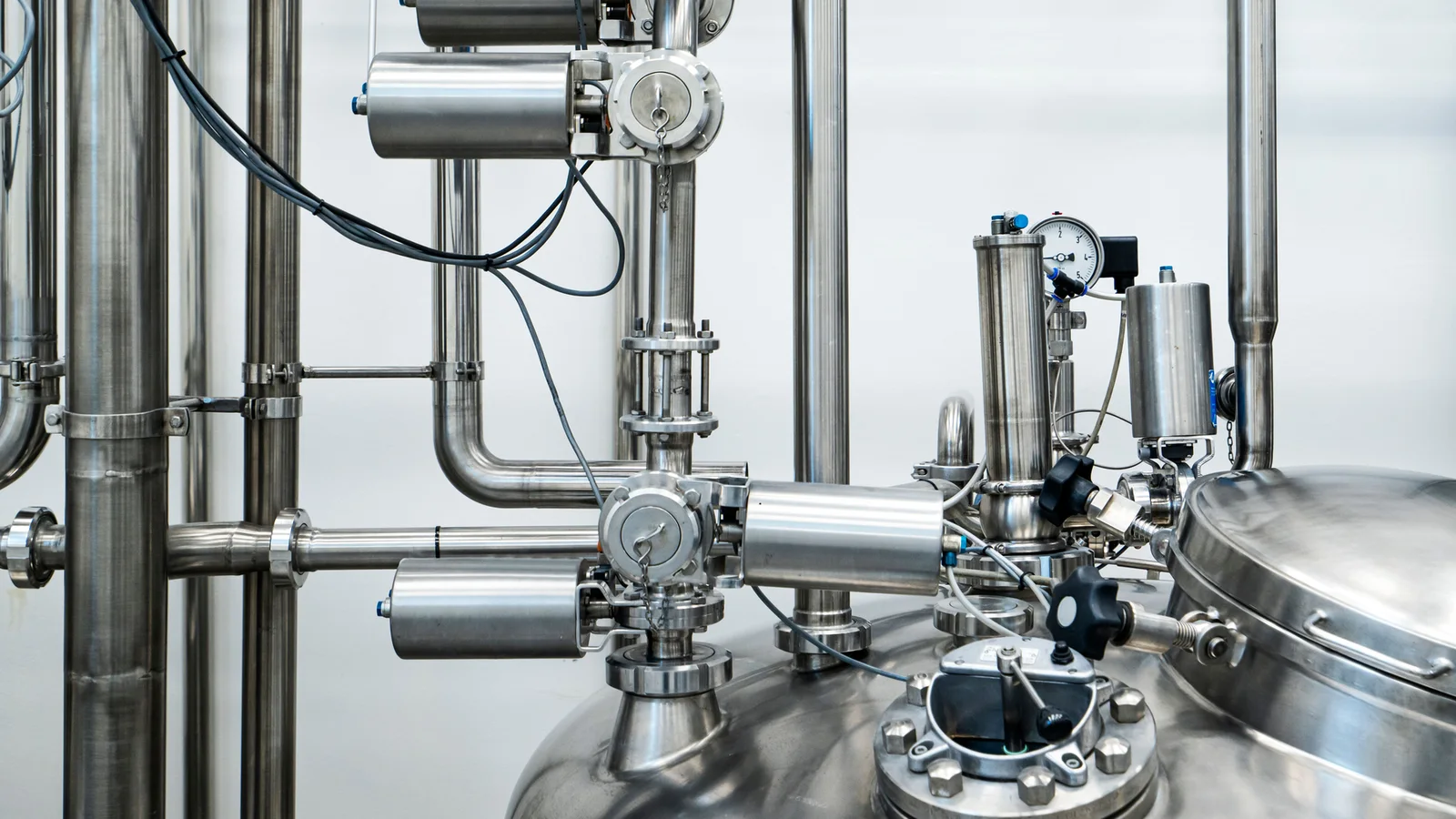
A stainless hydraulic cylinder works where an ordinary cylinder can't survive: under washdown chemicals on food production lines, in the constant damp of treatment plants, against aggressive vapours in chemical plants, in the salt air of marine and shipyard environments. At ÇevikSan we carry out stainless hydraulic cylinder manufacturing, repair and overhaul, and stainless hydraulic piston manufacturing, repair and overhaul, in Izmir.
What makes this work specialised is that stainless steel behaves differently from standard steel. It's harder to machine, its thermal behaviour is different, and both surface quality and welding technique demand separate care. Inexperienced workmanship produces cylinders that carry the "stainless" label but still lose out to corrosion. We work with these differences in mind, from material selection through to surface finishing — the result is a cylinder that genuinely stands up to its environment.
Why Is a Stainless Cylinder Necessary?
A standard hydraulic cylinder's rod is hard chrome plated; this coating resists wear well but offers limited protection against chemical attack and constant moisture. Once the coating is damaged, the steel underneath corrodes quickly, the rust cuts into the seal, and the cylinder starts to leak. Stainless material, by contrast, resists corrosion right through its bulk.
Typical environments where a stainless cylinder becomes essential:
- Food and beverage production: Daily washdown, steam, and acidic and alkaline cleaning chemicals; plus hygiene requirements.
- Water and wastewater treatment plants: Constant humidity, chlorine and a chemical-dosing environment.
- Chemical and pharmaceutical industry: Aggressive vapour and chemical contact risk.
- Marine, port and shipyard settings: Salt air and water — where corrosion advances fastest.
- Textile finishing and dye houses: Hot, humid, chemically laden air.
- Washdown and disinfection lines: Contact with pressurised water and detergent.
- Outdoor equipment: Systems constantly exposed to rain, humidity and temperature swings.
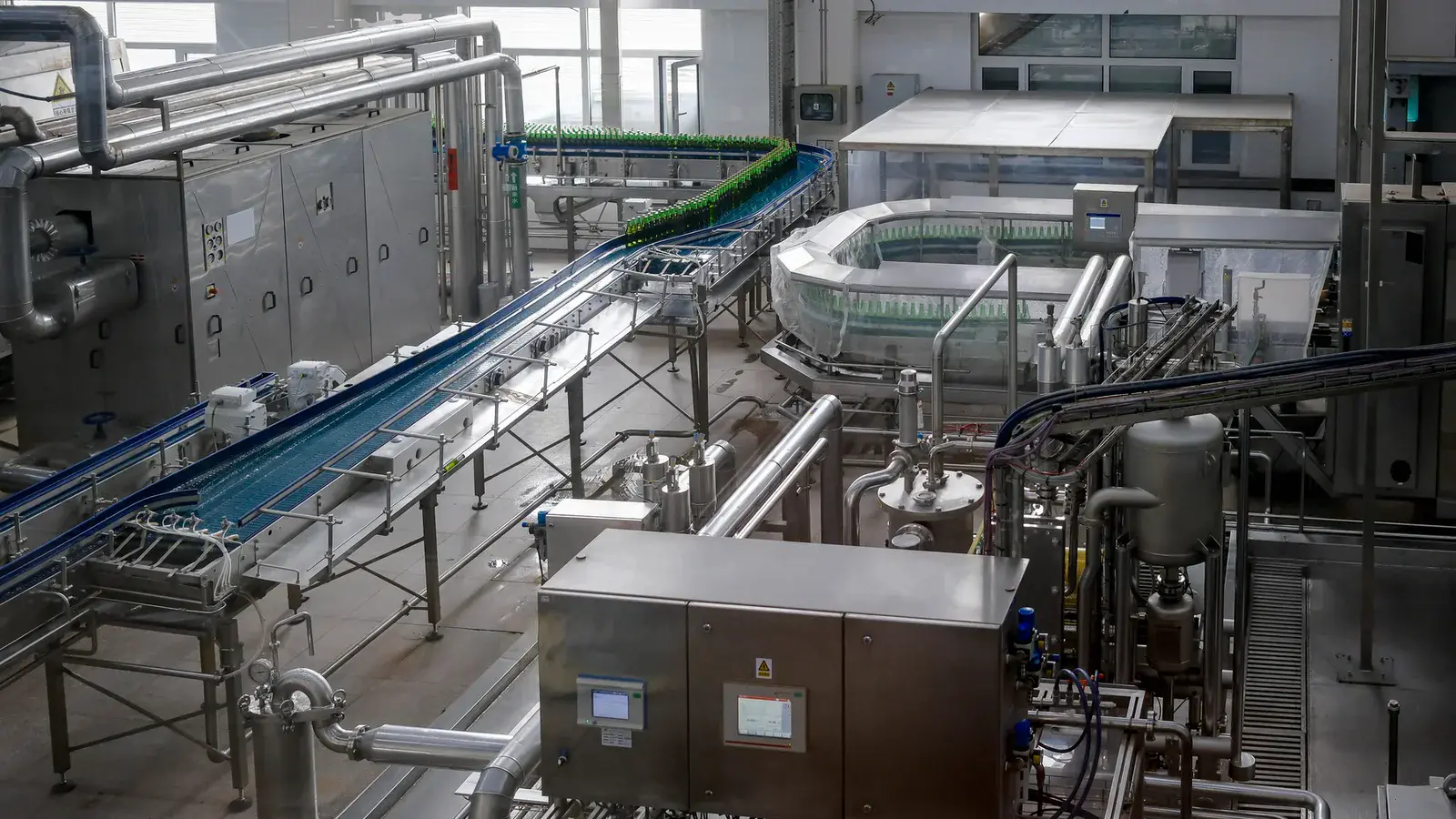
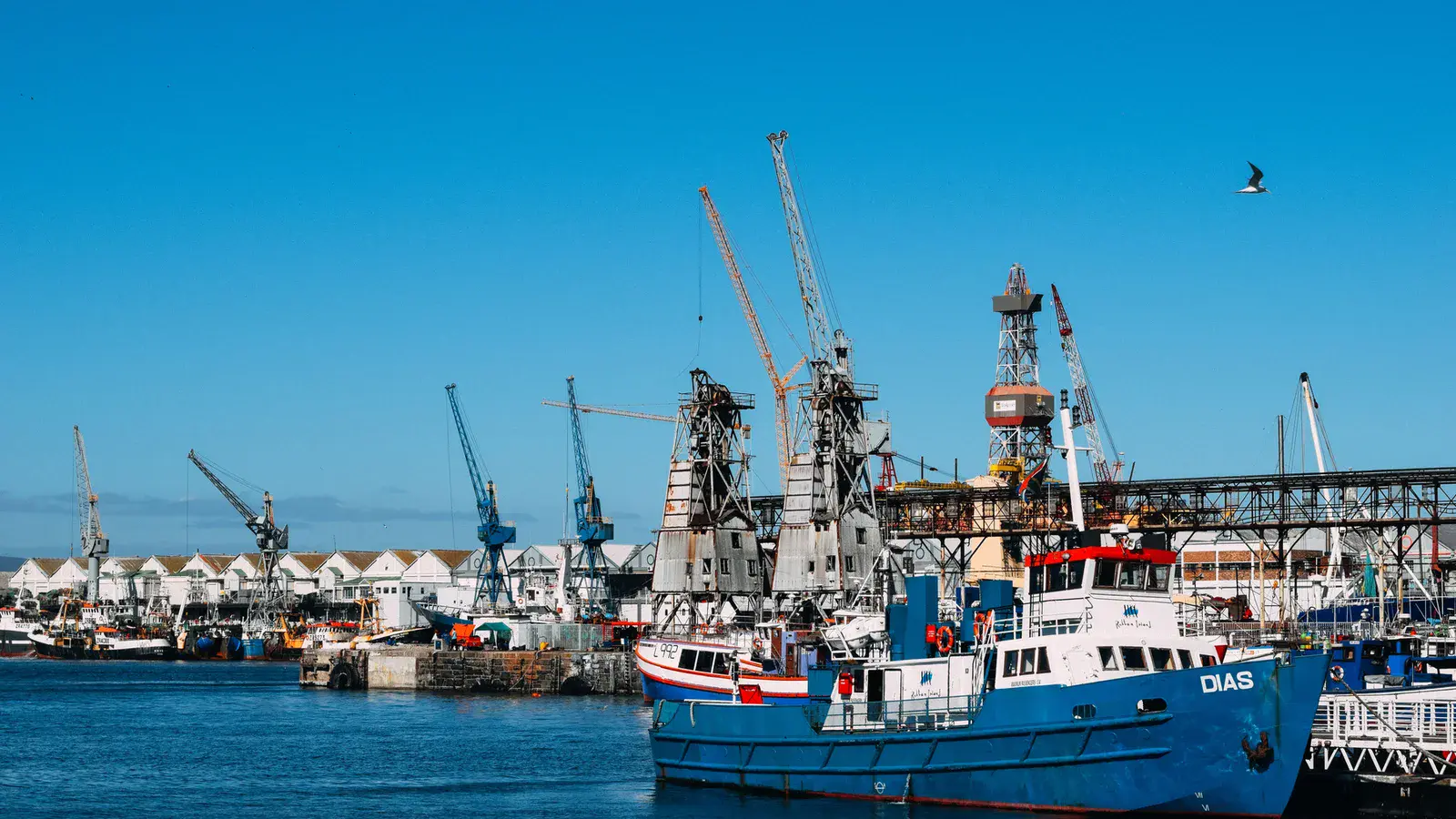
Using a standard cylinder in these environments may look like a saving in the short term, but it comes back as frequent faults, repeat service and unplanned downtime. In lines with a heavy cleaning regime especially, a standard cylinder's life falls well short of expectations — at first glance that looks like poor equipment quality, when the real issue is material selection.
Material Selection: 304 or 316?
"Stainless" doesn't refer to a single material. Choosing the right grade directly determines the cylinder's lifespan. A comparison of the grades used most often:
| Material | Resistance Characteristic | Suitable Environment |
|---|---|---|
| AISI 304 | Good general corrosion resistance | Food production, humid indoor settings, general industry |
| AISI 316 / 316L | High resistance to chlorides and acids (molybdenum-alloyed) | Marine environments, treatment plants, chemical, chlorinated settings |
| Hardened stainless rod | Corrosion and wear resistance combined | Heavy-duty stainless applications |
| Chrome-plated stainless rod | Increased surface hardness on stainless | Where both chemical and mechanical stress apply |
| Special alloys | For extremely aggressive environments | High-concentration chemical applications |
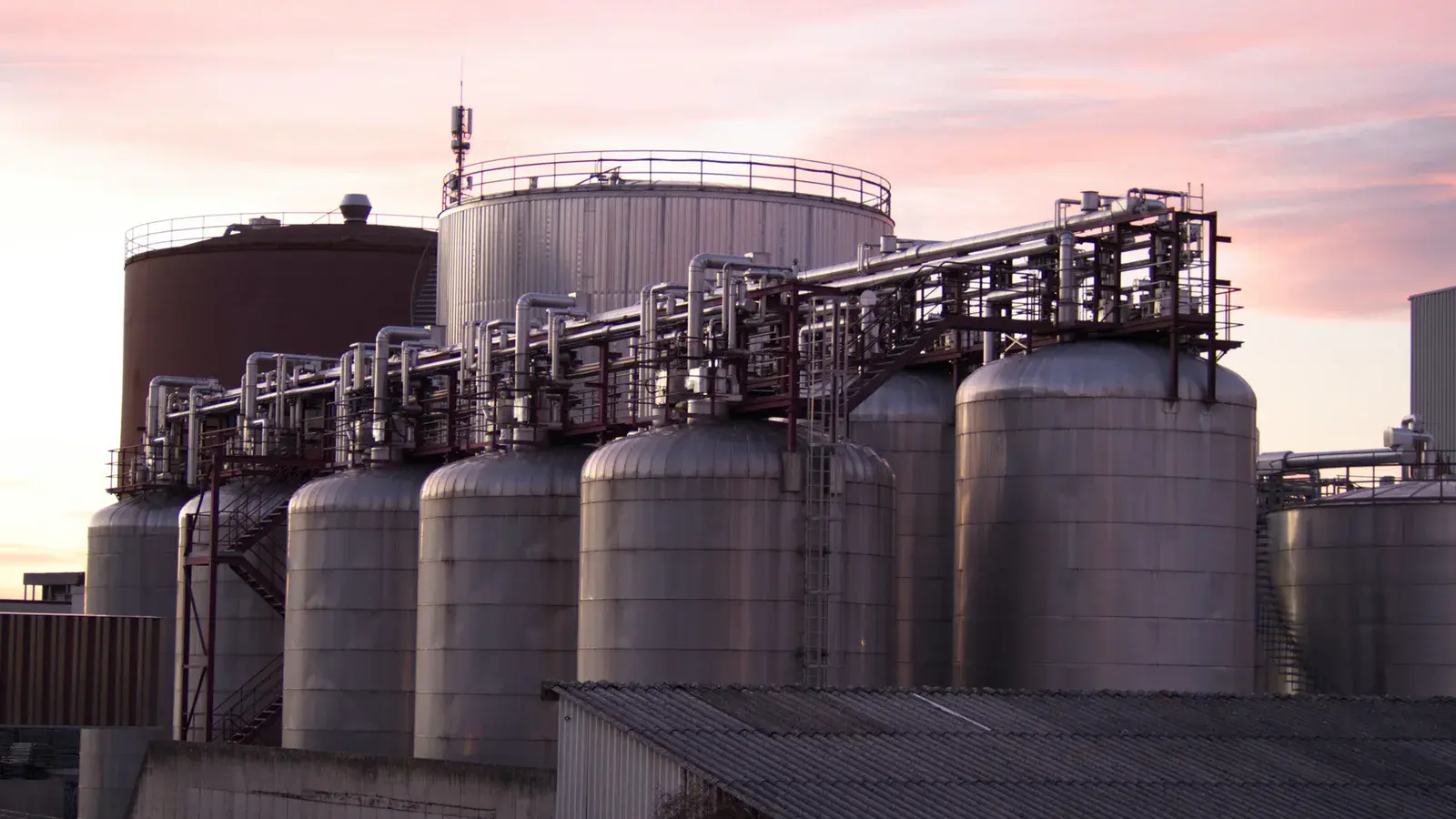
The general rule: if chlorides are present (salt, seawater, chlorinated cleaning agents), 316 is the choice; for general humidity and food-grade cleaning, 304 is usually sufficient. But the decision should be based on the actual conditions of the environment — we work that out together with you. Choosing the wrong grade means both unnecessary cost and premature corrosion.
Stainless Cylinder and Piston Manufacturing
Stainless hydraulic cylinder manufacturing and stainless hydraulic piston manufacturing differ from standard production in a few key ways:
- Machining technique: Heat management and tool selection are critical when machining stainless material; incorrect machining leaves surface stress and a starting point for corrosion.
- Welding and passivation: Weld zones are the most exposed points for corrosion; they require the right technique and surface cleaning afterward.
- Surface quality: The rod and tube bore are finished precisely, both for sealing and for corrosion resistance.
- Seal selection: A seal material resistant to the environment's chemicals and temperature is chosen; the wrong seal makes a stainless housing pointless.
- Fasteners: Bolts, nuts and joints are also stainless — a single carbon steel bolt can rust an entire cylinder.
For custom stainless hydraulic cylinder needs, dimensions, stroke, connection type and operating pressure are set entirely to your requirements. If you have a sample cylinder, we build an exact equivalent; if not, we listen to your application and size it accordingly.
A common mistake: buying a stainless housing and then using standard fasteners. Corrosion starts at the weakest link. We look at the whole system with the same eye — from the cylinder's mounting to the hose fitting.
Stainless Hydraulic Cylinder Repair and Overhaul
Repairing and overhauling a stainless hydraulic cylinder is more demanding than a standard cylinder overhaul, because the wrong intervention compromises corrosion resistance. What we do in a stainless cylinder overhaul:
- Teardown and surface assessment: Corrosion traces, pitting and surface damage are examined.
- Surface treatments: Honing the tube bore, grinding the rod; finishing the surface afterward in a way that preserves corrosion resistance.
- Stainless piston repair: The piston surface, seal grooves and guide bands are renewed; a new piston is manufactured if needed.
- Stainless rod manufacturing: If a damaged rod can't be saved, a new one is manufactured in the correct grade.
- The right seal kit: A seal group resistant to the environment's chemicals and temperature is fitted.
- Pressure testing: The cylinder is tested before delivery.
Stainless hydraulic piston overhaul and stainless hydraulic cylinder overhaul are, in most cases, more economical than new manufacturing — if the housing is sound, we favour saving it. The decision is made after teardown and measurement; we present both options with their price.
What We Watch For in a Stainless Overhaul
Overhauling a stainless cylinder is a more demanding job than overhauling a standard cylinder. The wrong intervention can permanently compromise the material's corrosion resistance. Points we take care over during overhaul:
- A dedicated work area: Stainless parts are dismantled and machined in a clean area free of carbon-steel swarf. If the same bench was previously used on carbon steel, it's cleaned first.
- A separate tool set: Brushes, grinding wheels and hand tools set aside specifically for stainless are used. A tool contaminated with carbon steel starts rust on the surface.
- Corrosion assessment: The type of staining on the surface is identified — is it surface contamination, or pitting corrosion? The two call for different interventions.
- Post-machining finishing: After grinding or honing, appropriate finishing is applied so the protective layer can re-form.
- Seal selection review: If the original seal failed early, it may not have been right for the environment; the material is reassessed.
- Fastener check: If carbon steel bolts are found, they're replaced with stainless.
- Root-cause analysis: Why did the corrosion start? The wrong grade, a cleaning procedure, contamination? The answers to these questions are reported.
When we encounter a stainless cylinder that has corroded, the first thing we look at is why. Manufacturing a new one without finding the cause just repeats the same outcome. That's why in corrosion cases we look at the environment, the cleaning procedure and installation details together.
Where corrosion has advanced and wall thickness has been reduced, though, we don't insist on repair — safety in a pressurised system always comes before cost. In that case we recommend new manufacturing and explain our reasoning plainly.
Special Notes for Food and Hygienic Environments
In food production facilities, corrosion resistance isn't the only thing expected of a cylinder — it also has to fit the cleaning regime. Points we pay attention to in these applications:
- A cleanable surface: Reducing corners and gaps that trap dirt; preferring flat, smooth surfaces.
- Washdown durability: Seal and wiper selection that accounts for exposure to pressurised water and detergent.
- Temperature range: If hot water or steam cleaning is used, the sealing material is chosen accordingly.
- Oil contact risk: In zones with a risk of product contact, appropriate precautions and reliable sealing take priority.
- Ease of visual inspection: Layout and colour choices that let a leak be spotted early.
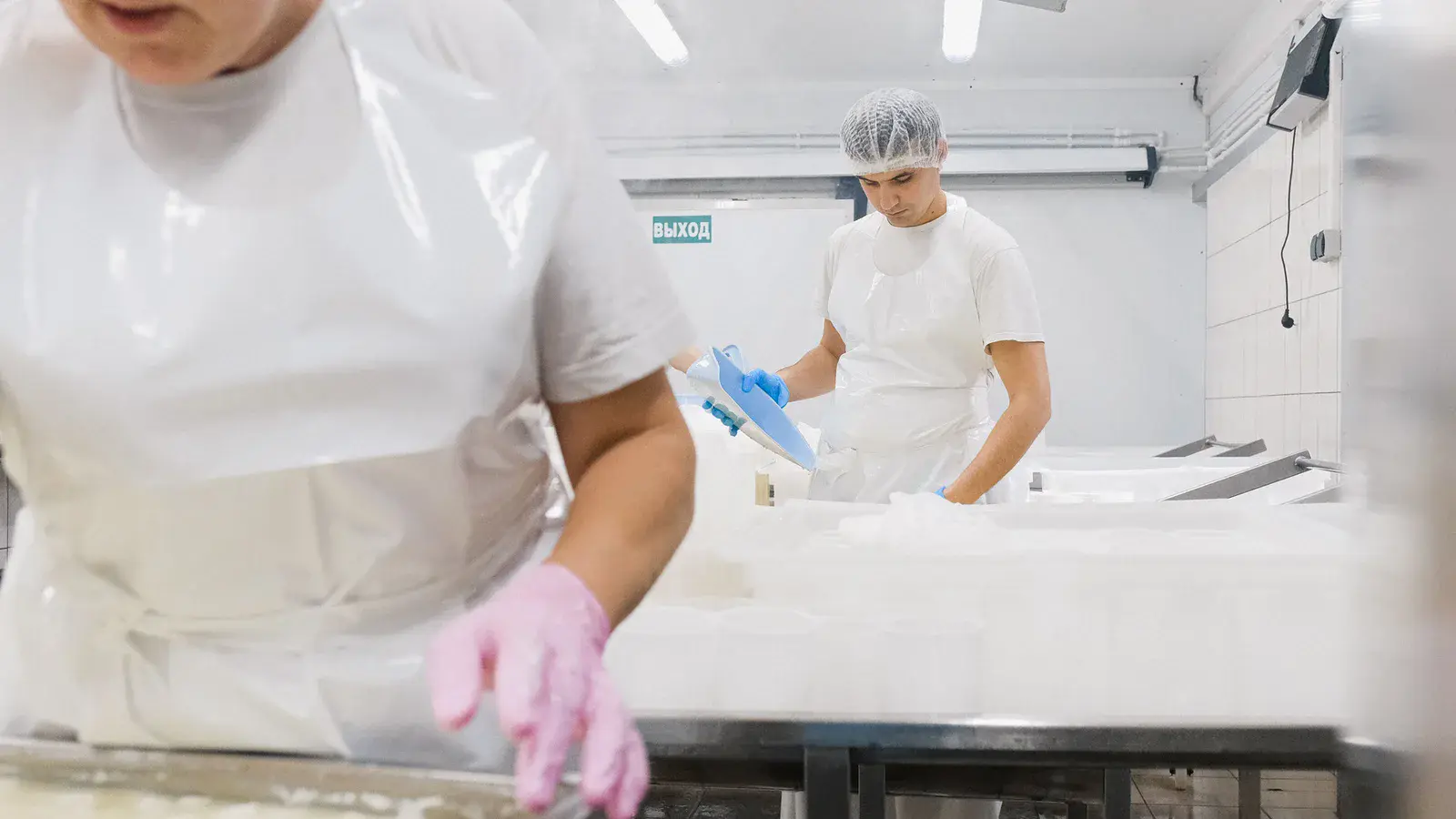
We work out these details together based on your application. Describing your facility's cleaning procedure is the most valuable information you can give us for correct material selection. Knowing which chemical is used, at what frequency and at what temperature, takes the guesswork out of seal material selection.
Extending a Stainless Cylinder's Life
Being stainless doesn't mean it can go without maintenance. Practices that extend its life:
- Surface cleaning: Chemical residue that builds up on the rod should be cleaned regularly; dried-on chemical starts localised corrosion.
- Carbon steel contact: Carbon steel parts touching the stainless surface (tools, swarf, bolts) can contaminate it and start rust.
- Wiper check: A worn rod wiper lets contamination from outside enter the system; even a stainless housing can't compensate for that.
- Leak tracking: Even the smallest leak is a serious problem in hygienic environments; early intervention is essential.
- Periodic seal renewal: Seals wear out faster in a chemical environment than in a standard one; a planned replacement schedule is the safest approach.
We can perform these checks as part of a periodic maintenance programme. For stainless cylinders running on critical lines, planned maintenance is far cheaper than unplanned downtime. And on hygienic lines, a leak isn't just a maintenance issue — it's a product-safety issue, which is why we especially recommend planned maintenance for these facilities.
Standard or Stainless? A Decision Table
Not every application needs stainless; choosing it unnecessarily is also a waste of budget. The criteria we look at when deciding:
| Operating Environment | Recommended Solution | Rationale |
|---|---|---|
| Dry, enclosed production area | Standard cylinder | Corrosion risk is low; a chrome-plated rod is sufficient |
| Humid environment, occasional washdown | Standard + good wiper, or a stainless rod | Partial protection is often enough |
| Daily washdown, food-grade cleaning | Stainless (304) | Chemical cleaning wears out a standard surface |
| Chlorinated cleaning, marine, salt air | Stainless (316) | Chlorides cause pitting corrosion even on 304 |
| Chemical vapour / acid contact | Stainless (316) + a special seal | Both housing and seal must withstand the chemical |
| Outdoor, rain and humidity | Stainless rod + a protected housing | The rod and seal area are affected most |
| High temperature + humidity | Stainless + a heat-resistant seal | Temperature becomes the deciding factor for seal material |
An intermediate solution is sometimes the right answer: a standard housing with a stainless rod, or a special coating. We evaluate options like this too — our aim isn't to sell the most expensive solution, but the one that fits your environment. Seeing the environment during the survey makes this decision much easier. Even just telling us the name of the cleaning chemical used at your facility and its application temperature is often enough to determine the right grade.
How Does Corrosion Start, and How Does It Progress?
The secret of stainless steel is a thin, invisible protective layer that forms on its surface on its own. As long as that layer stays intact, the material is protected; when it's damaged and can't renew itself, corrosion begins. The most common starting points we see in the field:
- Carbon steel contamination: Steel swarf, grinding dust or a carbon steel tool touching the stainless surface — even a small amount of contamination starts localised rust that spreads.
- Chloride buildup: Dried salt water or a chlorinated cleaning chemical concentrates on the surface and opens up pitting corrosion.
- Weld zones: Heat can damage the protective layer; if the right process isn't followed, corrosion is usually seen here first.
- Crevice corrosion: Liquid trapped in a narrow gap between two surfaces becomes oxygen-starved and speeds up corrosion.
- Mechanical damage: Scratches and impact marks make it harder for the protective layer to re-form.
Which is why "using stainless material" alone isn't enough in manufacturing — machining sequence, tool choice, post-weld cleaning and the fasteners used at assembly all need the same level of care. When we encounter a corroded stainless cylinder, these five starting points are the first thing we look at — manufacturing a new one without finding the cause just repeats the same outcome. That's why in corrosion cases we look at the environment, the cleaning procedure and installation details together, and look for the fix across the whole system, not just the cylinder.
A Maintenance Programme for the Stainless Cylinder
Being stainless doesn't mean it can go without maintenance. A cylinder working in a corrosive environment needs more regular attention than one in a standard setting. Our recommended programme:
| Frequency | Check | Why It Matters |
|---|---|---|
| Daily / start of shift | Visible leaks, rod surface cleanliness | A leak on a hygienic line can halt production |
| Weekly | Cleaning dried chemical residue | Residue starts localised corrosion |
| Weekly | Wiper condition | A worn wiper defeats even a stainless housing |
| Monthly | Scanning the surface for rust spots | Contamination caught early is easy to clean |
| Monthly | Fastener check | A loose or corroding bolt spreads corrosion |
| Periodic | Seal condition assessment | Seals wear out faster in a chemical environment |
| Periodic | Weld zone inspection | Corrosion most often starts here |
These checks take just a few minutes and need no tools. Done regularly, they catch corrosion while it's still small; advanced corrosion usually calls for part renewal.
We set up periodic maintenance agreements for stainless cylinders running on critical lines: we visit at agreed intervals, run through the checklist and report on system health. This record is especially valuable at facilities undergoing hygiene audits.
Stainless Cylinder Glossary
Let's explain the terms that come up in quotes and reports:
| Term | What It Means |
|---|---|
| AISI 304 | A general-purpose stainless grade; common for humid and food environments |
| AISI 316 | A molybdenum-alloyed grade; high resistance to chlorides and acids |
| Pitting corrosion | Localised pitting on a surface; seen in chloride environments |
| Passivation | The process of renewing a stainless surface's protective layer |
| Contamination | Carbon steel contact on a stainless surface; starts rust |
| Hard chrome plating | A hardness and corrosion coating applied to a rod's surface |
| Honing | Precision finishing of a tube's bore; determines seal life |
| Wiper | A component that stops the rod from bringing dirt and moisture in from outside |
| FKM / Viton | A seal material with high chemical and temperature resistance |
| CIP cleaning | Cleaning a line in place without disassembly; brings a chemical and heat load |
You don't need to know these terms, but we find them useful for customers who want to see what's what and why it was chosen. In our quote we state in writing which grade, which seal material and which fastener was chosen.
Technical Differences in Machining Stainless
Stainless material behaves differently from standard steel. Production that doesn't account for these differences produces parts that carry the "stainless" label but still lose out to corrosion. Points we pay attention to when machining:
- Heat management: Stainless conducts heat differently from standard steel. An overheated zone changes structure and loses corrosion resistance. Cutting speed and cooling are set accordingly.
- Tool selection: A separate tool set is used for stainless. Machining stainless with a tool that has worked carbon steel leaves surface contamination and starts rust.
- Work sequence: Stainless parts are machined in a clean environment free of carbon-steel swarf. Bench and surrounding cleanliness are critical for this work.
- Welding technique: The weld zone is the point most exposed to corrosion. The right technique and shielding gas are used.
- Post-weld processing: The oxide layer at the weld zone is cleaned and the protective layer is allowed to re-form. If this step is skipped, corrosion shows up here first.
- Surface finishing: The rod and tube bore are finished precisely for both sealing and corrosion resistance. A finish that leaves scratches or stress creates a starting point for corrosion.
These details don't appear as a separate line item on the quote, but they show up in the field within the first year. A stainless cylinder being surprisingly cheap is usually explained by one of these steps having been skipped.
Fasteners: The Weakest Link
Corrosion starts at the weakest link. Using a stainless housing and rod but leaving the fasteners standard is a common and expensive mistake.
| Component | Standard Choice | In a Stainless Application |
|---|---|---|
| Bolts and nuts | Galvanised steel | Stainless (of the appropriate grade) |
| Washers | Steel | Stainless |
| Rod eye and bearing | Standard steel | Stainless or protected |
| Fittings and hydraulic connections | Steel fitting | Stainless fitting |
| Mounting bracket | Painted steel | Stainless or protected |
| Wiper housing | Standard | Environment-resistant material |
| Labelling and marking | Adhesive | Permanent, chemical-resistant |
A single carbon steel bolt will stain the stainless surface around it, and over time the corrosion spreads. That's why our quote states in writing which component is made from which material — so you know exactly what you're buying.
The same care applies to sealing elements: a seal that isn't chemical-resistant turns even the highest-quality stainless housing into a leaking cylinder in short order. Knowing your environment's chemical and temperature lets us choose the right seal material.
Testing and Delivery: Extra Checks for Stainless
On stainless cylinders, we run a few additional checks beyond the standard tests:
- Dimensional verification: Tube bore, rod diameter, stroke and connection dimensions.
- Surface check: Any carbon steel contamination, scratches or machining marks? If contamination is suspected, surface treatment is repeated.
- Weld zone check: Was post-weld cleaning done, is there any oxide residue?
- Pressure test: A test pressure above operating pressure is applied.
- Sealing observation: Both external and internal leakage are assessed.
- Function test: Motion smoothness is checked through the full stroke.
- Fastener verification: All bolts, nuts and fittings are confirmed to be stainless.
- Protection and packaging: Special packaging to protect the surface from damage and from carbon steel contact during transport.
That last point matters: a perfectly manufactured stainless part can still become contaminated if it rubs against a carbon steel surface during shipping. That's why packaging and handling are part of the job too.
Sealing Selection: The Weak Point of Stainless
A stainless housing and rod withstand chemicals — but if the seal doesn't, the cylinder still leaks. That's why seal selection matters as much as material selection. The character of common seal materials:
| Seal Material | Strength | Limitation |
|---|---|---|
| NBR | Economical, general-purpose, good mechanical strength | Inadequate against hot water, steam and aggressive chemicals |
| Polyurethane (PU) | High wear resistance, long life | Risk of hydrolysis with hot water and some chemicals |
| FKM (Viton) | High temperature and chemical resistance | Higher cost, loses flexibility at low temperature |
| PTFE-based | Very broad chemical resistance, low friction | Low elasticity; generally used with a backing |
| EPDM | Good against hot water, steam and some cleaning chemicals | Incompatible with mineral oils — not used on the oil side |
As you can see, there's no single "best" material; the right choice has to suit both the hydraulic oil inside and the environment outside. On a food line cleaned with steam, for example, you need a material resistant to heat on the outside and compatible with oil on the inside. A choice made without balancing that dual fit turns even the highest-quality stainless housing into a leaking cylinder in short order.
Stainless Needs by Sector
Not every facility requesting stainless has the same needs. Our main areas of manufacturing in Izmir and their standout requirements:
| Sector | Environmental Challenge | Solution We Recommend |
|---|---|---|
| Food and beverage production | Daily washdown, detergent, steam | 304 housing and rod, washdown-resistant seal, cleanable layout |
| Water and wastewater treatment | Constant humidity, chlorine dosing | 316 grade, chemical-resistant sealing |
| Chemical and pharmaceutical | Acid/base vapour, spill risk | 316L, special seal material, stainless fasteners |
| Marine, port, shipyard | Salt-laden air and water | 316 grade, extra protection, corrosion tracking |
| Textile finishing | Hot humidity, chemically laden air | Heat- and chemical-resistant sealing |
| Washdown and disinfection | Pressurised water, detergent | Stainless housing, strong wiper, protected layout |
| Outdoor equipment | Rain, humidity, temperature swings | Stainless rod, protected housing — an intermediate solution may suffice |
Worth noting: not every application requires the highest grade. Using stainless in a dry production area is an unnecessary cost, while using 304 on a chlorinated cleaning line means early corrosion. Getting the level right matters for both budget and lifespan.
In some cases an intermediate solution is the right answer: a standard housing with a stainless rod, or stainless for the critical zones and protected material for the rest. Seeing the environment makes this decision much easier — the survey is free within Izmir.
Cost and Payback
A stainless solution costs more than standard manufacturing. The items that make up the difference:
- Material price: Stainless sheet, tube and rod are noticeably more expensive than standard steel. 316 costs more than 304.
- Machining difficulty: Stainless is harder to machine; tool life shortens, machine time lengthens.
- Welding and post-processing: A special technique and an extra cleaning step are required.
- Fasteners: Stainless bolts and fittings add to cost as well.
- Sealing: Chemical-resistant seal materials cost more than standard material.
Against that, here's the other side of the equation: how long does a standard cylinder last in a corrosive environment? Frequent faults, repeat service, unplanned downtime, and in hygienic facilities, the risk of stopping production altogether. Add those up, and a stainless solution is usually more economical over the medium term.
Before deciding, ask yourself: how often is this equipment renewed? How many times a year does it get serviced? The answers show how many months it takes for switching to stainless to pay for itself. We can work through that calculation together.
What We Need From You During Ordering
The information we need to determine the right stainless solution:
- Environment information: Where will it operate? Enclosed or outdoor? Humidity, temperature and chemical conditions.
- Cleaning procedure: Which chemical, at what temperature, how often is it used? This directly determines grade and seal selection.
- Is chloride present? Is salt water, sea air or a chlorinated cleaning product used? If yes, 316 is required.
- Dimensions: Bore, stroke, connection type and rod end. A sample is enough if you have one.
- Force and pressure: System pressure and required force.
- Hygiene requirements: Are you subject to audits? What points were flagged previously?
- Cycling and usage: How many motions per day, how many hours of operation?
Cleaning-procedure information in particular is invaluable: telling us the name of the chemical you use and its application temperature takes the guesswork out of seal material selection. If you operate at an audited facility, knowing what points the auditor has flagged before also directly improves the design.
Stainless Hydraulic Solutions in Izmir
Our workshop is at Mersinli Mah. 2843 Sk. No:15, Konak / İzmir, in the Mersinli industrial district of Konak. We serve production facilities in Kemalpaşa and Torbalı, where food and beverage plants are concentrated; Aliağa, home to chemical and petrochemical facilities; Çiğli OIZ, the hub of organised industry; shipyard and port areas; and Bornova, Işıkkent and Pınarbaşı.
Stainless applications come up constantly in Izmir's industry, closely tied as it is to food, treatment and marine sectors. The common problem for businesses operating in these environments is that standard equipment wears out early and needs frequent service. A stainless cylinder made from the right material looks like a somewhat larger initial investment, but it noticeably cuts service frequency and downtime.
If your stainless needs go beyond the cylinder, take a look at our stainless hydraulic power unit page for the system's power source too. Having the cylinder and unit come out of the same workshop is also an advantage for material compatibility. When the same team designs both, material grade, fasteners and seal selection are aligned from the outset, avoiding the problems that crop up when parts from different suppliers corrode each other.
Frequently Asked Questions
How much more expensive is a stainless cylinder than a standard one?
It's higher due to material cost and machining difficulty; the difference varies with the grade chosen (304/316) and the size. But when you factor in a standard cylinder's frequent faults and downtime cost in a corrosive environment, a stainless solution is often more economical overall.
Should I get 304 or 316?
If chlorides are present — marine settings, salt water, chlorinated cleaning chemicals — 316 should be preferred. For general humidity and standard food-grade cleaning, 304 is sufficient for most applications. Tell us your facility's actual conditions and we'll decide together.
My existing stainless cylinder has corroded — is that possible?
Yes, it's possible. The cause is usually the wrong grade selection, carbon steel contamination, degradation of the protective layer at a weld zone, or an environment more aggressive than expected. We inspect it, identify the cause and recommend the right fix.
Can my stainless cylinder be repaired, or does it need to be new?
If the housing and rod are salvageable, overhaul is preferred; with surface treatment and a new seal set, the cylinder gets a long second life. If corrosion has gone deep and pitting has advanced, new manufacturing is the right call. The decision is made after teardown and measurement.
I'll be using it in a food facility — are there special requirements?
Beyond material grade, cleanability, washdown durability and the right seal selection stand out. Describing your facility's cleaning procedure (chemical, temperature, frequency) is the most valuable information you can give us for the right design.
Do you also manufacture stainless pistons?
Yes. Stainless hydraulic piston manufacturing, repair and overhaul are part of our services. In most faults it's just the piston group that needs renewing, not the whole cylinder — a fast, economical fix.
I have a sample cylinder — can you build an exact match?
Yes. We disassemble the sample, take every measurement, and manufacture an equivalent in the appropriate stainless grade. Mounting dimensions are preserved, so your machine needs no changes.
What is carbon steel contamination, and how is it prevented?
Steel swarf, grinding dust or a carbon steel tool touching a stainless surface leaves contamination that starts rust. To prevent it, stainless parts are machined with dedicated tools in a clean environment; tools like wire brushes need to be kept separate for stainless work.
Can I clean my stainless cylinder with a wire brush?
Don't use a carbon steel wire brush — it permanently contaminates the surface and starts rust spots. Use a brush set aside for stainless, or an appropriate cleaning method.
Is an intermediate solution possible — does everything have to be stainless?
It depends on how harsh the environment is. In lightly humid settings, a stainless rod with the right seal may be enough, with the housing staying standard. But if there's chlorinated cleaning or salt air, the whole system — bolts included — should be stainless.
How long is the lead time?
Sourcing stainless material can take a little longer than standard steel. It varies with size and grade, but the lead time is confirmed once the survey and material check are done. Let us know if it's urgent and we'll plan accordingly.
Can I have just the rod made stainless?
Yes, this is a commonly chosen intermediate solution. The rod and seal area is usually the section most exposed to corrosion; where the housing is protected, a stainless rod with the right seal set is often sufficient. We can tell you what level is needed once we've seen the environment.

İsmail Çevik is the founding partner of ÇevikSan. This content was prepared based on our workshop's hands-on manufacturing, repair and overhaul experience with hydraulic and pneumatic cylinders.
Last updated: August 27, 2026