
In Short
- The wrong grade choice means either wasted cost or early corrosion. What happens when chloride is present, and what's enough for a food facility?
- Topics covered in this article: What Makes Stainless Steel Stainless?, The Difference Between 304 and 316, Types of Corrosion Seen in Stainless Steel, Which Grade for Which Environment?, Stainless in Hydraulic Applications.
- Our services related to this topic: Paslanmaz Hidrolik Silindir, Paslanmaz Hidrolik Ünite.
- On-site inspection is free within and around Izmir; a firm quote follows measurement.
In This Article9 sections
What Makes Stainless Steel Stainless?
The secret of stainless steel is an extremely thin, invisible protective layer that forms on its surface on its own. That layer forms thanks to the chromium in the material, and renews itself on contact with air.
Two important consequences follow from this:
- If the layer is damaged but conditions allow it to renew, the material keeps protecting itself.
- If the layer is damaged and can't renew (an oxygen-starved environment, sustained chemical attack, contamination from carbon steel), corrosion begins and spreads.
In other words, "stainless" isn't absolute protection — the right grade needs to be chosen for the environment and processed correctly. Nearly every "stainless that rusted" case we see on site comes down to one of these two issues.
The Difference Between 304 and 316
The two grades most widely used in industry, and the key difference between them, is molybdenum:
| Property | AISI 304 | AISI 316 / 316L |
|---|---|---|
| Core difference | Chromium-nickel alloy | Chromium-nickel + molybdenum |
| General corrosion resistance | Good | Very good |
| Chloride resistance | Limited | High |
| Acid resistance | Moderate | High |
| Marine environment | Not suitable | Suitable |
| Cost | More economical | Higher |
| Typical use | Food production, humid interiors | Marine, chemical, water treatment, chlorinated |
Molybdenum specifically boosts resistance to pitting corrosion. This is critical in chloride-containing environments: seawater, salt air, chlorinated cleaning chemicals.
The "L" in 316L stands for low carbon; it reduces the risk of post-weld corrosion. It's preferred on parts with extensive welding.
Types of Corrosion Seen in Stainless Steel
Corrosion in stainless steel shows up differently from ordinary rusting:
- Pitting corrosion: localised pits on the surface. Seen in chloride environments. It looks small but goes deep and can eventually perforate the material.
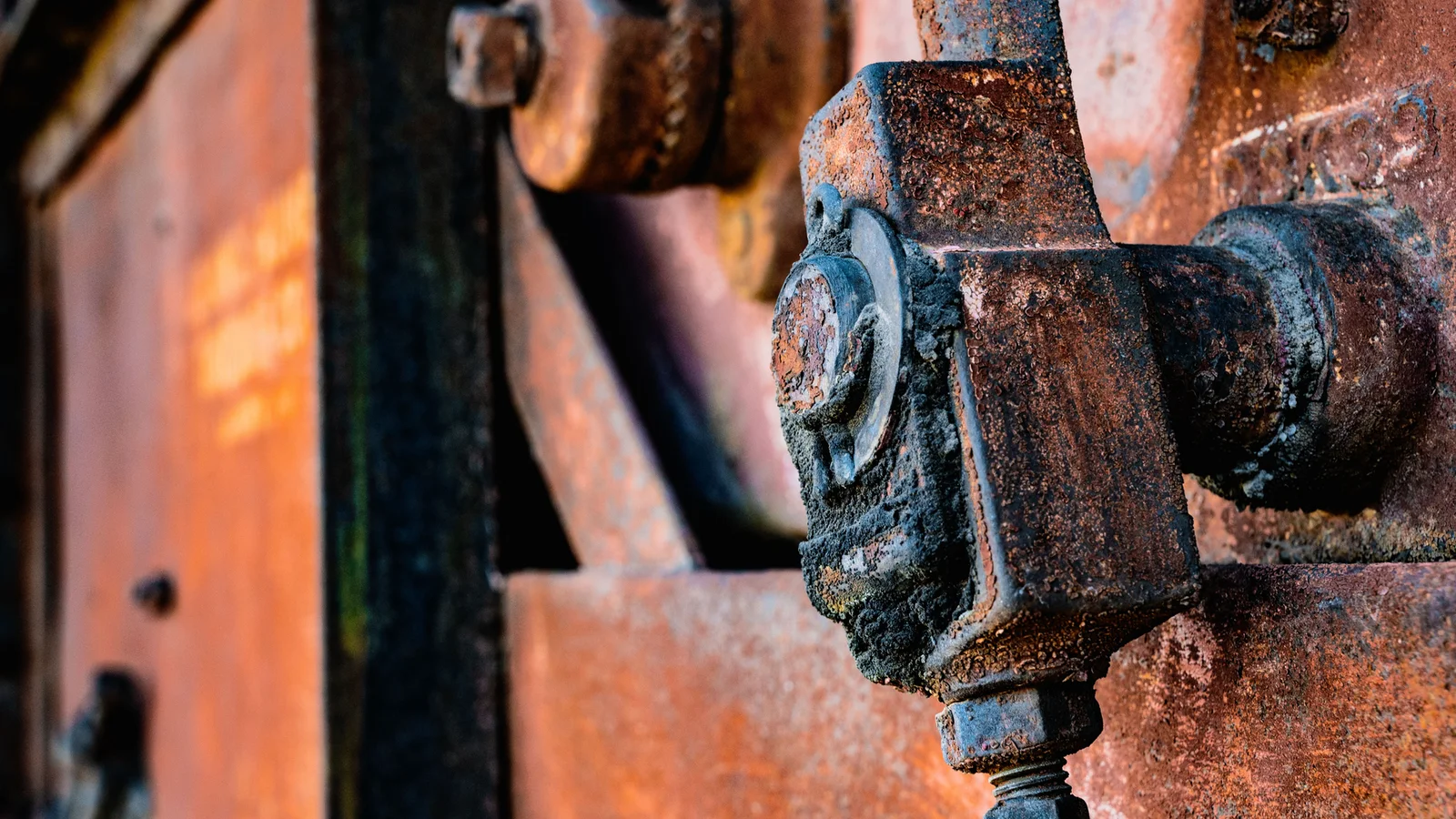
- Crevice corrosion: liquid trapped in a narrow gap between two surfaces goes oxygen-starved, and the protective layer can't renew. Under gaskets, under bolt heads, between overlapping sheets are typical spots.
- Contamination rust: carbon steel chips, grinding dust or tool marks touching a stainless surface; even a small contamination starts a rust stain and it spreads.
- Weld-zone corrosion: heat changes the structure; without proper post-weld treatment, corrosion shows up here first.
- Stress corrosion: cracking that forms in a stressed part exposed to an unsuitable environment.
Which Grade for Which Environment?
The criteria we look at when deciding:
| Working Environment | Recommended Grade | Reasoning |
|---|---|---|
| Dry, enclosed production area | Standard steel may be enough | Corrosion risk is low; stainless is unnecessary cost |
| Damp environment, occasional washdown | 304 | General moisture resistance is enough |
| Food production, daily washdown | 304 | Withstands standard cleaning chemicals |
| Line with chlorinated cleaning | 316 | Chloride causes pitting corrosion in 304 |
| Marine, port, shipyard | 316 | Salt air is one of the most aggressive environments |
| Chemical and pharmaceutical plant | 316 / 316L | Requires acid and chemical vapour resistance |
| Water and wastewater treatment | 316 | Chlorine dosing and constant moisture |
| High temperature + moisture | 316 + suitable seal | Temperature accelerates corrosion |
The general rule: if chloride is present, use 316. Otherwise, 304 is sufficient for most applications and offers a cost advantage. If you're not sure, describe the environment and we'll decide together.
Stainless in Hydraulic Applications
In a stainless hydraulic cylinder or unit, the job isn't done once you've picked the material. Because corrosion starts at the weakest link, the whole system needs to be evaluated the same way:
- Body and rod: the right stainless grade is chosen.
- Fasteners: bolts, nuts, washers should also be stainless. A single carbon-steel bolt will stain the stainless surface around it too.
- Sealing: seals resistant to the ambient chemical and temperature are chosen. The wrong seal makes a stainless body pointless.
- Post-weld treatment: the weld zone's protective layer needs to be renewed.
- Machining order: stainless parts need to be machined so they don't pick up contamination from a machine that also cuts carbon steel.
These details don't show up in the quoted price, but they show up in the field within the first year. In our manufacturing, these aren't negotiable — we specify in writing which component is made of which material in the quote.
Maintaining Stainless Equipment
Being stainless doesn't mean it can go without maintenance. Practices that extend its life:
- Surface cleaning: dried chemical residue starts localised corrosion; regular rinsing matters.
- Avoid contact with carbon steel: don't let steel chips, tools or wire brushes touch the stainless surface. Use dedicated tools for stainless.
- Wiper check: once the rod wiper wears out, ambient contamination gets in; a stainless body doesn't compensate for that.
- Leak tracking: in hygienic environments, even the smallest leak is a serious problem.
- Scheduled seal renewal: in a chemical environment, seals wear out faster than in a standard one.
Checklist for Stainless Equipment
A simple checklist to assess the condition of your stainless equipment:
- Are there rust stains on the surface? If so, where matters: at a weld zone, around a bolt, on a flat surface? Location points to the cause.
- What does the stain look like? A surface-level orange stain is usually contamination and can be cleaned off. Localised pitting is more serious.
- Are the fasteners stainless? Check bolts, nuts and washers. If they're carbon steel, corrosion may be spreading from there.
- What do the weld zones look like? Discoloration or oxide residue indicates post-weld treatment was skipped or incomplete.
- Is chemical residue building up? Areas not rinsed after cleaning are where corrosion starts.
- Is there contact with carbon steel? Is there a bench, shelf or tool nearby that produces steel chips?
- Has the cleaning chemical changed? A change in cleaning product is a common cause of new corrosion problems.
This check takes five minutes and gives you a quick sense of how serious the problem is. Surface contamination caught early can be cleaned and the protective layer renewed; advanced pitting corrosion generally requires replacing the part.
Common Mistakes
- "We bought stainless, nothing can go wrong" complacency: if the wrong grade was chosen or it's not maintained, stainless degrades too.
- Only making the body stainless: if the bolts stay carbon steel, corrosion starts there.
- Skipping the seal material: a seal that can't withstand the chemical turns even the best stainless body into a leaking cylinder.
- Cheap welding workmanship: if the weld zone isn't processed correctly, corrosion starts there first.
- Using carbon-steel tools: a single wire brush can permanently contaminate the surface.
If your stainless equipment has corroded, don't order a replacement before finding out why — the same thing will happen again. Let's inspect it and identify the root cause: 0553 608 69 10
Frequently Asked Questions
What's the price difference between 304 and 316?
316 costs more because it contains molybdenum; the difference varies with part size and market conditions. But using 304 in a chloride environment costs far more in early replacement and downtime.
My stainless equipment corroded — was the grade wrong?
Not always. The most common causes are: a grade unsuited to the environment, carbon-steel contamination, a compromised protective layer at a weld zone, and dried chemical residue. Blaming the grade without an inspection isn't accurate.
Is 304 enough for my food facility?
Generally yes, for standard food-grade cleaning. But if you use chlorinated disinfectant or process salted products, 316 is safer. Telling us the name of the chemical you use is usually enough for us to determine the right grade.
Can I just have the rod made stainless?
In some applications, yes — the area most exposed to corrosion is usually the rod and seal area. Where the body is otherwise protected, a stainless rod with the right seal set can be enough. We'll look at the environment and tell you what level is needed.
Can rust stains on a stainless surface be cleaned off?
Stains from surface contamination can be cleaned with the right method and the protective layer renewed. But if pitting corrosion has gone deep, cleaning won't be enough — the part's condition needs to be measured before deciding.
Our Services on This Topic
More From the Guide

İsmail Çevik is the founding partner of ÇevikSan. This content was prepared based on our workshop's hands-on manufacturing, repair and overhaul experience with hydraulic and pneumatic cylinders.
Last updated: August 27, 2026