
Summary
- Our Hydraulic Cylinder Repair & Overhaul service covers Izmir and the surrounding region; site surveys and fault diagnosis are free.
- We provide a firm quote after removal and measurement; no work starts without your approval.
- Manufacturing and repair are done in the same workshop — we produce equivalent replacements for parts that are no longer available.
- Every part is pressure-tested before delivery; workmanship is guaranteed.
- Topics covered on this page: Hydraulic Cylinder Repair and Overhaul in Izmir, Warning Signs: What Is Your Cylinder Telling You?, Repair, Overhaul, or a New One?, Our Overhaul Process: From Teardown to Pressure Test, Hydraulic Piston Repair and Rod Renewal.
Table of Contents21 sections
- Hydraulic Cylinder Repair and Overhaul in Izmir
- Warning Signs: What Is Your Cylinder Telling You?
- Repair, Overhaul, or a New One?
- Our Overhaul Process: From Teardown to Pressure Test
- Hydraulic Piston Repair and Rod Renewal
- Heavy Equipment Hydraulic Cylinder Repair
- Stopping the Repeat: Root-Cause Analysis
- Diagnosis: Internal Leak or External Leak?
- Surface Work: The Step That Determines How Long an Overhaul Lasts
- Seal Selection: Same Size, Different Material
- On-Site Service or Workshop?
- If Temperature Isn't Controlled, the System Runs Away
- Wear and Service by Industry
- Emergency Service: When Your Line Is Down
- After the Overhaul: Guarantee, Report and Follow-Up
- Before You Call for Service: An 8-Step Check
- Terms Used in Service Reports
- What Determines Overhaul Cost?
- The Cost of Hydraulic Leaks to Your Business
- On-Site Hydraulic Service Across All of Izmir
- Frequently Asked Questions
Hydraulic Cylinder Repair and Overhaul in Izmir
Hydraulic cylinder repair starts wherever production has stopped. A cylinder leaking oil, a press platen dropping, a piece of heavy equipment's arm losing force — they all lead to the same outcome: the machine isn't running, and the job is falling behind. At ÇevikSan we carry out hydraulic cylinder repair, overhaul and rod renewal at our Mersinli workshop. We don't charge a survey fee — call us, let our team come to your machine, diagnose the fault on site and give you a firm quote.
In hydraulics, a rushed decision gets expensive fast. A "it's leaking, let's change the seal" approach that ignores the underlying cause — a scored tube, a rod running out of true, dirty oil — sends the cylinder back to the bench a few months later. Our approach to overhaul looks at the root cause: the cylinder is fully stripped down, every surface is measured, what needs doing is reported, and work only starts after your approval. If the damage is beyond repair, we say so plainly and put new cylinder manufacturing on the table with its price.
Warning Signs: What Is Your Cylinder Telling You?
Hydraulic cylinders give warning before they fail. Reading those warnings is the difference between a small overhaul and a major shutdown:
- Oil weeping from the rod: The rod seal has failed, or the rod surface is scored. The most common and most visible fault.
- Drift under load: If the cylinder can't hold its position and the load slowly settles, the piston seal is leaking internally. A safety risk on lifting systems.
- Loss of force: Can't do the old job at the same pressure — a sign of an internal leak or a pump problem.
- Jerky, stuttering motion: Air in the system, dirty oil, or bearing wear.
- Scoring, bending, or flaking chrome on the rod: Side load, impact or corrosion; if it progresses, it cuts the seal and opens new leaks.
- Leak from the base of the cap: An O-ring or cap-connection problem.
- Abnormal noise and overheating: Internal friction, an oil leak, or wrong pressure.
Continuing to run with any of these symptoms usually multiplies the eventual repair cost — a scored rod only needs a new seal at first, but left unattended it takes the tube with it. Acting early is always the cheaper option. If you're not sure about a symptom, don't push it — send us a photo and we'll do an initial assessment over the phone.
Repair, Overhaul, or a New One?
A decision made without disassembling the cylinder is a guess. After measurement, one of three paths is recommended:
| Situation | Work Done | Result |
|---|---|---|
| Only the seal group has failed | Sealing set replacement + testing | Fast, economical fix; cylinder can go back the same day |
| Rod scored / chrome flaking | Rod grinding or new rod + seal set | The body is kept; a long second life for the cylinder |
| Scoring or ovality inside the tube | Honing; a new body if that doesn't recover it | Surface corrected, seal life returns to normal |
| Bearing/bushing wear, run-out | Bearing renewal, cap machining | Rod re-centred, repeat seal failures stop |
| Cap or weld crack | New manufacturing recommended | Safety under pressure; a repair here won't hold |
| Part unavailable | Equivalent part or complete new cylinder | No more waiting on imported parts |
Our definition of overhaul is clear: the cylinder is fully stripped down, every worn element is renewed, surfaces are machined, and the cylinder is delivered after pressure testing. In other words, it's not "we changed the seal" — it's "we renewed the cylinder."
Our Overhaul Process: From Teardown to Pressure Test
Every hydraulic cylinder that comes into our workshop follows the same discipline:
- Intake and complaint record: Which machine the cylinder came from, what conditions it worked under, and the fault symptoms are recorded.
- Teardown: The cylinder is safely disassembled; the oil inside is drained, parts are cleaned.
- Measurement and damage assessment: Bore diameter, rod diameter and run-out, piston dimensions, bearing clearances are measured. Damage is photographed.
- Report and quote: What will be done, which parts will be replaced, and the cost are communicated clearly. No work happens without your approval.
- Machining: Tube honing, rod grinding/chrome plating, cap machining, and manufacturing any needed parts in-house.
- New sealing group: A seal, wiper and O-ring set matched to working pressure, temperature and oil type is fitted.
- Assembly and pressure test: The cylinder is assembled; sealing, stroke and smoothness of motion are verified at test pressure.
- Painting and delivery: The cylinder is painted for protection and delivered tested. On-site installation is available.
We give priority to businesses with a stopped line. Tell us it's urgent and let's talk lead time plainly: 0553 608 69 10
Hydraulic Piston Repair and Rod Renewal
Hydraulic piston repair is at the heart of an overhaul — force loss and drift under load usually trace back to the piston group. What we do here:
- Piston seal and guide band replacement: The key fix for internal leaks; material is selected for pressure and speed.
- Piston body inspection/manufacturing: A piston that's out of tolerance or damaged is machined or remade.
- Rod grinding: Surface scoring can often be recovered by grinding the rod.
- Hard-chrome replating: Rods with flaking chrome are replated, recovering corrosion and wear resistance.
- New rod manufacturing: For bent or deeply damaged rods, a new one is made to the exact dimension.
- Rod seal and wiper: The elements that stop external leakage and keep out dirt are renewed.
The quality of critical materials like the rod and tube determines the outcome of the job; we've written up our approach on the chrome-plated shafts and honed tubes page.
Heavy Equipment Hydraulic Cylinder Repair
Heavy-equipment cylinders live a different life from industrial ones: dust, mud, impact, outdoor exposure and heavy loads. We provide regular service in Izmir for excavators, loaders, forklifts, cranes, dump trucks and agricultural machinery.
The faults we see most often on these machines, and how we fix them:
| Fault | Cause | Our Fix |
|---|---|---|
| Oil leaking from boom/arm | Rod seal and wiper worn out | Full seal set + rod surface inspection |
| Bucket drops under load | Piston seal internal leak | Piston group overhaul + pressure test |
| Rod bent / scored | Impact, side load, stone strike | Straightening, grinding/chrome, or new rod manufacturing |
| Cylinder body dented | Impact damage | Dimensional check; new body if it can't be recovered |
| Clevis/bushing play | Wear | Bushing renewal, ear machining and weld repair if needed |
| Motion slow, weak | May be a pump or valve issue | System check; pump repair if needed |
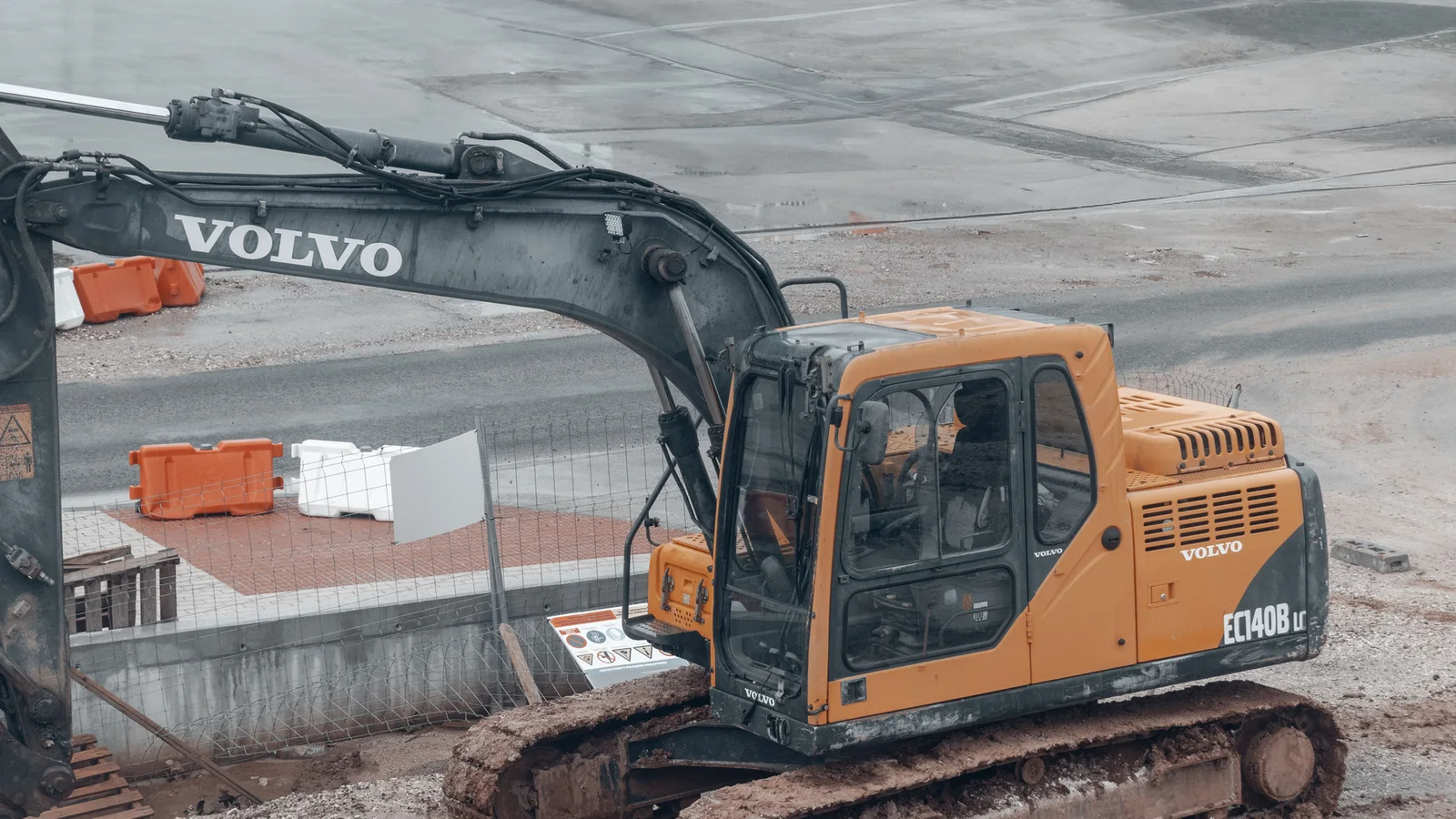
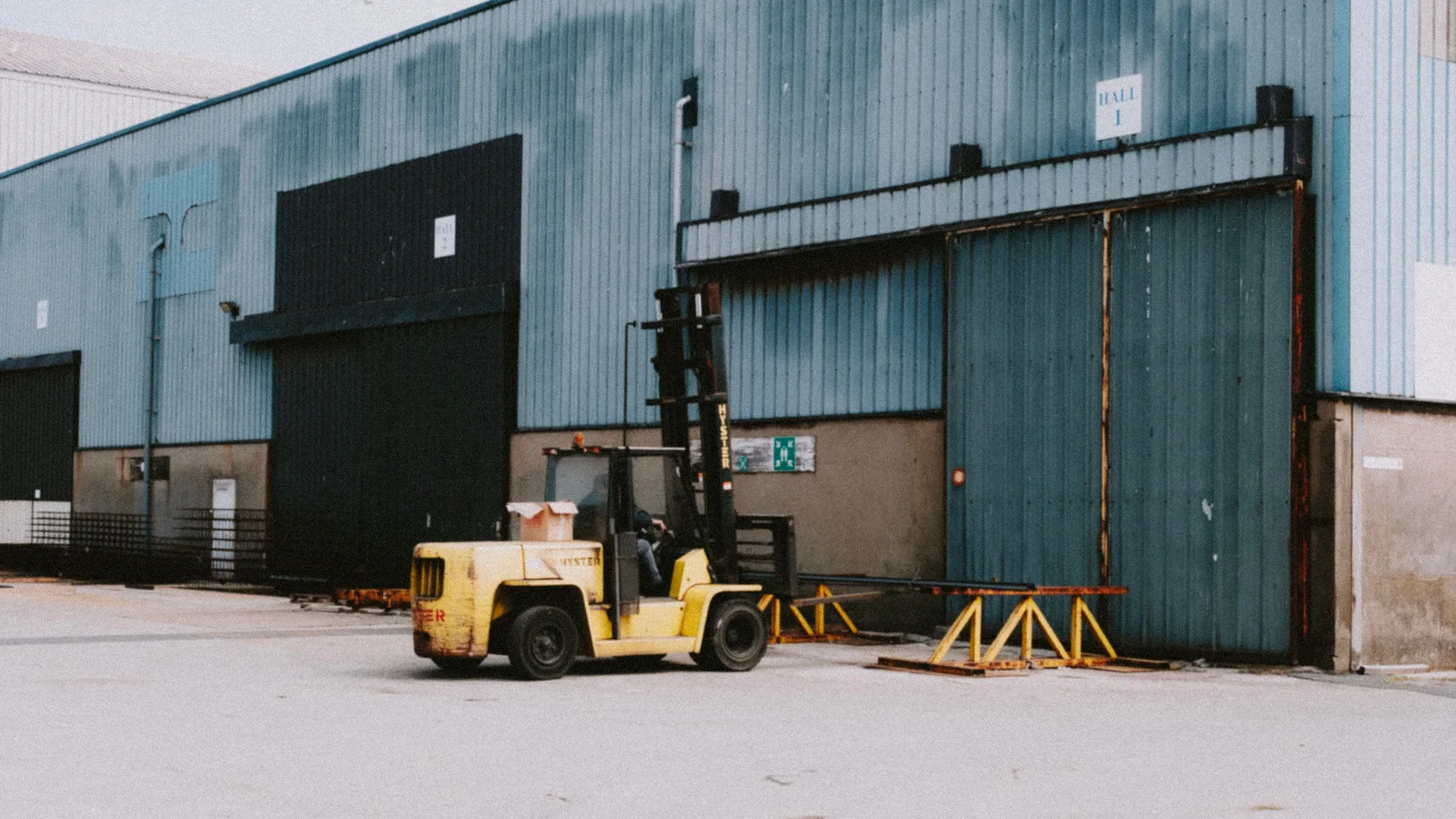
If the fault turns out to be in the pump or valve rather than the cylinder, we'll tell you — we don't have you replace parts unnecessarily. For pump and press-side work, see our hydraulic press, injection and pump repair page.
Stopping the Repeat: Root-Cause Analysis
Repairing a cylinder is the easy part; the craft is making sure the same fault doesn't come back in six months. That's why our overhaul report always includes a root-cause assessment. The root causes we see most often, and their fixes:
- Dirty or degraded oil: Contamination is hydraulics' number-one enemy. Particulates in the oil cut the seal and score the tube. Fix: oil and filter maintenance, tank cleaning.
- Excess heat: High temperature destroys the oil's protective properties, hardens seals, and increases leaks. Fix: cooling checks, correct oil selection.
- Installation misalignment: A rod carrying side load wears out the seal and bearing early. Fix: clevis-type connection and alignment correction.
- Wrong sizing: An undersized rod diameter or too-small a cylinder is constantly overstressed. Fix: a properly sized new cylinder.
- Dust and outside contamination: A cylinder with a worn wiper draws in dirt. Fix: a suitable wiper and, if needed, a bellows guard.
- Pressure set too high: If the relief valve is set above spec, the whole system is overstressed. Fix: correcting the system pressure setting.
If the root cause is structural, we say so plainly. Repairing the same cylinder every six months might look like it's in our interest — but we'd rather deliver a lasting fix and an ongoing relationship.
Diagnosis: Internal Leak or External Leak?
The first step in diagnosing a hydraulic cylinder is identifying the type of leak. The two lead to completely different outcomes and need different fixes:
| Symptom | Leak Type | What It Means |
|---|---|---|
| Wetness on the rod, drips on the floor | External leak | Rod seal has failed, or the rod surface is damaged |
| Leak from the base of the cap | External leak | Cap O-ring or connection issue |
| Slow drift under load | Internal leak | Piston seal is passing oil to the other chamber |
| Force is low at the same pressure | Internal leak | Piston seal or bore surface is worn |
| System is overheating | Internal leak | The energy of the leaking oil is turning to heat |
| Oil level dropping | External leak | Oil is escaping somewhere in the system |
| Jerky / stuttering motion | Not a leak | Air, contamination or bearing wear in the system |
A practical test: stop the cylinder in mid-stroke and close off both lines. If the piston slowly drifts, there's an internal leak. Another method: hold the cylinder at end of stroke and apply pressure — if oil keeps coming from the return line, that's an internal leak too.
In the workshop we run these tests with measuring equipment and can quantify the leak rate too. That way we're not just answering "is it leaking" but "how much, and is that acceptable?"
Surface Work: The Step That Determines How Long an Overhaul Lasts
The most often-skipped, highest-impact stage of an overhaul is surface work. Just replacing the seal doesn't remove what killed it in the first place. The surface treatments we apply:
- Tube honing: Light scoring on the inner surface is removed, and dimensional precision and an oil-film-retaining texture are restored. It has limits: honing enlarges the bore slightly, and past a certain point seal fit is compromised.
- Rod grinding: Surface-scored rods can be recovered by grinding. This reduces the rod diameter slightly; a matching seal size needs to be chosen.
- Hard-chrome replating: Rods with flaking chrome are replated, recovering both wear and corrosion resistance.
- Rod straightening: Light bends can be straightened; if the bend is beyond that limit, straightening won't hold and a new rod is needed.
- Cap and bearing machining: Worn bearing bores are machined and a new bushing fitted. This is usually where run-out originates.
- Piston machining: A piston that's out of tolerance or has damaged seal grooves is machined or remade.
Which of these is needed is determined by measurement. Saying "we'll just hone it, should be fine" without measuring first isn't right — every surface has a limit past which it can't be recovered. We share the measurement results and options openly, and flag the risk on parts that are right at the recovery limit.
Seal Selection: Same Size, Different Material
In an overhaul, the material of the seal is as decisive as its size. Two seals of the same size but different material can give very different service lives in the same cylinder:
| Material | Strength | Limitation | Suited To |
|---|---|---|---|
| NBR | Economical, good mechanical durability, compatible with mineral oil | Falls short at high temperature and with aggressive chemicals | General industrial applications |
| Polyurethane (PU) | Very high wear resistance, long service life | Hydrolysis risk in hot water | Heavy cycling, high pressure |
| FKM (Viton) | High temperature and broad chemical resistance | Higher cost, hardens at low temperature | Foundry, glass, chemical environments |
| PTFE-based | Very low friction, broad chemical resistance | Lower elasticity, used with backup rings | Precision motion, special applications |
| Fabric-reinforced | High pressure resistance, extrusion resistance | Cost and availability | Very high-pressure systems |
"Just fit the same one" often isn't the right answer. If the original seal failed early, it may not have suited the environment. That's why, before starting an overhaul, we ask about the cylinder's working conditions: oil type, temperature, pressure, cycle count and environmental conditions.
That few-minutes-long conversation determines how many years the overhaul lasts. Sharing that information costs you nothing, but it pays off directly.
On-Site Service or Workshop?
Not every job has to be brought into the workshop. Here's which is right for which situation:
| Situation | Where It's Done | Reason |
|---|---|---|
| Fault diagnosis and measurement | On site | Needs to see how the machine actually behaves |
| Hose, fitting, gasket replacement | On site | No teardown needed, quick turnaround |
| Pressure setting and valve check | On site | Done while the system is running |
| Leak survey | On site | Requires observation on the line |
| Cylinder overhaul | Workshop | Requires teardown, measurement and surface-machining equipment |
| Rod manufacturing or chrome plating | Workshop | Machining and plating work |
| Tube honing | Workshop | Requires specialist equipment |
| Pressure testing | Workshop | Requires test rig equipment |
On-site service is especially valuable for large equipment that can't be moved — heavy machinery, presses, fixed machine tools. Our team diagnoses the fault on site; if it needs the workshop, we remove the cylinder, take it in, carry out the overhaul and refit it. We manage the removal, transport and installation — your team doesn't need to be tied up.
The survey is free within Izmir. That applies even if you decide not to work with us in the end: if you don't accept our quote after the assessment, we don't charge anything.
If Temperature Isn't Controlled, the System Runs Away
In hydraulic systems, excess heat is a quiet failure cause that most businesses notice late. As oil temperature climbs, a chain of effects follows:
- Oil life shortens: High temperature degrades the oil; its lubrication and protective properties drop, and oxidation byproducts build up in the system.
- Part wear increases: Metals expand, tolerances shift, friction and wear accelerate.
- Efficiency drops: Thinner oil increases internal leaks; the system uses more energy to do the same job.
- Sealing elements harden: Gaskets and seals lose their flexibility, oil leaks begin, and the system gets dirtier.
- Downtime increases: Unexpected faults translate into lost production and higher costs.
If a cylinder arrives for overhaul with hardened, burnt-looking gaskets, we know the problem is bigger than the cylinder itself. In that case we look at the whole system — cooler, oil level, filter condition and pressure settings. You can use our free survey for heat problems too — getting temperature under control directly extends the life of your cylinders.
Wear and Service by Industry
The same fault can have a different cause — and need a different fix — depending on the industry. Here are the areas we serve in Izmir and the leading wear factor in each:
| Industry | What Wears the Cylinder | Our Service Approach |
|---|---|---|
| Hydraulic press shops | High cycle counts, full load, end-of-stroke impact | Cushioning checks, robust seal choice, safety-element testing |
| Plastic injection | Continuous duty, high temperature | Heat-resistant sealing, filtration checks |
| Heavy equipment | Impact, dust, mud, outdoor conditions | Reinforced wiper, rod surface repair, protection recommendations |
| Marble and natural stone | Water, abrasive slurry | Corrosion checks, frequent wiper renewal |
| Recycling facilities | Continuous high load, dirty environment | Heavy-duty seal set, bearing checks |
| Agricultural machinery | Seasonal use, idle periods, moisture | Corrosion repair, pre-season checks |
| Shipyard and port | Salt air, constant humidity | Stainless solutions, special coating |
| Food facilities | Washdown, cleaning chemicals | Chemical-resistant seals, stainless parts |
This table shows something important: a seal in a food plant might fail from chemical exposure, while the same seal in a foundry gets cut by metal dust. Fitting the same seal in both cases works in one and not the other.
That's why we always ask where and how the cylinder operates before starting an overhaul. Sharing your industry and any special conditions directly determines how long the overhaul lasts.
Emergency Service: When Your Line Is Down
A stopped line is a loss you can measure by the hour. We prioritise urgent jobs; here's what we ask of you to speed up the process:
- Tell us it's urgent: Say "the line is down" when you call; we plan around it.
- Send a photo: An overall shot of the cylinder, the label, and the damaged area. Often enough for a preliminary assessment.
- Share machine details: Which machine, what job it does, when and how the fault started.
- System information: Working pressure, oil type, and the date of the last maintenance.
- Bring it in if you can: If the cylinder is easy to remove, bringing it to the workshop is the fastest route.
For businesses running critical lines, our recommendation is this: keep a spare on hand for whichever cylinder fails most often, or is most expensive when it's down. When a fault happens, swap in the spare and take your time overhauling the failed one properly. This approach eliminates both downtime and emergency-service costs.
We offer planning support for spares too: we can work out together, based on criticality and lead time, which cylinders are worth keeping a spare for.
After the Overhaul: Guarantee, Report and Follow-Up
Every cylinder we deliver is covered by a workmanship guarantee. But more important than the guarantee is making sure the fault doesn't come back. We do three things on every overhaul:
- Root-cause report: What actually caused the cylinder's condition — dirty oil, misalignment, excess heat, wrong sizing? We report it in writing.
- Recommendation list: What should be done to prevent a repeat. Acting on it is up to you — but we don't want you operating with a risk you don't know about.
- Records: We keep track of what was done to which cylinder and when. On the next fault, that history shortens diagnosis time.
The same cylinder coming back to the bench every six months means, to us, an unsolved problem too. Sometimes the lasting fix isn't an overhaul at all but a properly sized new cylinder — we won't hesitate to say so.
With businesses we work with regularly, there's an extra benefit: because we know the system, we can often talk you through a fix over the phone. That's a closeness a distant supplier can't offer, and it's a deliberate reason why we focus on Izmir.
Before You Call for Service: An 8-Step Check
Some faults can be solved, or at least narrowed down, with a few minutes of checking. Checks your own team can run before calling for service:
- Read the oil level: A low level is both a sign of a leak and a strain on the pump. If the level is dropping, oil is escaping somewhere in the system.
- Check the oil's condition: Thickened, burnt-smelling, or milky-cloudy oil is a warning sign.
- Check the filter gauge: If there's a contamination indicator, read it; otherwise check the last change date.
- Measure the pressure: Does the gauge show the expected value? If it's low, the problem may not be the cylinder.
- Observe the temperature: Is the tank or the lines hotter than normal? Which section runs hottest?
- Visual leak check: Rod, cap joints, fittings and hoses. Any drips on the floor?
- Drift-under-load test: Stop the cylinder in a loaded position and watch it. If it drifts, there's an internal leak.
- Check the mechanical load: The mechanism the cylinder drives may have jammed — the problem might not be hydraulic at all, but in the machine.
These eight steps narrow down the source of a large share of faults. If you can't get anywhere, get in touch — telling us what you've already checked meaningfully shortens diagnosis time.
Important safety warning: Don't touch a pressurised hydraulic line. The system must be depressurised, the load mechanically secured, and no one should be in the cylinder's range of motion. Disconnecting a fitting under pressure can cause serious injury.
Terms Used in Service Reports
We try to write our reports in plain language, but some technical terms are unavoidable:
| Term | What It Means |
|---|---|
| Internal leak | Oil passing from one side of the piston to the other; causes force loss and heat |
| External leak | Oil escaping outside the cylinder; visible, causes contamination |
| Drift | The cylinder slowly slipping under load; a sign of internal leakage |
| Honing | Precision grinding of the tube's inner surface |
| Hard chrome plating | A hardness and corrosion coating applied to the rod surface |
| Run-out | The rod deviating from centre as it moves |
| Pitting | Localised corrosion pits on a surface |
| Cavitation | The pump failing to draw enough oil; causes noise and wear |
| Viscosity | How thick or thin the oil is; changes with temperature |
| Test pressure | The verification pressure applied above working pressure |
| Load-holding valve | A safety valve that holds the load in position |
| Equivalent part | A replacement manufactured to the dimensions of an unavailable original |
If there's a line in a quote or report you don't understand, don't hesitate to ask. We don't want you paying without knowing what was done and why.
For more detail on this subject, take a look at our guide articles: why hydraulic cylinders leak oil and hydraulic oil guide.
What Determines Overhaul Cost?
There's no single answer to "how much will it cost?" — two cylinders of the same bore can have very different needs. The items that determine cost:
- Extent of the damage: Just a seal set, or does it also need rod manufacturing and tube machining? This is where the biggest difference comes from.
- Cylinder size: Material, labour and machine time rise with bore and stroke.
- Sealing material: Standard material, or a special one for high temperature or chemical resistance?
- Surface treatments: Honing, grinding and hard-chrome plating widen the scope of the job.
- Teardown-reassembly: Is your team handling it, or are we coming to site?
- Urgency: A stopped line may need work outside normal hours.
Our quote is given after teardown and measurement, because a figure given without opening the cylinder misleads either you or us. If you don't approve the work, your cylinder is reassembled and returned — we don't charge for the damage assessment. If your facility has more than one cylinder, planning a batch overhaul is usually more advantageous: they all get serviced in a single planned downtime.
As a rough idea: there's a significant cost gap between a straightforward seal replacement and an overhaul that requires rod manufacturing. That's why early intervention — calling for service the moment you notice a leak — is always the cheapest option.
The Cost of Hydraulic Leaks to Your Business
A small oil leak is the start of a bigger loss. It grows unnoticed and wears your business down:
- Energy loss: Leaks reduce system pressure; machines have to work harder, and electricity costs rise.
- Falling performance: Machines slow down, cycle times get longer, and your production schedule slips.
- Equipment wear: Low oil levels and pressure imbalance shorten pump and valve life.
- Oil consumption and rising cost: A constant need to top up oil sets in — most businesses never even calculate the annual bill for it.
- Environmental and safety risk: A slippery floor, fire risk and injury potential, plus the extra problem of managing waste oil.
- Unplanned downtime: Small leaks grow over time into major faults.
At ÇevikSan we run a leak survey on the line alongside cylinder overhaul: hoses, fittings, valves and connections are checked, and the result comes back as a prioritised repair list. In most plants, the cost of the service pays for itself quickly in the oil and energy loss it prevents.
On-Site Hydraulic Service Across All of Izmir
Our workshop is at Mersinli Mah. 2843 Sk. No:15, Konak / İzmir — in the Mersinli industrial area of Konak district. We provide both on-site and workshop service to facilities in Bornova, Işıkkent, Pınarbaşı, Çiğli Organized Industrial Zone, Kemalpaşa, Torbalı, Menemen, Aliağa and the surrounding districts.
On-site service is especially necessary when the cylinder is large and its removal needs equipment, when the machine can't be moved, or when it's unclear whether the fault is in the cylinder or the pump. Our team diagnoses the fault on site; if it needs the workshop, we remove the cylinder, carry out the overhaul, and refit it. Your only job is to keep production running.
For facilities that need to run without interruption, we recommend a periodic maintenance programme: seal sets on critical cylinders are renewed on a planned schedule, oil and filter condition is checked, and leak surveys are run. For businesses that know the cost of unplanned downtime, this programme is the most cost-effective maintenance investment there is.
Among the industries we serve are metalworking shops running hydraulic presses, plastic injection facilities, marble and natural stone businesses, food and agricultural machinery, construction and earthmoving companies, and shipyard and port equipment operators. Every industry wears out its cylinders differently: heat and dust in foundries, water and abrasive slurry in marble work, impact and outdoor conditions on job sites. We choose seals and materials for an overhaul based on your actual operating conditions — not off a catalogue, but by looking at your line.
Frequently Asked Questions
My hydraulic cylinder is leaking oil — does it need repair, or a new one?
Most leaks are solved with a seal set replacement and a surface check. But if the cause is a scored rod or an ovalised tube, just changing the seal is only a temporary fix. After teardown and measurement, we present which route is more economical, with prices for both.
How long does an overhaul take?
An overhaul that only needs a seal set is usually finished in 1–2 working days. If rod manufacturing, chrome plating or tube honing is needed, it takes longer. Lead time is confirmed after teardown; urgent jobs are prioritised.
My cylinder is slowly dropping under load — is that dangerous?
Yes, especially on lifting and platform applications, this is a serious safety risk. It's usually caused by the piston seal leaking internally. Don't keep operating with this symptom — get it checked as soon as possible.
Can you inspect my heavy equipment's cylinder without removing it?
For an initial diagnosis, yes — our team comes on site and checks for leaks and movement issues. But a definitive damage assessment requires removing and measuring the cylinder. We also support removal and transport.
Can you straighten a bent rod?
For light bends, straightening and grinding can recover the rod. If the bend is beyond a certain limit, straightening won't hold permanently — in that case we manufacture a new rod to size. We can tell you which applies after measurement.
Can you renew a rod with flaking chrome?
Yes. The rod surface can be machined and replated with hard chrome, or a new rod can be manufactured. The decision depends on how deep the damage is, the rod diameter, and a cost comparison.
Do you service every brand of hydraulic cylinder?
Yes, both domestic and foreign brands. On older models where the original seal kit isn't available, we source suitable sealing elements, or manufacture the part in our workshop if needed.
Can you quote a price without disassembling the cylinder?
We can give a rough range, but a firm quote comes after teardown and measurement. In hydraulics the damage is often different from how it looks from outside; a price given without opening it up usually comes out either too low or too high. The damage assessment is free.
Will the system get air in it when the cylinder goes back in?
Not if it's commissioned correctly. After installation the system needs to be bled, pressure raised gradually, and the first cycles observed. We provide installation and commissioning support within Izmir — we'd rather hand over a system that's already running.
I can't remove my cylinder myself — what should I do?
Our team comes to your facility within Izmir and handles the removal. If the cylinder needs the workshop, we take it in and refit it after the overhaul. We manage the removal, transport and installation.
Does it make sense to keep a spare cylinder?
Absolutely, for critical lines. When a fault happens, the spare goes in and the failed unit gets overhauled at a relaxed pace — downtime drops to nearly zero. We offer planning support on which cylinders are worth keeping a spare for.
What seal material do you use in an overhaul?
We choose based on the cylinder's operating conditions: oil type, temperature, pressure, cycle count and environment are the deciding factors. 'Just fit the same one' isn't always right — if the original seal failed early, it may not have suited the environment.
If the problem isn't the cylinder, do you still charge?
The survey and diagnosis are free within Izmir. If we find the fault is in the pump, a valve or the line, we'll tell you and quote separately for that fix. We don't have you replace parts unnecessarily.
Do you guarantee the repair afterwards?
Our workmanship is guaranteed. If a workmanship-related issue arises under correct installation and operating conditions, we fix it free of charge. We also report the root cause of the fault and share recommendations to prevent a repeat.
How long will my cylinder last after an overhaul?
A cylinder that's been properly overhauled — surfaces machined and the right seal set fitted — gives a service life comparable to a new one. What decides that is the maintenance conditions: with clean oil, correct temperature and proper installation, it will run trouble-free for years.

İsmail Çevik is the founding partner of ÇevikSan. This content was prepared based on our workshop's hands-on manufacturing, repair and overhaul experience with hydraulic and pneumatic cylinders.
Last updated: August 27, 2026