
Summary
- Our Yacht & Boat Hydraulic Systems service covers Izmir and the surrounding region; site surveys and fault diagnosis are free.
- We provide a firm quote after removal and measurement; no work starts without your approval.
- Manufacturing and repair are done in the same workshop — we produce equivalent replacements for parts that are no longer available.
- Every part is pressure-tested before delivery; workmanship is guaranteed.
- Topics covered on this page: Yacht and Boat Hydraulic Systems in Izmir: Manufacturing, Repair, Overhaul, Why Is Marine Hydraulics Different From Onshore?, Passerelle Cylinder: Manufacturing, Repair, Overhaul, Windlass (Anchor Winch) Cylinder: Manufacturing, Repair, Overhaul, Steering Cylinder: Manufacturing, Repair, Overhaul.
Table of Contents22 sections
- Yacht and Boat Hydraulic Systems in Izmir: Manufacturing, Repair, Overhaul
- Why Is Marine Hydraulics Different From Onshore?
- Passerelle Cylinder: Manufacturing, Repair, Overhaul
- Windlass (Anchor Winch) Cylinder: Manufacturing, Repair, Overhaul
- Steering Cylinder: Manufacturing, Repair, Overhaul
- Crane and Davit Cylinders: Manufacturing, Repair, Overhaul
- Which Boat Types Do We Work With?
- A Note for Fishing Boats
- Material and Seal Selection for the Marine Environment
- Hydraulic or Electric? Choosing the Right Drive
- Safety: Why There's No Tolerance in This Line of Work
- Can't Find a Part? Our Equivalent-Manufacturing Approach
- What We Need From You for an Order or Quote
- What Determines the Cost?
- Which Symptom Points to Which Fault?
- Our Manufacturing Process
- Our Repair and Overhaul Process
- Periodic Maintenance and Winter Layup
- Repair or New Manufacture? Decision Table
- Common Terms in Yacht and Boat Hydraulics
- Service Along the Izmir and Aegean Coastline
- Frequently Asked Questions
Yacht and Boat Hydraulic Systems in Izmir: Manufacturing, Repair, Overhaul
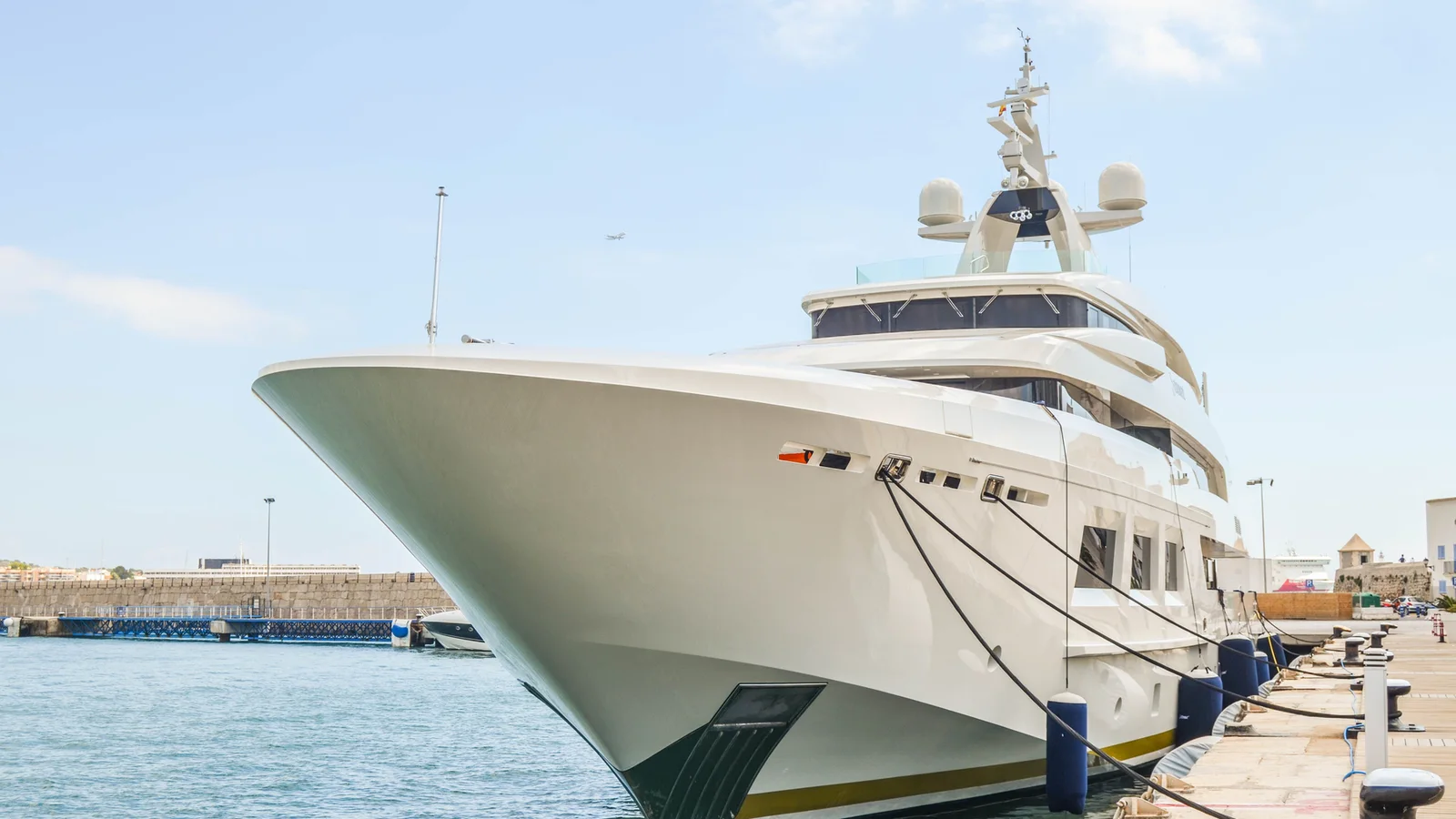
Hydraulic systems working out on the water face a far harsher environment than any piece of equipment on land: salt water, constant humidity, sun, vibration, and — on fishing boats — heavy physical load. At ÇevikSan we manufacture, repair and overhaul passerelle cylinders, windlass (anchor winch) cylinders, steering cylinders and crane/davit cylinders for yachts and boats in Izmir.
Our customer base is broad: we work with everything from day-use sports boats to large yachts, from commercial fishing boats to special-purpose marine craft. What they all share is this — the marine environment wears out a hydraulic part faster than it would on land, and a repair done without the right material and workmanship brings the same fault back within a few months.
Why Is Marine Hydraulics Different From Onshore?
A hydraulic cylinder on heavy equipment works in an enclosed, controlled site environment. A boat's hydraulics have to cope with constant salt-spray, humidity from the sea air, UV exposure from the sun, and the vibration generated by the boat's own motion. These differences directly shape our choice of material and workmanship:
- Corrosion rate: Salt water and sea air start corrosion on a standard steel surface far faster than on land. Rod coating and body material need to be chosen accordingly.
- Constant vibration: Wave motion and engine vibration loosen fasteners more often than on land; locking method and seal selection become important.
- Access difficulty: A boat's hydraulics often sit in a tight bilge, under the deck, or in the transom; removal and refitting call for different planning.
- Safety dimension: Unlike an onshore machine fault, a steering-cylinder or windlass failure can directly threaten lives at sea.
- A narrow time window: The boating season, a survey date, or the next scheduled voyage all dictate how quickly a repair has to be finished.
Applying a standard cylinder overhaul as-is isn't enough for yacht and boat hydraulics — decisions on everything from material selection to seal type need to account specifically for the marine environment. For a more detailed material comparison, see our stainless hydraulic cylinders page.
Passerelle Cylinder: Manufacturing, Repair, Overhaul
A passerelle is a hydraulically operated gangway that extends from the stern or side of a boat to the dock, with an adjustable angle of descent. It lets passengers and crew board and disembark safely; on larger yachts it's usually operated remotely via a hydraulic mechanism.
The passerelle cylinder is constantly opening and closing, and is directly exposed to salt water and sun. Faults we see often:
- Slow or uneven opening/closing: Usually caused by seal wear, air ingress, or a valve fault.
- Corrosion staining on the rod: Starts wherever the coating has been damaged; over time it cuts the seal and leads to leaking.
- Oil leak: The seal has reached the end of its life, or the rod surface is scored.
- Won't fully open / won't fully close: Play in the mechanical linkage, a stroke-setting shift, or low hydraulic pressure.
- Noise and vibration: Joint and bushing wear, insufficient lubrication.
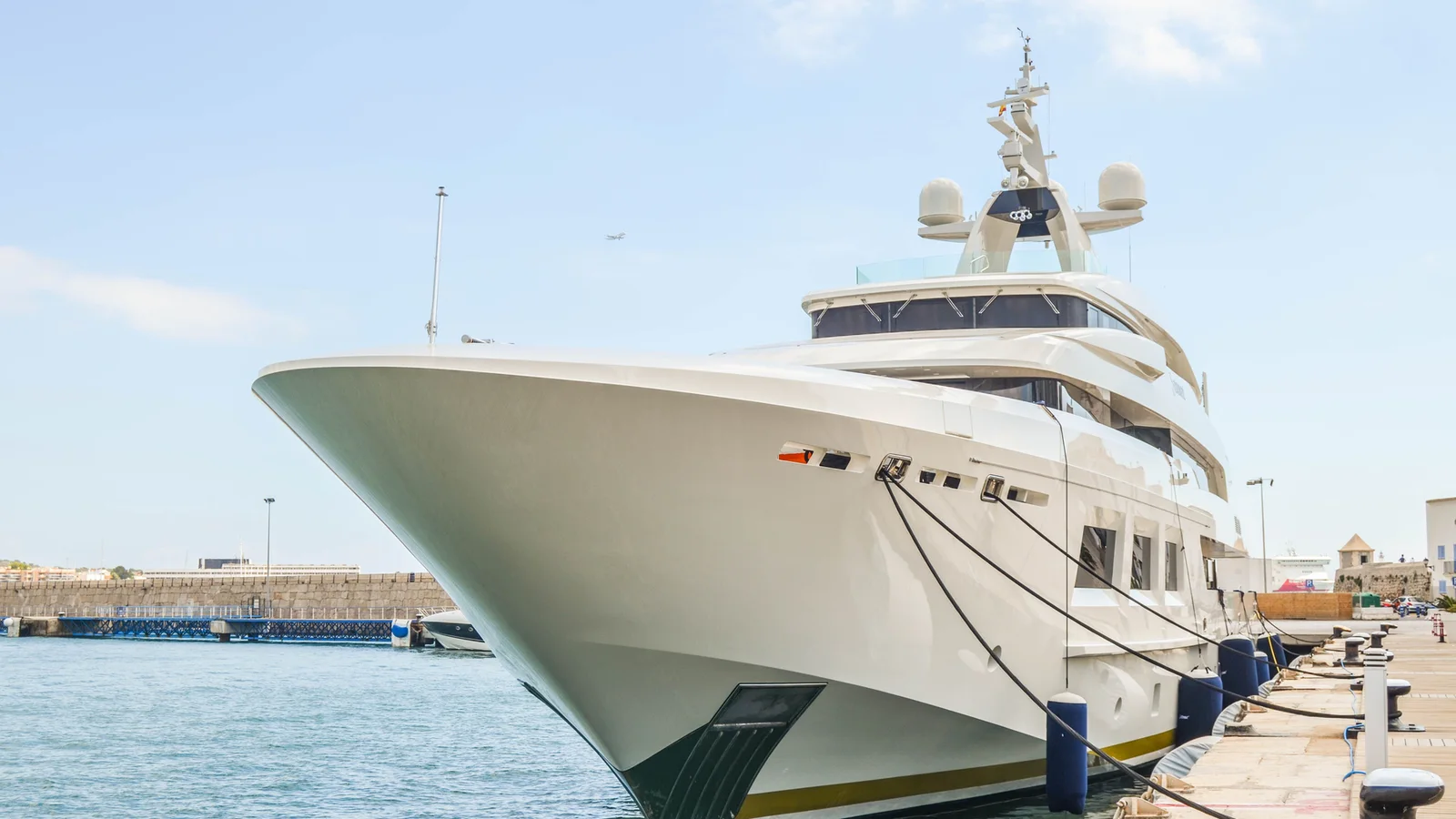
For a new passerelle cylinder we determine the dimension, stroke and connection type specific to your boat; if you have a sample cylinder, we produce an exact equivalent. In repair and overhaul, once removed we check the rod and body, and decide — based on the extent of corrosion — between grinding, recoating, or manufacturing a new rod. We don't deliver a single passerelle cylinder without a pressure test — this part is directly tied to people's safety.
Windlass (Anchor Winch) Cylinder: Manufacturing, Repair, Overhaul
A windlass is the deck equipment that raises and lowers a boat's anchor, winding in the chain or rope. Electric windlasses are common, but on medium and large boats especially, hydraulically driven windlass systems, along with hydraulic cylinders working alongside them (as a lock, brake, or auxiliary mechanism), are also frequently used.
Typical faults we see in windlass systems:
- Struggling or hesitating while hauling chain: Pressure loss in the hydraulic motor or cylinder, valve fault.
- Uneven pay-in/pay-out: Mechanical wear or hydraulic flow imbalance.
- Oil leakage: Seal wear in the windlass motor and its associated cylinders below deck; salt water and sand together accelerate wear in this area.
- Overheating: An incorrect system pressure setting or loss of internal sealing.
- Brake not holding: A hydraulic or mechanical fault in the anchor lock mechanism; requires urgent attention for safety reasons.
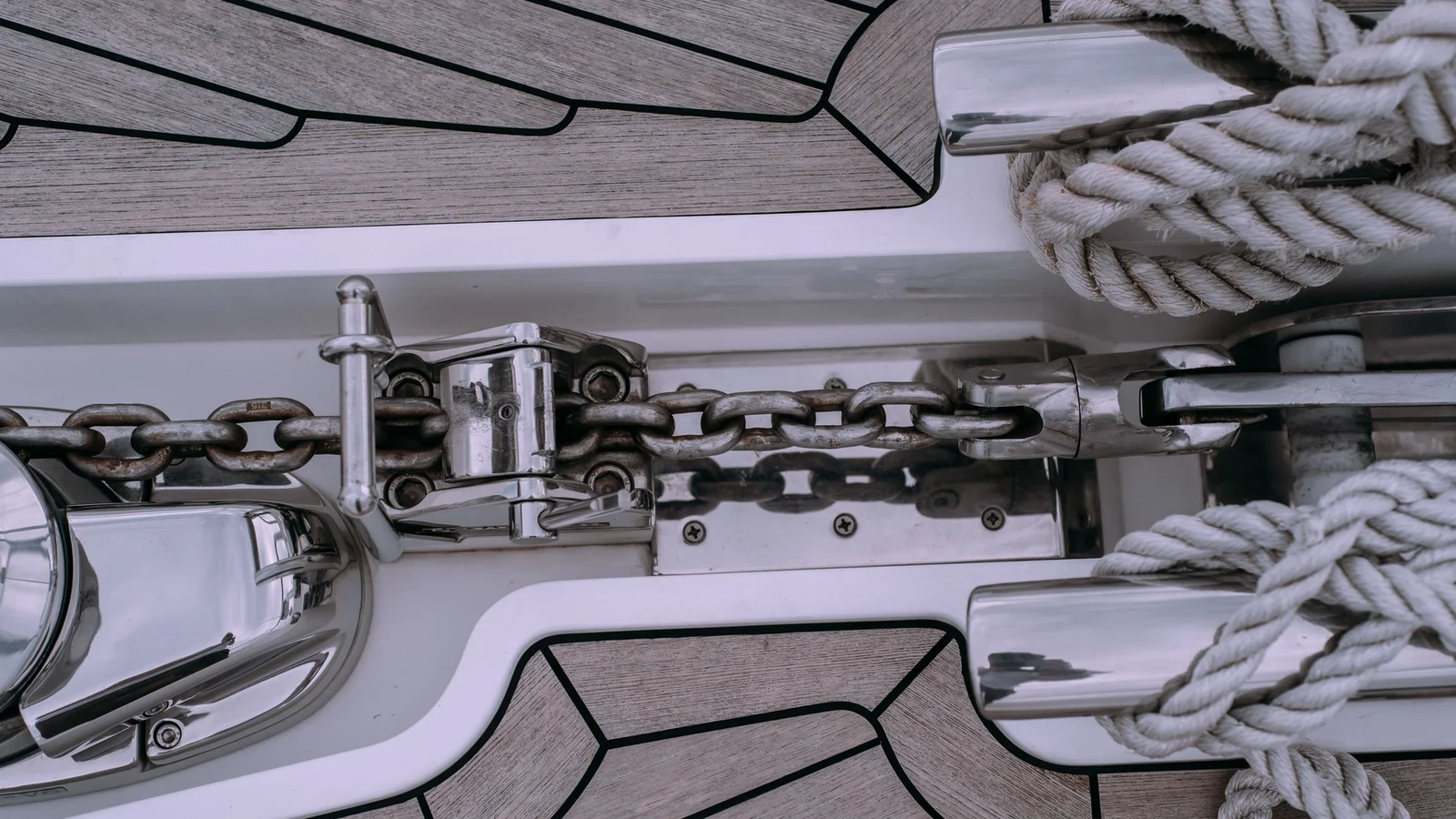
For hydraulic cylinders and motors connected to a windlass, we use stainless or chrome-plated shafts, a suitable sealing set, and connection hardware built to withstand the below-deck environment. In repair, we first determine whether the fault is chain-related or hydraulic — most of the time, a "windlass isn't working" complaint traces back to the mechanical side, not the hydraulic one; we don't swap hydraulic parts unnecessarily.
Steering Cylinder: Manufacturing, Repair, Overhaul
On boats with a hydraulic steering system, the steering cylinder is the component that carries the command from the wheel (or the autopilot) directly to the rudder blade or drive unit. This is a critical system for the boat's safe navigation — a fault here directly affects manoeuvrability.
The symptoms we see most often in steering cylinders:
- Stiff or delayed turning: Air in the system, low oil level, or loss of internal sealing.
- The wheel spins freely: The seal inside the cylinder has worn, and oil is bypassing from one side to the other.
- The boat won't hold a heading / drifts off course: Internal leak or valve fault in the cylinder — a situation that directly affects the safety of the voyage.
- Oil level keeps dropping: An external leak — at the rod seal or a connection fitting.
- Unusual noise: Air lock (cavitation) or internal component wear.
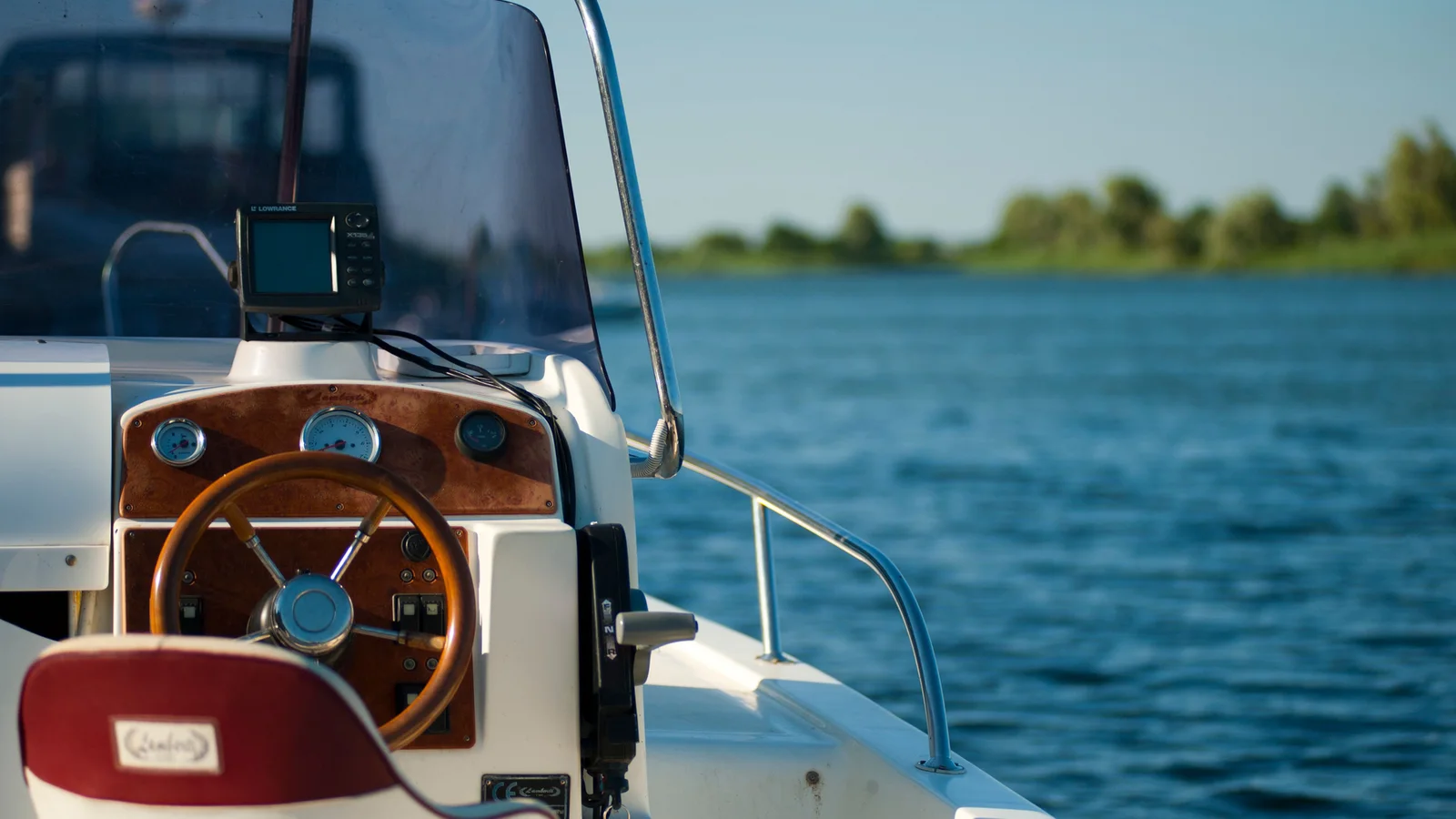
Because the steering cylinder is one of the most safety-critical parts on a boat, we take extra care with it in both manufacturing and repair: pressure testing is done above the standard stroke, internal sealing is checked separately, and wherever possible the cylinder is delivered after a function test on the boat itself. If you have a sample cylinder, we take its exact dimensions and produce an equivalent — often the only solution on older boats where parts are no longer available.
If you've bought a boat with hydraulic steering, or moved to a used boat, and don't know when the steering system was last checked, we'd recommend a general inspection. Even with no visible symptoms, a small corrosion stain that's just starting on the rod surface can be resolved in a few minutes if caught early.
If you have even the slightest doubt about your steering system, have it checked before heading out. A fault in this part, once discovered at sea, leaves far less room to act.
Crane and Davit Cylinders: Manufacturing, Repair, Overhaul
On boats and yachts, hydraulic crane/davit systems are used for lifting and lowering a tender (auxiliary boat), handling cargo, and — on fishing boats — hauling nets and crates. At the heart of these systems is one or more hydraulic cylinders that move the arm.
On fishing boats, the crane system operates under near-daily, heavy load; this accelerates wear. Faults we see often:
- Arm rises slowly or sags under load: Loss of internal sealing or low pressure.
- Visible oil leak from the cylinder: Seal wear; salt water and contact with fishing nets accelerate wear in this area.
- Bent or scored rod: The result of overloading or an impact; if it can't be straightened, a new rod has to be manufactured.
- Stiff or catching motion: Corrosion on the rod surface, bushing wear, or misalignment.
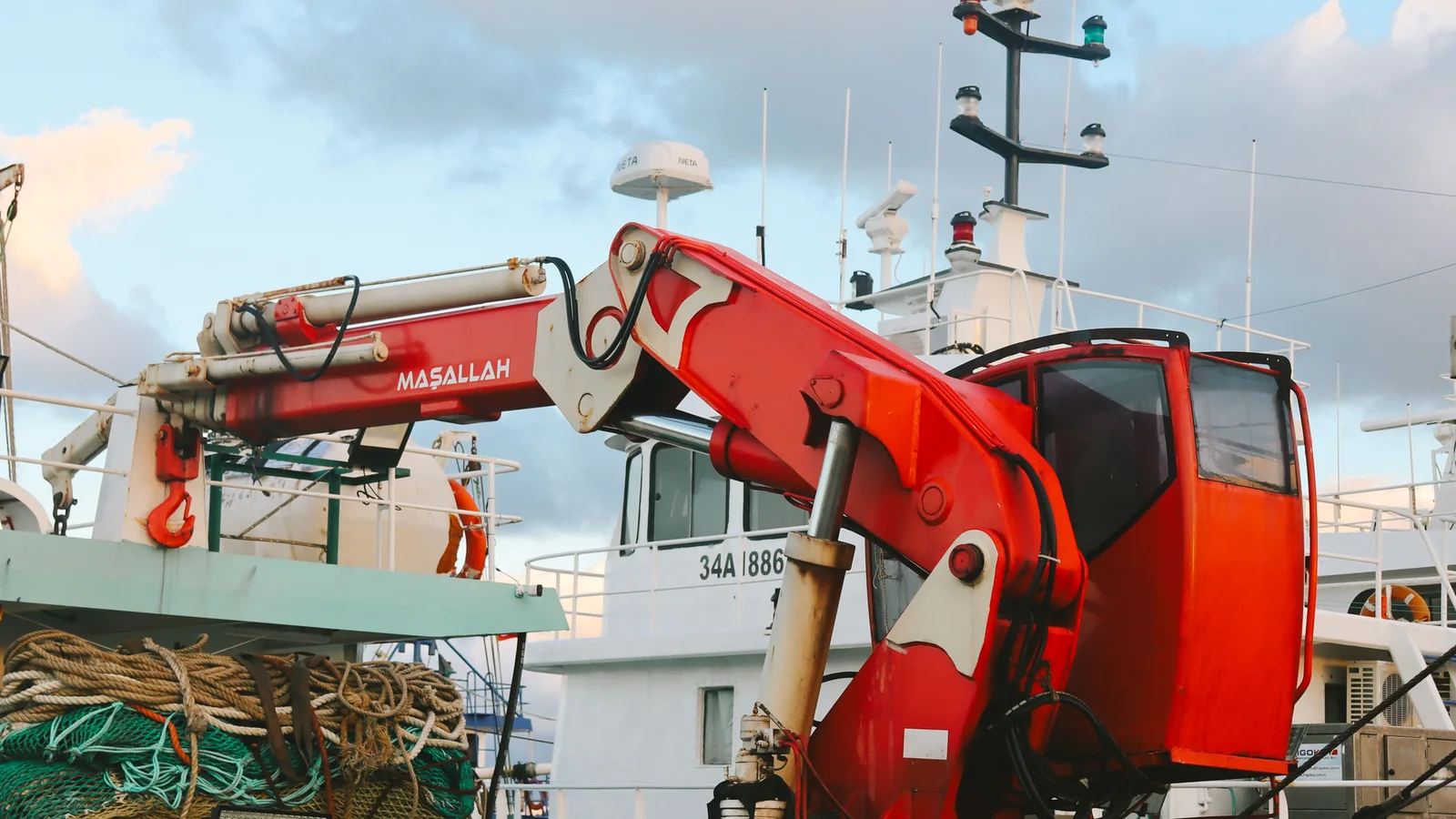
In manufacturing crane and davit cylinders, we set rod quality and seal specification according to the severity of use — a fishing-boat crane working under heavy daily load has different needs from an occasionally used yacht davit. In repair, we first run a load test to identify the source of the fault (cylinder, valve, or hose) before replacing any unnecessary parts.
Which Boat Types Do We Work With?
"Yacht" isn't a single category — motor yachts, sailboats, sports boats, gulets and fishing boats each carry different hydraulic needs. We work across a wide range, from small sports boats to large motor yachts; each boat type has a different priority need:
| Boat Type | Main Hydraulic Need | Typical Use Intensity |
|---|---|---|
| Sports boat / day boat | Steering cylinder, small windlass | Low-medium — seasonal, occasional use |
| Sailboat | Steering cylinder, windlass, sometimes a crane | Medium — variable wind and wave load |
| Motor yacht / gulet | Passerelle, steering, windlass, davit | Medium-high — multi-function, frequent use |
| Large yacht | Passerelle, multiple cranes/davits, steering | High — daily use with a professional crew |
| Fishing boat | Windlass, net/crate crane, sometimes steering | Very high — daily, heavy load, all season |
We treat this distinction seriously, because the wrong assumption either drives up cost unnecessarily or leaves you undersupplied. Recommending fishing-boat-grade, over-engineered (and expensive) material for a sports boat's steering cylinder is overkill; conversely, fitting a cruising-boat-grade lightweight material to a fishing-boat crane means another failure within a few months. Before quoting, we always ask about boat type and use intensity, and select material and seals accordingly.
We work regardless of make or manufacturer — from locally built boats to imported yachts and motorboats. Once we've seen and measured the part itself, we can produce an equivalent without needing manufacturer information.
A Note for Fishing Boats
A fishing boat's hydraulic needs differ from those of a leisure boat: daily use all season, heavy and irregular loading, and constant contact with salt water and fish/netting all come together. The hydraulic needs we encounter most on these boats are the windlass (anchor and chain), the net/crate crane, and — on some boats — a hydraulic steering system.
Fishing-boat owners tend to ask us the same question: "Can you finish before the season starts?" That's why we pay particular attention to two things in this segment:
- Lead-time clarity: After removal and measurement, we give a firm delivery date; knowing your season schedule helps us plan around it.
- Durability first: On a fishing boat, durability matters far more than looks; we choose material and seals accordingly — we don't push unnecessary "premium" material that inflates cost.
On older-generation boats where parts are no longer available, bringing us a sample cylinder or the broken part itself is the fastest and most reliable way to take measurements. We produce equivalents that preserve the exact dimensions, material and connection type.
Material and Seal Selection for the Marine Environment
Material selection matters more in marine hydraulics than in onshore applications. Our general approach:
| Area / Part | Recommended Material | Why |
|---|---|---|
| Passerelle and above-deck rod | Stainless or thick chrome-plated shaft | Direct salt-spray and sun exposure |
| Windlass area body and connections | Stainless or corrosion-resistant coating | Chain/sand wear combined with salt water |
| Steering cylinder rod | Hard chrome plating or stainless | Constant motion + safety-critical |
| Crane/davit cylinder | Stainless or coated, depending on use intensity | Heavy load and salt water together |
| Fasteners (bolts, fittings) | Stainless | A standard steel fastener stains the stainless body around it |
On the sealing side, we select seal materials suited to the marine environment, favouring components resistant to salt water and UV. For a more detailed look at the relationship between material grade and corrosion, see the 304/316 comparison on our stainless hydraulic cylinders page — the same logic applies to boat hydraulics.
One point we stress in particular: using a stainless body but leaving the fasteners (bolts, nuts, fittings) in standard steel is a common and costly mistake in a marine environment. A single standard-steel bolt will stain the stainless surface around it, and the corrosion spreads over time. That's why we state in writing, in our quotes, which component is made from which material.
Hydraulic or Electric? Choosing the Right Drive
Both hydraulic and electric drive solutions exist on the market for passerelle, windlass and crane systems. Which one is right depends on the boat's size and use intensity, so we don't automatically say "hydraulic" to every request.
| Criterion | Hydraulic Drive | Electric Drive |
|---|---|---|
| Force / load capacity | Superior at high loads, produces constant force | Adequate up to medium loads; the motor grows at high load |
| Continuous/heavy use | More resistant to overheating | Motor can overheat under sustained heavy load |
| Maintenance complexity | Requires hose, seal and oil maintenance | Electric/motor maintenance; no hydraulic-oil concerns |
| Sudden-failure risk | A leak gives early warning, fails gradually | A motor or electronics fault can be sudden |
| Practicality on small boats | May need a separate power unit | Usually simpler to install |
The general trend: on small and medium boats, for a single function (say, just the windlass), electric drive is usually a simpler, sufficient solution. On large yachts, where multiple functions (passerelle, crane, davit) draw from the same power unit, and on fishing-boat cranes running under heavy, sustained load, hydraulic drive comes out ahead — because it produces constant force and holds up better against overheating.
If your current system is electric and you've come to us wanting a hydraulic cylinder/crane, we assess the need together first; sometimes reinforcing the existing system is more economical than switching to hydraulics from scratch.
Safety: Why There's No Tolerance in This Line of Work
A hydraulic fault on land usually stops production; a hydraulic fault at sea can threaten lives. We stress this difference specifically, because it shapes how we run our work:
- Steering system: Loss of manoeuvrability is a serious risk in a tight marina entrance or in bad weather. If there's any suspicious symptom, we recommend a check before heading out.
- Windlass / anchor lock: If the lock doesn't hold, the anchor can drop suddenly — a risk to both the equipment and anyone on deck.
- Passerelle: A mechanism used for boarding and disembarking passengers — it must never close suddenly or collapse under load.
- Crane and davit: A sudden pressure loss under load means a falling load — in an area where someone could be standing.
That's why, on all four of these systems, we run the pressure test above the standard stroke and, wherever possible, run the function test as close as we can to real load or real use conditions. We don't hand back a part with a "probably fine" — if a test result isn't clear, we run additional checks.
Can't Find a Part? Our Equivalent-Manufacturing Approach
One of the most common situations we run into in marine hydraulics: the boat's manufacturer is no longer in business, the parts importer doesn't carry stock, or the original part is only available from abroad after a long wait. In these cases, rather than leaving the boat waiting at the dock, we manufacture an equivalent from the part in hand or from the removed original.
How this approach works:
- Sample inspection: The existing or broken part is removed and every dimension (bore, stroke, connection thread, joint type) is taken.
- Material matching: We preserve the original material wherever possible; if a more durable alternative exists for the marine environment, we share that with you.
- Connection fit: Mounting dimensions are preserved exactly — no extra modification, drilling, or bracket adaptation is needed on your boat.
- Testing and delivery: The newly manufactured part is delivered after passing the same test standard as the original.
This method is especially valuable on older-model boats, imported yachts, and brands no longer imported. Instead of losing weeks waiting for the original part, we can often deliver the equivalent within a few working days.
What We Need From You for an Order or Quote
The information we need to give you a fast, accurate quote:
- Which system: Passerelle, windlass, steering, or crane/davit — which one is faulty or newly needed.
- Boat type and use: Cruising boat, yacht or fishing boat; frequency of use and load severity.
- Existing part information: Do you have a sample or broken part? Is the make/manufacturer known?
- Dimensions: Bore, stroke, connection type — if there's no sample, we'll plan an on-site measurement.
- Symptom or request: Is this a fault complaint, or new manufacturing from scratch?
- Time window: Start of season, a survey date, or your next voyage — directly affects lead-time planning.
- Where the boat is located: Can it be brought to our workshop, or does it need on-site work?
You don't need all of this information upfront — we can start with a photo or short video and fill in the gaps together during our conversation.
Even if we can't reach your boat at the marina or mooring, a few well-taken photos (the faulty part itself, the connection point, and any label/brand information) are often enough for a preliminary quote. The firm price and lead time are confirmed after removal or an on-site inspection.
What Determines the Cost?
The cost factors in yacht and boat hydraulics are largely the same as onshore applications, but the marine environment brings some of them to the forefront:
- Material quality: Stainless or coated shafts cost more than standard steel, but they extend service life significantly in a marine environment.
- Part condition: The difference between surface corrosion and deep pitting directly affects overhaul cost.
- Access difficulty: Labour time differs between an easily removed part and a system that has to be worked on in a tight bilge.
- Need for on-site work: Working on the boat itself can require more planning and time than working in the workshop.
- Urgency: A mid-season emergency and a planned pre-season service call for different prioritisation.
A firm price is given after removal and inspection — we don't start with a rough figure and build it up later. We always present repair and new-manufacture options together with both their costs; the decision is yours.
Which Symptom Points to Which Fault?
The symptom a boat owner first describes to us isn't always the actual fault. For a quick self-assessment:
| Symptom | Likely Cause | Urgency |
|---|---|---|
| Slow / delayed movement | Air ingress, low oil, seal wear | Medium — plan a check |
| Visible oil leak | Seal or fitting wear | Medium-High — address before it worsens |
| Steering won't hold / drifts | Loss of internal sealing, valve fault | High — check before heading out |
| Windlass struggles hauling chain | Pressure loss or valve fault | Medium — before next use |
| Crane sags under load | Internal leak, serious pressure loss | High — don't use under load |
| Unusual noise / vibration | Air lock, bushing or joint wear | Medium — early detection means a cheap fix |
If you're not sure, sending a photo or a short video can be enough for a preliminary assessment; a firm diagnosis needs an on-site or post-removal inspection.
Our Manufacturing Process
The steps we follow when manufacturing a new passerelle, windlass, steering or crane cylinder:
- Measurement and needs assessment: If a sample part exists, it's measured exactly; otherwise we listen to how it's used on your boat and size it accordingly.
- Material and seal selection: Material and sealing are chosen based on location of use (above deck, below deck, constant water contact).
- Manufacturing: The body, rod and piston are machined in our workshop; connection type and stroke are built specific to your boat.
- Assembly and sealing: The seal set is fitted; fasteners are stainless.
- Pressure and function testing: Testing is done above working pressure; motion is checked through the full stroke.
- Delivery: Delivered with mounting dimensions preserved; no additional modification is needed on your boat.
This process is especially valuable on older boats whose parts are no longer produced — even when the original part can't be found, we can manufacture an exact equivalent from a removed sample.
Our Repair and Overhaul Process
The path we follow to repair and overhaul an existing passerelle, windlass, steering or crane cylinder:
- Removal and initial inspection: The part is removed and assessed for corrosion, wear and damage.
- Surface and dimensional check: The rod and the body's inner surface are measured; a decision is made between grinding, honing, or manufacturing a new rod.
- Firm quote: After removal and measurement, salvage and new-manufacture options are presented together with their cost — no work begins without your approval.
- Overhaul: Necessary surface work is carried out, a new seal set is fitted, and a new rod is produced if needed.
- Testing: Pressure testing and function checking are carried out.
- Delivery: Wherever possible, delivered after installation and a function test on the boat itself.
In most cases, if the body is sound, overhaul is more economical than new manufacture, so we try salvage first. If corrosion has advanced and there's a safety risk — particularly on a steering cylinder — we recommend new manufacture and explain our reasoning clearly.
Periodic Maintenance and Winter Layup
Boat hydraulics last significantly longer with regular maintenance. The periodic checks we recommend:
| Frequency | Check | Why It Matters |
|---|---|---|
| Before every use | Visible leaks, oil level | Early warning before heading out |
| Monthly (active season) | Rod-surface cleaning, corrosion-stain check | A stain caught early is easy to clean off |
| Monthly | Fastener and joint check | Vibration-loosened connections are caught early |
| End of season (hauling out) | Full removed inspection, oil analysis | Prevents winter moisture and stagnation damage |
| Start of season | Function test, seal check | Starting the season leak-free and safe |
A check carried out during winter layup (hauling out) in particular prevents most surprise faults at the start of the season. Coating rod surfaces with protective oil and isolating cylinders from moisture as much as possible during this period is an important but often-skipped step. We can also set up periodic maintenance agreements for businesses with a fleet or multiple boats.
Repair or New Manufacture? Decision Table
Not every fault requires a new part, but insisting on repair in every case isn't right either. Our general approach:
| Situation | Our Recommendation | Reasoning |
|---|---|---|
| Surface corrosion, body sound | Repair / overhaul | Grinding and a new seal give a long second life |
| Rod bent or deeply scored | New rod manufacture | Straightening isn't a lasting fix — the fault will return |
| Corrosion advanced, wall thickness reduced | New manufacture | Safety comes first in a pressurised system |
| Suspected internal leak in a steering cylinder | Urgent overhaul or renewal | Directly affects the safety of the voyage |
| Part not available on the market | Equivalent manufacture from a sample | Often the only solution on older boats |
| Same fault keeps recurring | Root-cause analysis + redesign | The wrong material or dimension is usually the real cause of a repeat fault |
The decision is always made with you, after removal and inspection — we present both options together with their cost.
Common Terms in Yacht and Boat Hydraulics
A brief explanation of the terms that come up in quotes and conversations:
| Term | Meaning |
|---|---|
| Passerelle | A hydraulically operated gangway that extends from the boat to the dock |
| Windlass | Deck winch that raises and lowers the anchor and chain/rope |
| Davit | A crane arm used for lifting and lowering a tender/dinghy |
| Steering cylinder | The hydraulic cylinder that carries the steering command to the rudder blade |
| Cavitation | Air-bubble formation in a hydraulic system; causes noise and lost efficiency |
| Stroke | The total travel distance of a cylinder's piston movement |
| Seal | The component inside a cylinder that prevents oil leaking |
| Honing | Precision machining of a tube's inner surface; determines seal life |
| Hard chrome plating | A wear- and corrosion-resistant coating applied to a shaft |
| Winter layup | Hauling a boat out at season's end for maintenance |
You don't need to know these terms, but our quotes explain in writing which part is being changed, with what material, and why — so you know exactly what you're paying for.
Service Along the Izmir and Aegean Coastline
Our workshop is at Mersinli Mah. 2843 Sk. No:15, Konak / İzmir, in the industrial district of Konak, close to Izmir Bay. We serve central Izmir, the Karşıyaka and Alsancak coastline, and districts with heavy boat and yacht traffic such as Çeşme, Urla, Foça and Seferihisar. For removable parts, bringing them to our workshop speeds the job up; for situations that need on-site work on the boat (particularly steering and passerelle systems), we schedule a suitable day together.
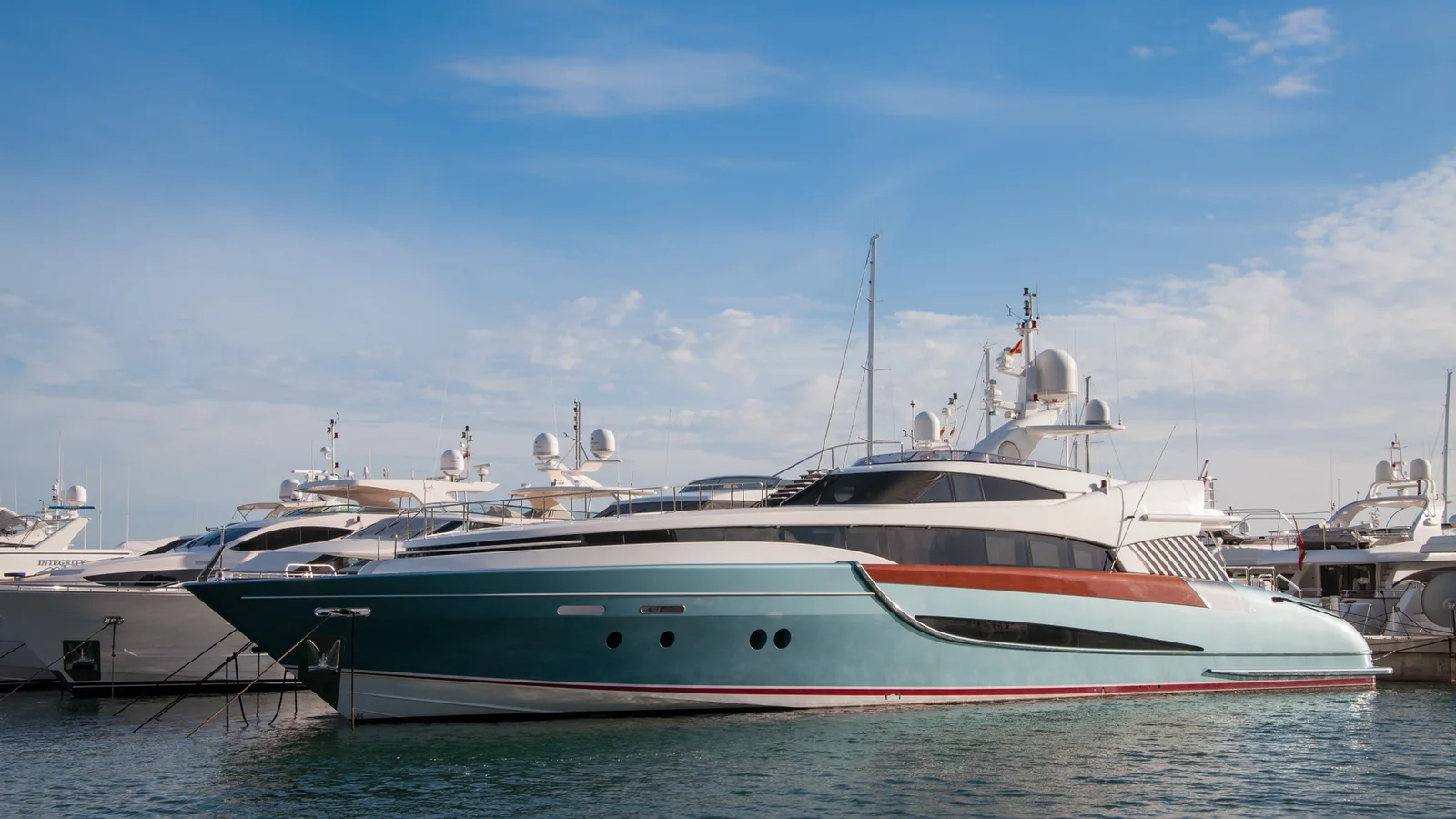
If your yacht or boat hydraulics need also cover the power-unit side, see our hydraulic power unit repair page; for special material needs in a corrosive environment, see our stainless hydraulic power units page. Whether it's a pre-season group check, an urgent fault, or new manufacturing — whatever stage you're at, the survey and initial assessment are free within Izmir.
Frequently Asked Questions
Can my passerelle cylinder be repaired, or does it need a new one?
If the body and rod are in salvageable condition, we prefer an overhaul; surface work and a new seal can give it a long second life. If corrosion has gone deeper, we recommend new manufacture. The decision is made after removal and inspection.
My windlass isn't working — how do we tell if it's hydraulic or mechanical?
Struggling, hesitating or losing power while hauling chain usually points to the hydraulic side; the chain jumping or jamming points to a mechanical problem. A firm diagnosis needs an on-site inspection — but the symptoms you describe over the phone give us a starting picture.
My steering cylinder is faulty — can I still go out on the water?
The steering system is one of the most safety-critical hydraulic parts on a boat. If you notice it not holding, slipping, or spinning free, we recommend getting it checked before heading out.
Can you finish my fishing boat's job before the season starts?
We pay particular attention to lead-time clarity. We give a firm date after removal and measurement; telling us your season schedule upfront helps us plan around it.
I have a sample cylinder — can you make an exact copy?
Yes. We remove the sample, take every dimension, and produce an equivalent in the right material. Mounting dimensions are preserved, so no extra modification is needed on your boat.
My part belongs to an old/rare boat and isn't available on the market — what can I do?
This is the situation we handle most often on older boats whose parts are no longer produced: bringing us the existing part, or the broken one, is the fastest and most reliable way for us to take measurements.
My crane/davit cylinder sags under load — is that dangerous?
Yes, this points to a serious loss of internal sealing. We'd recommend not using the system under load until the problem is fixed.
Do you work on the boat itself, or does the part need to come to your workshop?
For removable parts, bringing them to our workshop speeds things up. For systems that are hard to remove, like steering and passerelle systems, we can schedule a suitable day and work on the boat itself.
What material do you use — is standard steel enough?
Because of salt water and moisture in the marine environment, we generally recommend stainless or hard chrome-plated shafts. We work out the right grade together based on where it's used and your budget.
Is the survey or initial assessment chargeable?
No, survey and initial assessment are free within Izmir. Sending a photo or short video is often enough for us to give you an initial read.
Do you offer periodic maintenance agreements?
Yes, we set up periodic maintenance agreements particularly for businesses with a fleet or multiple boats; start- and end-of-season checks are carried out on a planned schedule.
Do you offer a guarantee?
Yes, our manufacturing and workmanship are guaranteed. No part is delivered without a pressure test.
Should I switch to hydraulic, or stay with electric?
For a single, light-duty function, electric is usually sufficient. For systems where several functions draw from the same power unit, or that run under heavy, sustained load, hydraulic drive holds up better. We'll assess your needs together.
My boat is imported and the original part isn't available in Turkey — what can I do?
This is a situation we run into often with imported boats. Bringing us the existing or broken part is usually enough for us to take the dimensions and connection type and manufacture an equivalent — you won't need to wait weeks for an import.

İsmail Çevik is the founding partner of ÇevikSan. This content was prepared based on our workshop's hands-on manufacturing, repair and overhaul experience with hydraulic and pneumatic cylinders.
Last updated: August 27, 2026