
Summary
- Our Hydraulic Cylinder Manufacturing service covers Izmir and the surrounding region; site surveys and fault diagnosis are free.
- We provide a firm quote after removal and measurement; no work starts without your approval.
- Manufacturing and repair are done in the same workshop — we produce equivalent replacements for parts that are no longer available.
- Every part is pressure-tested before delivery; workmanship is guaranteed.
- Topics covered on this page: Hydraulic Cylinder Manufacturing in Izmir, What Is a Hydraulic Cylinder, and Where Is It Used?, Hydraulic Cylinder Types We Manufacture, How Does Custom Hydraulic Cylinder Manufacturing Work?, Correct Sizing: Bore, Pressure and Force.
Table of Contents22 sections
- Hydraulic Cylinder Manufacturing in Izmir
- What Is a Hydraulic Cylinder, and Where Is It Used?
- Hydraulic Cylinder Types We Manufacture
- How Does Custom Hydraulic Cylinder Manufacturing Work?
- Correct Sizing: Bore, Pressure and Force
- Equivalent Manufacturing: No More Waiting on Parts
- One Size Doesn't Fit All: Cylinders by Industry
- How Does a Hydraulic Cylinder Work? The Technical Basics
- The Sealing Group: The Smallest Part, the Biggest Impact
- Choosing Mounting Type: Same Cylinder, Different Behaviour
- Pressure Testing and Quality Control
- Parts of a Hydraulic Cylinder and Where They Matter Most
- Installation and Commissioning: Where a Cylinder's Life Is Decided
- New Manufacturing or Overhaul? An Honest Comparison
- Special Solutions: Non-Standard Requests
- Safety: The Responsibility of Working With High Pressure
- Hydraulic Cylinder Needs by Industry
- Cost: What Determines the Price?
- What We Need From You During the Ordering Process
- Hydraulic Cylinder Terms
- Why ÇevikSan?
- Frequently Asked Questions
Hydraulic Cylinder Manufacturing in Izmir
Hydraulic cylinder manufacturing is one of the jobs in Izmir industry that most often calls for a genuinely custom build. A hydraulic cylinder is rarely something you pull off a shelf — the bore, stroke, connection type and working pressure of a cylinder destined for a press, a piece of heavy equipment, a lifting platform, or a special-purpose machine are all specific to that particular machine. At ÇevikSan we manufacture project-specific hydraulic cylinders at our Mersinli workshop — the whole process, from measuring to testing, runs through a single hand.
Custom hydraulic cylinder manufacturing isn't the exception for us — it's routine work. You don't need a technical drawing; bringing in a sample cylinder, or letting us take measurements at the machine, is enough. Building an exact equivalent for businesses that would otherwise wait weeks for a part from abroad is also something we do often. If your existing cylinder can still be repaired, we won't push you toward manufacturing — we'll put hydraulic cylinder repair and overhaul on the table too, with its price.
What Is a Hydraulic Cylinder, and Where Is It Used?
A hydraulic cylinder is an actuator that converts the energy of pressurised oil into linear force. Its fundamental difference from pneumatics is that liquid can't be compressed: this makes it possible to generate very high forces, and motion stays controlled even under load. Typical hydraulic systems run at 100–350 bar — tens of times the force of a pneumatic cylinder at the same bore.
In Izmir, hydraulic cylinders see the heaviest use in:
- Hydraulic presses: Deep drawing, stamping, baling, moulding
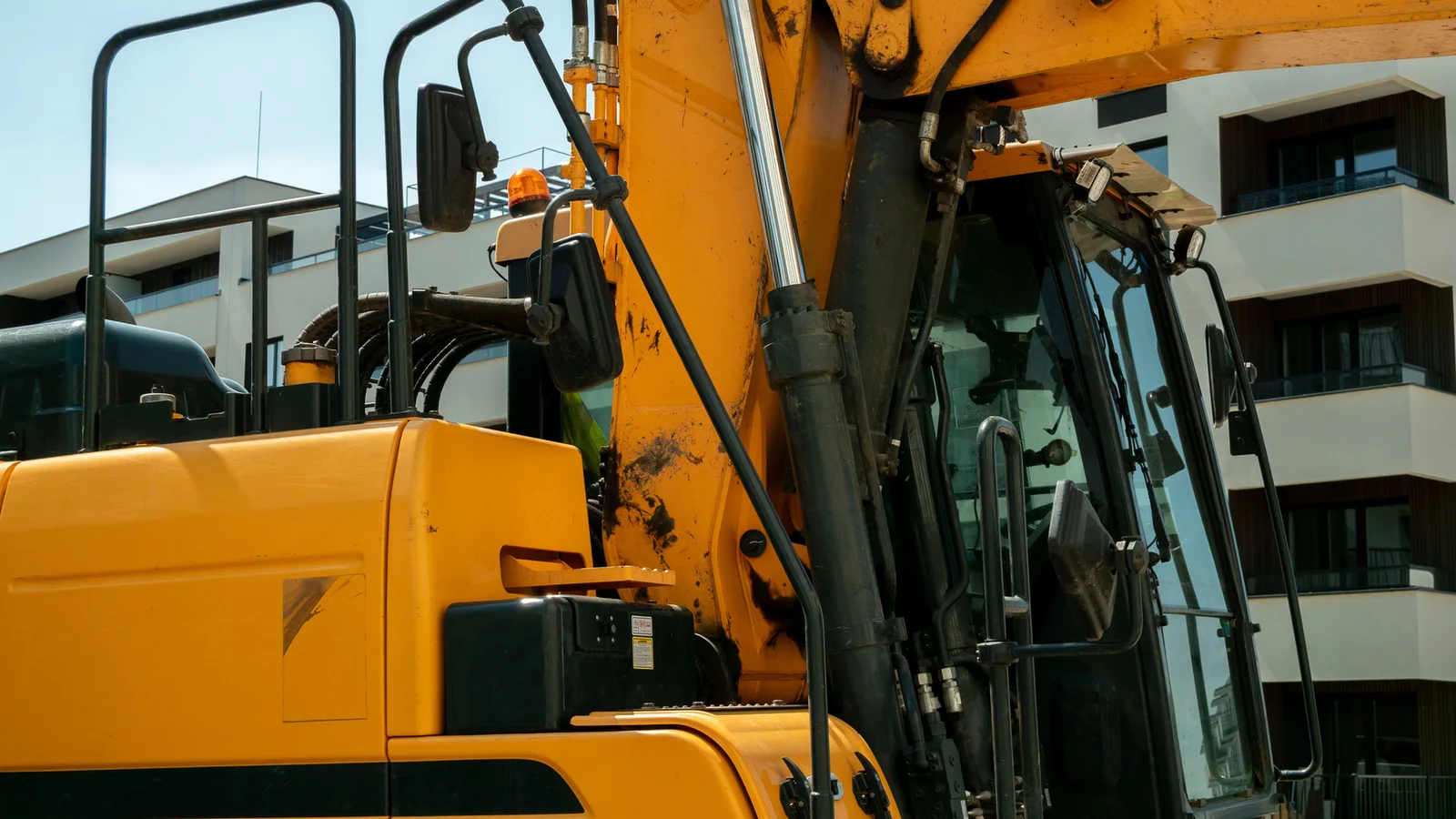
- Heavy equipment: Excavator boom-arm-bucket, loaders, forklifts, cranes
- Plastic injection machines: Mould clamping, injection, ejector units
- Lifting and platform systems: Scissor lifts, dump trucks, ramps
- Marble and stone processing: Cutting, loading, positioning units
- Agricultural and food machinery: Pressing, clamping, loading mechanisms
- Shipyard and marine equipment: Hatch, ramp and crane cylinders
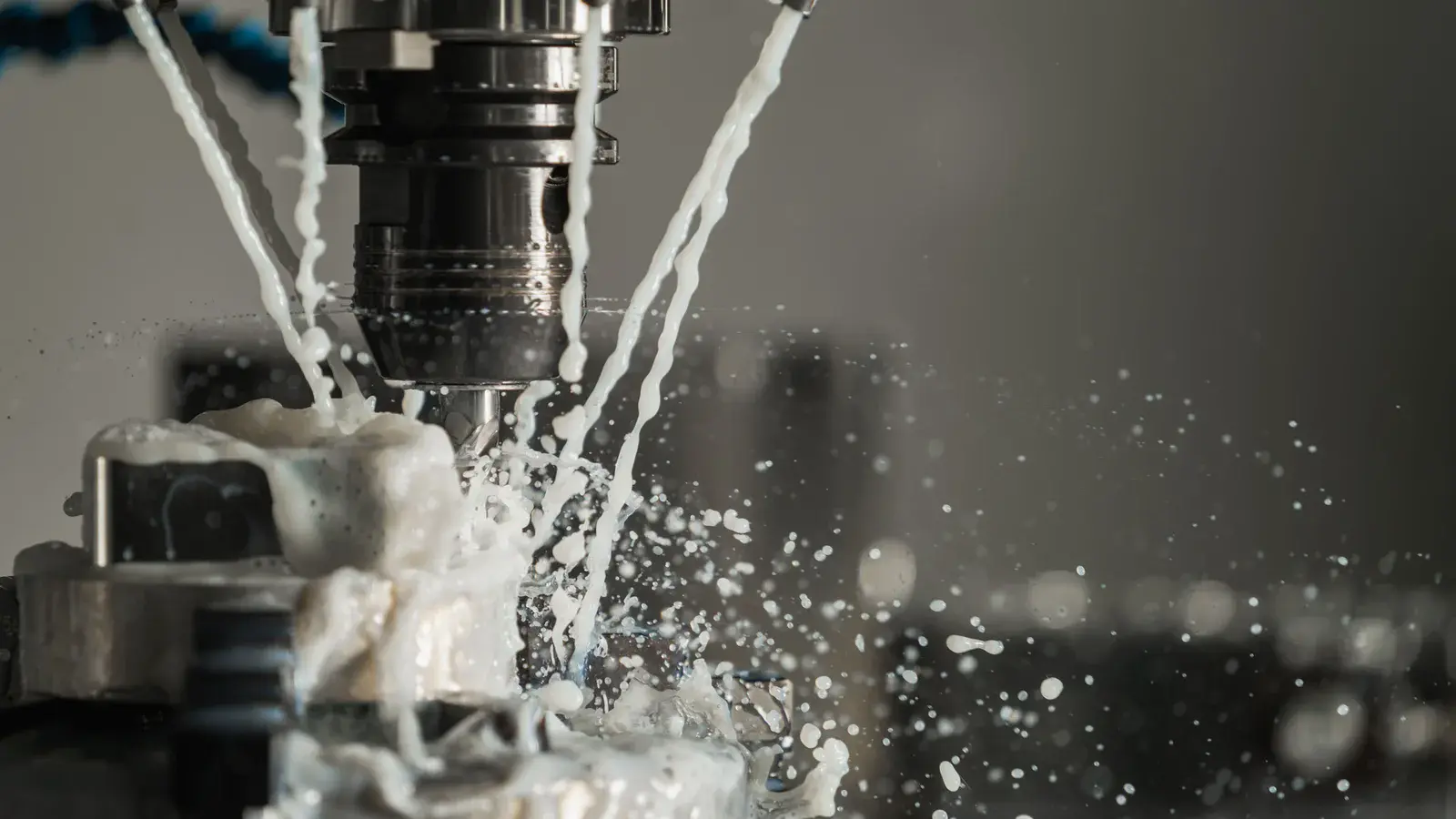
What these machines have in common is this: if the cylinder stops, the machine stops, and if the machine stops, production stops. That's why, in hydraulic cylinder manufacturing, material and workmanship quality isn't an area where "cheap will do" holds up. Set the price of a cylinder next to the daily cost of a line standing idle because of it, and it becomes obvious that proper manufacturing isn't expensive — it's the cheap option.
Hydraulic Cylinder Types We Manufacture
Cylinder type is chosen based on force direction, mounting space and the kind of motion needed. The main types we manufacture, and where they're used:
| Cylinder Type | Feature | Typical Use |
|---|---|---|
| Double-acting cylinder | Oil drives motion in both directions | Presses, heavy equipment, general purpose |
| Single-acting cylinder | Pushes in one direction; load or spring returns it | Dump trucks, jacks, lifting |
| Telescopic cylinder | Nested stages — long stroke from a short body | Dump truck beds, high-lift applications |
| Tie-rod | Structure that can be disassembled for maintenance | Industrial presses, machine tools |
| Welded-body | Compact, rugged body | Heavy equipment, heavy-duty service |
| Cushioned cylinder | End-of-stroke shock damping | High-speed, heavily loaded motion |
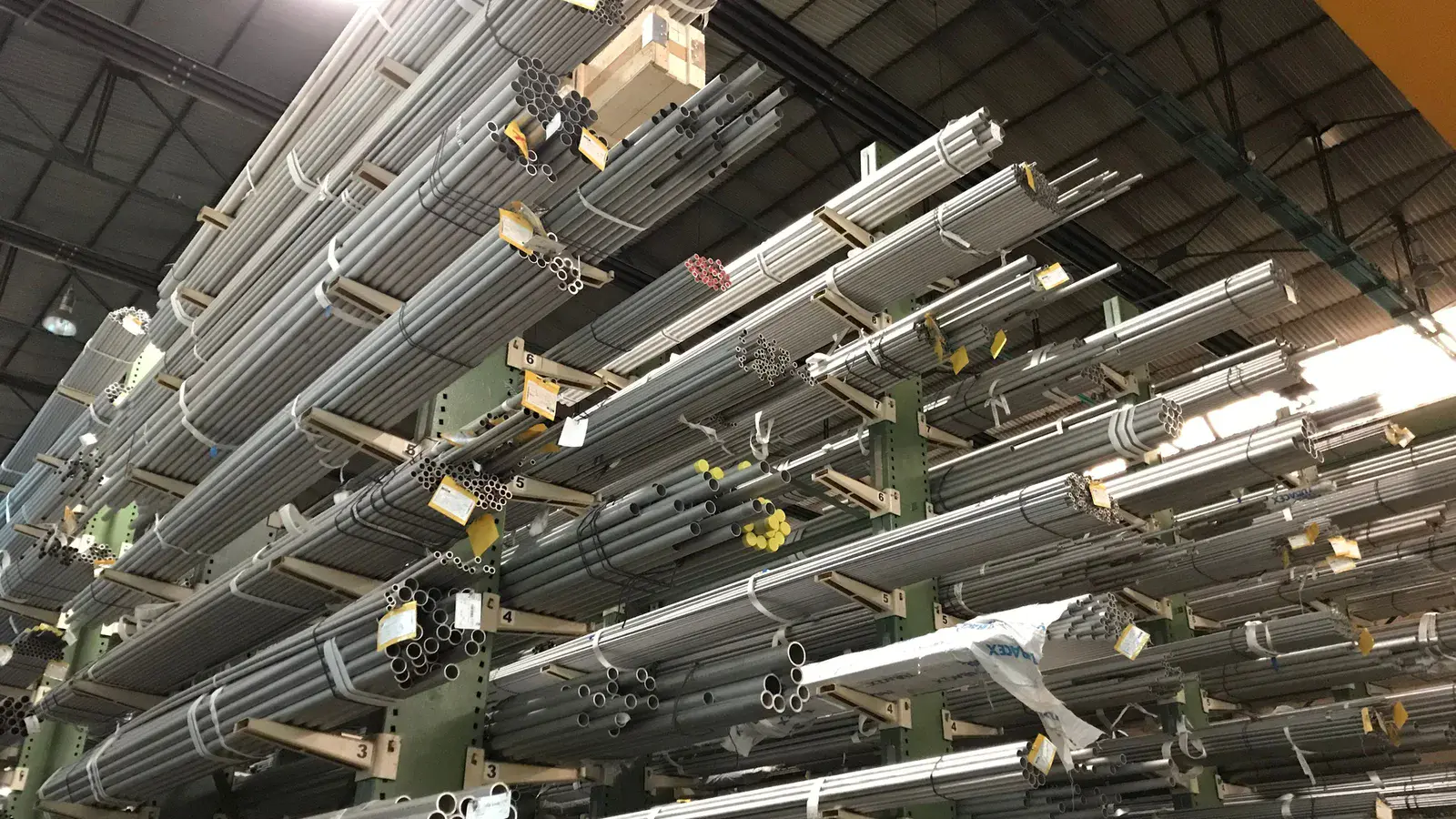
| Stainless cylinder | Corrosion-resistant material | Food, chemical, marine, treatment plants |
We have a dedicated specialism for stainless requirements — see the details on our stainless hydraulic cylinder manufacturing page. We can also build the power source the cylinder will run on — hydraulic power unit manufacturing is handled by the same workshop.
How Does Custom Hydraulic Cylinder Manufacturing Work?
We're manufacturing a part that will work under high pressure, and the process reflects that seriousness:
- Needs analysis: Force requirement, working pressure, stroke, mounting dimensions and operating environment are all established. If there's a sample, it's removed and measured.
- Sizing: Piston bore and rod diameter are chosen based on force and buckling calculations. If there's side load, bearing support is planned accordingly.
- Material selection: Honed tube, chrome-plated shaft, cap material and a sealing set suited to the job are determined.
- Machining: The body, caps, piston and rod fittings are machined on the lathe and mill; tolerances are verified by measurement.
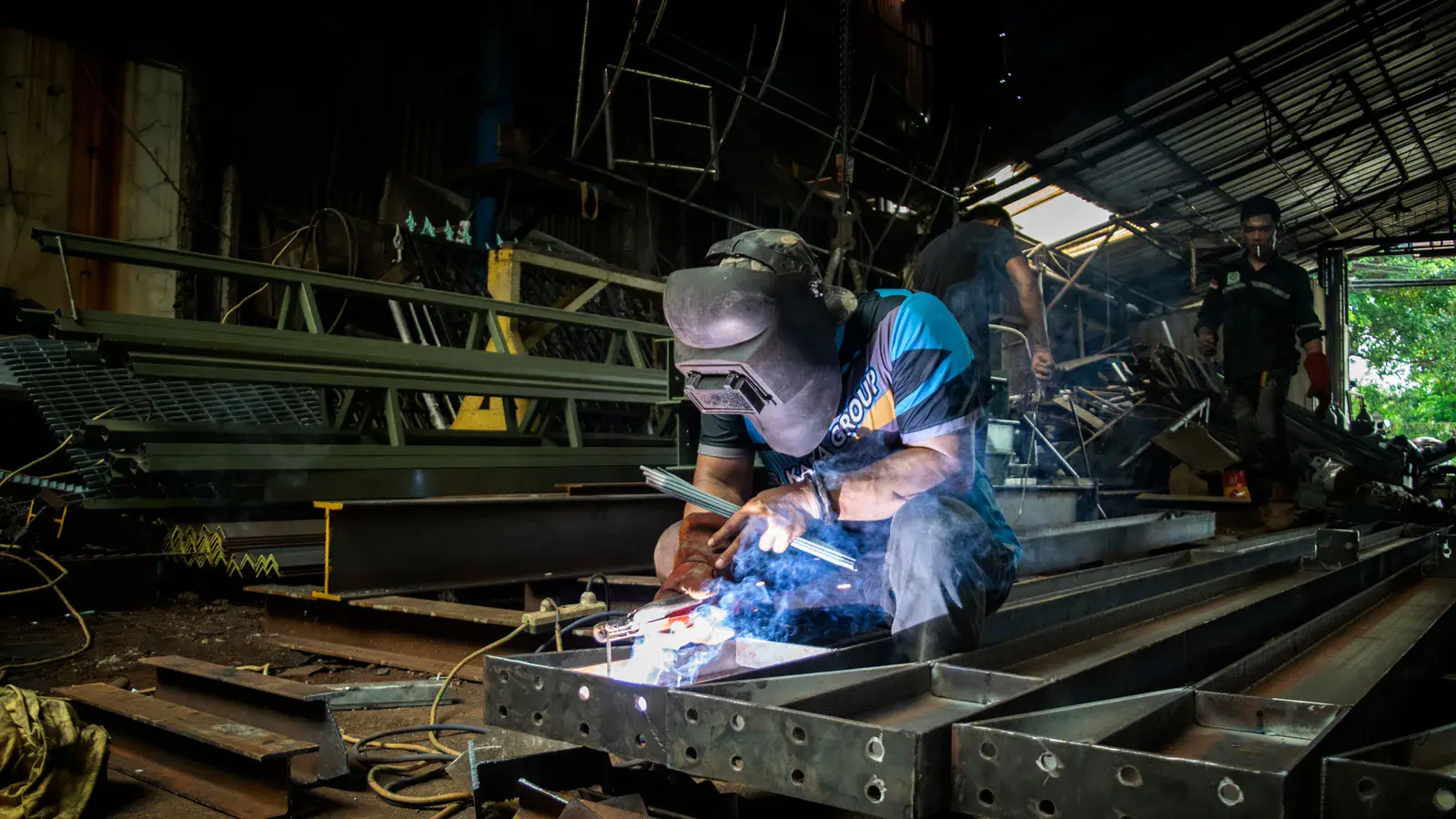
- Welding and assembly: Any required welded joints are made, sealing elements are fitted, the cylinder is assembled.
- Pressure testing: A test pressure above working pressure is applied; sealing, stroke length and smoothness of motion are checked.
- Painting and delivery: The cylinder is painted against corrosion and delivered tested; on-site installation is available too.
A hydraulic cylinder has two critical surfaces: the honed bore and the ground, chrome-plated rod. The quality of these two surfaces determines how many years the cylinder will run without leaking. We've written up what we use on the material side on our chrome-plated shafts and honed tubes page.
Correct Sizing: Bore, Pressure and Force
In a hydraulic cylinder, force is piston area multiplied by system pressure — so "stronger" doesn't always mean "bigger." Sometimes the right combination of pressure and bore is all that's needed. Here are approximate thrust forces at common bores and pressures, to give you a sense of scale:
| Piston Bore | 100 Bar | 160 Bar | 250 Bar |
|---|---|---|---|
| Ø50 mm | ~2.0 t | ~3.1 t | ~4.9 t |
| Ø63 mm | ~3.1 t | ~5.0 t | ~7.8 t |
| Ø80 mm | ~5.0 t | ~8.0 t | ~12.6 t |
| Ø100 mm | ~7.9 t | ~12.6 t | ~19.6 t |
| Ø125 mm | ~12.3 t | ~19.6 t | ~30.7 t |
| Ø160 mm | ~20.1 t | ~32.2 t | ~50.3 t |
The figures in the table are theoretical thrust values; on the pull stroke, force drops because the rod's cross-section is subtracted from the piston area. Long-stroke cylinders also need a separate rod buckling calculation: a cylinder that generates enough force but has too thin a rod will bend under load and be scrapped in short order. We run these calculations for you — just describe your application.
Equivalent Manufacturing: No More Waiting on Parts
When the hydraulic cylinder on a foreign-made machine fails, the most common thing you hear is "the part's been ordered, it'll take a few weeks." During that time the machine sits idle, production is disrupted, deliveries slip. ÇevikSan's answer is equivalent manufacturing:
- The existing cylinder is removed and every dimension is recorded — bore, stroke, mounting sizes, port locations, rod-end detail.
- Mounting dimensions are preserved exactly; nothing on your machine needs to change.
- Material and sealing selection are made to match the original, or to be more durable for your actual operating conditions.
- The cylinder is delivered tested, and it's covered by our workmanship guarantee.
Not having a brand, model or catalogue reference isn't a problem. In most jobs, the only thing that reaches us is the failed cylinder itself — and that's enough. What's more, equivalent manufacturing is often both faster and more economical than waiting on an imported original part.
One Size Doesn't Fit All: Cylinders by Industry
Two hydraulic cylinders of the same bore can have very different service lives in different industries. We base our manufacturing decisions on the real environment the cylinder will work in:
- Press and mould applications: High cycle counts and full-force operation; solid cap connections and cushioning matter most.
- Heavy equipment: Impact, dust and outdoor conditions; thick wall sections, strong welding and a durable wiper are needed.
- Food and chemical: Wash water, chemicals and hygiene; a stainless body and the right seal material are essential.
- Marine and shipyard: Saltwater environment; corrosion resistance and special coating come first.
- Hot environments (foundry, glass): Heat-resistant sealing materials are selected.
- Lifting and platforms: Human safety; a higher safety margin is kept, and testing gets special attention.
Tell us your industry and operating conditions, and we'll design the cylinder around your environment. The right design from day one means fewer failures and a longer service life.
How Does a Hydraulic Cylinder Work? The Technical Basics
Knowing what's happening inside a cylinder helps you choose the right one and read a fault correctly. The logic of a hydraulic cylinder is this: a piston sits inside a closed body tube, sealed tightly against the bore. When pressurised oil is applied to one side of the piston, that oil pressure acts on the piston face and pushes it forward.
The fundamental difference from pneumatics is that liquid can't be compressed. Air compresses and springs back; oil doesn't. That's why a hydraulic cylinder can hold its position under load and transmit very high forces in a controlled way.
Points that are critical to performance:
- Sealing quality: The piston seal has to fully separate the two chambers. If it doesn't, oil escapes to the other chamber without doing work — force is lost, and that energy turns into heat.
- Surface quality: The bore surface needs to be honed, and the rod ground and chrome-plated. If the surface is poor, even the best seal has a short life.
- Bearing support: The rod has to stay centred in its bearing. If it runs out of true, the seal presses unevenly and fails early.
- Wall thickness: The body has to be calculated against working pressure. This is a safety matter, not a place to save money.
These four points are what we focus on both in manufacturing and in overhaul work. A cylinder being "good" isn't just about having the right dimensions — it's about getting these details right too.
The Sealing Group: The Smallest Part, the Biggest Impact
A hydraulic cylinder has several sealing elements, each with a different job. Getting just one of them wrong turns the whole cylinder into a leaker:
| Element | Function | If Chosen Wrong |
|---|---|---|
| Piston seal | Separates the two pressure chambers | Internal leak; force loss, slipping under load, heating |
| Rod seal | Prevents oil from escaping where the rod exits | External oil leak, dropping level, contamination |
| Wiper | Scrapes off dirt and moisture the rod carries in | Dirt getting in wears out the seal and the bore |
| Guide band | Centres the piston inside the tube | Metal-to-metal contact, scoring of the bore |
| Rod bearing / bushing | Carries radial load | Run-out, rod bending, early seal failure |
| End-cap O-rings | Seals the cap-to-body joint | Leak from the base of the cap |
| Cushioning elements | Damps speed at end of stroke | Hard impact, breakage of internal parts |
Material choice matters just as much as dimensions. NBR is economical and general-purpose; polyurethane is highly wear-resistant but struggles in hot water; FKM offers high temperature and chemical resistance but costs more. The environment and temperature the cylinder will work in determines which material is right.
We make these choices on your behalf. Just describe the application: what's the temperature, what oil is used, what's the cycle count, is there any chemical exposure?
Choosing Mounting Type: Same Cylinder, Different Behaviour
Two cylinders of the same bore and stroke can behave very differently with different mounting types. Mounting type determines how the load is transmitted, what forces the rod is exposed to, and consequently the cylinder's service life:
| Mounting Type | Feature | Suited To |
|---|---|---|
| Foot mount | Bolted to a surface from the body | Fixed direction, straight-line motion, easy installation |
| Front / rear flange | Bolted from the cap | Axial load, compact layout |
| Rear clevis | Cylinder can change angle | Mechanisms with a swinging motion |
| Trunnion (centre pivot) | Pivots from the middle of the body | Long-stroke oscillating motion |
| Spherical bearing mount | Freedom in two axes | Locations with a high risk of misalignment |
| Welded body | Compact, rugged structure | Heavy equipment, high-impact environments |
| Tie-rod | Can be disassembled for maintenance | Industrial presses, systems where maintenance access matters |
Clevis-type connections have an important advantage: they tolerate small misalignments. A large share of the early failures we see in the field come from a rigidly mounted cylinder constantly carrying a side load. Using a clevis removes most of that risk.
The rod end is a separate choice too: threaded, forked, clevis-pinned, or specially machined. When we're manufacturing a cylinder to fit your existing machine, we copy the old part's rod end exactly, so nothing on the machine needs to change.
Pressure Testing and Quality Control
Since we're manufacturing a part that will work under high pressure, testing isn't optional — it's mandatory. Every hydraulic cylinder that leaves our workshop goes through the following checks:
- Dimensional verification: Bore, rod diameter, stroke and every connection dimension are checked with calipers and a micrometre.
- Assembly check: Seals are inspected to confirm the right orientation and seating. A single seal fitted in reverse undoes the whole job.
- Free-movement test: With no pressure applied, the rod is moved to check for binding, sticking and run-out.
- Pressure test: A test pressure above working pressure is applied; the body, caps and all sealing elements are tried at that pressure.
- Leak observation: Both external and internal leakage are assessed. For internal leaks, the cylinder is held at the end of stroke and the return line is watched.
- Function test: It's cycled through the full stroke; smoothness of motion and end-of-stroke behaviour are verified.
- Cushioning adjustment: On cushioned types, the damping is set.
- Protection and painting: The cylinder is painted against corrosion, the rod is protected.
These checks take extra time, but they keep problems from showing up in the field. We don't treat this step as negotiable in our manufacturing, because sending an untested part wastes everyone's time — the customer's and ours.
Parts of a Hydraulic Cylinder and Where They Matter Most
From the outside, a hydraulic cylinder looks simple: a tube, a rod, two caps. Under high pressure, though, every part carries its own responsibility, and the weakest link in the chain sets the cylinder's service life:
| Part | Function | What Matters Most in Manufacturing |
|---|---|---|
| Body tube | Carries the pressure; the piston's bearing surface | Inner surface must be honed; wall thickness calculated for pressure |
| Piston rod | Transmits force outward | Ground and hard-chrome-plated; sufficient diameter against buckling |
| Piston | Separates the pressure chambers, generates the force | Exact fit to the tube bore; seal grooves machined precisely |
| Front and rear caps | Close the body, bear the rod | Connection strength; precision of bearing and seal grooves |
| Sealing group | Prevents oil from escaping | Material matched to pressure, speed and temperature |
| Rod bearing / bushing | Carries radial load | Longer bearing support needed if there's side load |
| Mounting hardware | Connects the cylinder to the machine | Clevis, flange or foot — chosen to suit load direction |
| Oil ports | Oil in and out | Bore sized to flow rate; location planned around mounting |
This table also shows where cheap manufacturing cuts corners: an unhoned tube, an unplated rod, a haphazard seal choice. A cylinder like that runs fine for the first few months, then starts leaking and keeps bringing you back to the bench. We don't cut corners on these items — because the real cost isn't the cylinder's price, it's the hours the machine sits idle.
Installation and Commissioning: Where a Cylinder's Life Is Decided
Even a perfectly manufactured cylinder can fail quickly if it's installed wrong. We share what to watch for after delivery with our customers, and carry out the installation ourselves on request:
- Alignment: The cylinder axis must line up with the load axis. Misalignment puts a constant side load on the rod, wearing out the seal and bearing early. Clevis-type connections reduce this risk.
- Air bleeding: Air in the system must be purged during commissioning. Trapped air causes jerky motion, noise and pressure fluctuation.
- Oil cleanliness: Contamination is the number-one enemy of a hydraulic system. When fitting a new cylinder, check the condition of the filters and oil.
- Gradual pressure ramp-up: The first run is done at low pressure, seal integrity is observed, and only then is pressure brought up to working level.
- End-of-stroke check: Confirm the cylinder isn't hitting mechanical limits; adjust end-of-stroke stops if needed.
- Hose and pipe slack: Connections shouldn't be taut — they need to stay free through the range of motion.
All these steps take a few minutes on day one but add years to the cylinder's life. We offer installation and commissioning support within Izmir — we'd rather hand over a system that's already running.
New Manufacturing or Overhaul? An Honest Comparison
Not every failed cylinder needs replacing — but not every cylinder can be repaired forever either. The criteria we look at when deciding:
| Situation | Our Recommendation | Reason |
|---|---|---|
| Only a leak, tube and rod are sound | Overhaul | Seal set and surface touch-up give a long service life; low cost |
| Rod scored or chrome flaking | Rod manufacturing + overhaul | The body is kept, a new rod is made; more economical than full replacement |
| Deep scoring / ovality inside the tube | New manufacturing | Honing can't recover the dimension; a new seal fails again quickly |
| Crack in the cap or a weld | New manufacturing | Genuine safety risk under pressure; a repair here won't hold |
| Cylinder keeps failing | Re-sizing and new manufacturing | The problem may not be wear at all — it could be the wrong choice |
| Part unavailable, machine down | Equivalent manufacturing | Faster — and often cheaper — than waiting on an imported part |
We make this assessment after teardown and measurement — never a guess. We put both options on the table with their prices and leave the decision to you. For the details on overhaul work, see our hydraulic cylinder repair and overhaul page.
Special Solutions: Non-Standard Requests
The advantage of being a manufacturing workshop is being able to answer non-standard requests. Special solutions we build regularly:
- Long-stroke cylinders: Strokes beyond catalogue limits; rod diameter is set by buckling calculation, with intermediate support planned if needed.
- Large-bore cylinders: Bodies with wall thickness calculated for pressure, for high-tonnage press and lifting applications.
- Through-rod cylinders: For applications needing symmetric force, where the rod exits both ends.
- Telescopic cylinders: For dump-truck and lifting systems that need a long stroke from a short body.
- Custom rod-end machining: Forked, spherical-bearing, threaded or specially profiled ends built to match your mechanism exactly.
- Non-standard port positions: Oil ports placed at the angle and position needed on machines with tight layout constraints.
- High-temperature applications: Heat-resistant sealing materials for foundry, glass and furnace-surround work.
- Stainless cylinders: For food, chemical, treatment plant and marine environments.
- Custom cushioned designs: Adjustable cushioning for high-speed, heavily loaded motion.
What these requests have in common is this: off-the-shelf catalogues either don't cover them, or sourcing them takes weeks. For a workshop that manufactures in-house, they're routine work. Describe your need and we'll tell you honestly whether it's feasible — and just as openly if it falls outside our expertise.
Safety: The Responsibility of Working With High Pressure
A hydraulic cylinder operates under hundreds of bar of pressure — that's the fundamental difference between manufacturing one and ordinary mechanical work. Safety points we watch through manufacturing and delivery:
- Wall thickness calculation: The body and caps are sized against working pressure with a safety margin added. This is never an item we cut back on.
- Test pressure: Every cylinder is tested at a pressure above its working pressure. This prevents surprises in the field.
- Connection strength: Cap connections and welds are calculated against the load; weld quality is checked.
- Lifting applications: Where human safety is involved, we keep a higher safety margin and recommend using a load-holding valve.
- Material traceability: We know what material we've used and state it in the quote.
On the usage side, a few rules apply too: a pressurised line must always be depressurised before you work on it, the load must be mechanically secured, and no one should be in the cylinder's range of motion. We remind your team of these at delivery.
If a cylinder's low price can only be explained by cutting corners on safety, that quote isn't cheap at all. We don't compromise here, and we recommend our customers don't either.
Hydraulic Cylinder Needs by Industry
Two cylinders of the same bore can have very different service lives in different industries. Here are the main areas we manufacture for in Izmir and what stands out in each:
| Industry | Typical Use | Key Requirement |
|---|---|---|
| Metalworking and presses | Deep drawing, stamping, baling | High force, solid cap connections, cushioning |
| Plastic injection | Mould clamping, injection, ejection | Repeatability, heat resistance, precise control |
| Heavy equipment | Boom, arm, bucket, outrigger | Impact resistance, strong wiper, thick wall section |
| Lifting and platforms | Scissor lifts, dump trucks, ramps | High safety margin design, load-holding valve compatibility |
| Marble and natural stone | Cutting, loading, positioning | Resistance to water and abrasive slurry, corrosion protection |
| Food and agricultural machinery | Pressing, clamping, loading | Stainless option, hygiene and cleaning compatibility |
| Shipyard and marine | Hatch, ramp, crane cylinders | Saltwater resistance, special coating |
| Recycling | Baling press, shear, pusher | Continuous duty, high cycle rate, robust bearing support |
Telling us your industry is the shortest route to the right design. In a cylinder for heavy equipment, the priority is impact resistance and dust protection; in plastic injection, it's repeatability and heat resistance. Both get called "hydraulic cylinders," but the design decisions behind them are different.
Cost: What Determines the Price?
Knowing what each line item on a quote represents makes your decision easier. What determines cost in hydraulic cylinder manufacturing:
- Bore and stroke: The most decisive item. Material, machine time and labour all rise with size.
- Working pressure: Higher pressure calls for thicker walls and higher-grade sealing.
- Material: Standard steel, or stainless? Stainless costs more in both material and labour.
- Sealing group: There's a clear price gap between standard material and high-temperature/chemical-resistant material.
- Surface treatments: Honing, grinding and chrome plating widen the scope of the job.
- Special machining: Requests like a non-standard port position, a custom rod end, or a sensor slot add machine time.
- Quantity: Unit cost drops on a production run.
- Urgency: A business with a stopped line may need work outside normal hours.
We break these items out separately in our quotes. If budget is tight, the answer isn't cutting the material — it's scoping the job correctly: what's actually needed, and what's just "nice to have"? We work through that together — though we won't recommend cutting back on items like wall thickness and surface quality that determine safety and service life.
What We Need From You During the Ordering Process
Here's the information we need to speed up your quote and build the right product. You don't need to know all of it — we'll fill in the gaps from a sample part or during the survey:
- What job will it do? Push, pull or lift? This determines the force direction calculation.
- How much force? How many tonnes or kilograms? Even an estimate is useful.
- Stroke: How many mm of travel?
- Working pressure: What pressure does your existing system run at?
- Time: How many seconds should the motion take? (For the flow-rate calculation.)
- Mounting: How will it connect — foot, flange, clevis? A photo works well.
- Rod end: Threaded, forked, clevis-pinned or custom.
- Environment: Moisture, chemicals, temperature, dust, salt air?
- Cycling: How many movements per day/hour?
If you have a sample cylinder, the job is much easier: bring the part to our workshop and we'll strip it down and pull every measurement off it. We don't need a brand, model, catalogue or technical drawing. In most jobs, the only thing that reaches us is the failed cylinder itself, and that's enough.
Hydraulic Cylinder Terms
Let's explain the terms that come up in quotes and technical conversations:
| Term | What It Means |
|---|---|
| Stroke | The distance the cylinder travels |
| Piston bore | The internal diameter that determines thrust force |
| Rod diameter | Affects pull force and resistance to buckling |
| Buckling | The tendency of a long, thin rod to bend under load |
| Internal leak | Oil passing from one side of the piston to the other |
| Honing | Precision grinding of the tube's inner surface; sets dimension and texture |
| Hard chrome plating | A hardness and corrosion coating applied to the rod surface |
| Cushioning | Damping of speed at the end of stroke |
| Tie-rod | A tie-rod body structure that can be disassembled for maintenance |
| Trunnion | A mounting type pivoted from the centre of the body |
| Test pressure | The verification pressure applied above working pressure |
| Equivalent manufacturing | New production built to exactly match an existing part's dimensions |
If there's a line item you don't understand, don't hesitate to ask — we're happy to explain. Speaking the same language also makes it easier to compare quotes from different suppliers.
For more detail on this subject, take a look at our guide articles: hydraulic cylinder sizing guide and why chrome-plated shafts and honed tubes matter.
Why ÇevikSan?
What sets us apart among Izmir's hydraulic cylinder manufacturers:
- Manufacturing and service together: We also maintain, repair and overhaul the cylinders we build. One point of contact, one line of responsibility.
- No survey fee: We come to your machine within Izmir and establish the measurements and needs on site; we don't charge for it.
- No drawing required: A sample or the machine itself is enough — we don't require a technical drawing.
- Delivered tested: No cylinder leaves our workshop without pressure testing.
- A firm quote, no surprises: Scope, materials and lead time are set out from the start; no work starts without your approval.
- Guaranteed workmanship: Our manufacturing is delivered with a workmanship guarantee.
We're here for the whole system, not just the cylinder: power unit, hose and pipe connections, valve selection and commissioning. If your press or injection machine needs a comprehensive overhaul, take a look at our hydraulic press and injection machine repair page.
Our workshop is at Mersinli Mah. 2843 Sk. No:15, Konak / İzmir; we serve every industrial district of Izmir, including Bornova, Işıkkent, Pınarbaşı, Çiğli Organized Industrial Zone, Kemalpaşa, Torbalı, Menemen and Aliağa. Call us to have measurements taken: 0553 608 69 10. Your machine matters to you — and the cylinder we build for it matters just as much to us.
Frequently Asked Questions
I don't have a technical drawing, only a broken cylinder. Can you still manufacture one?
Yes, this is the most common job we get. Bring the cylinder to our workshop; we'll remove it, take every measurement, and build an exact equivalent. No brand, model or drawing is required.
What's the maximum pressure your hydraulic cylinders are rated for?
The 100–250 bar range common in industry is routine work for us; for special requests needing higher pressure, material and wall thickness are calculated accordingly. Every cylinder is tested at a pressure above working pressure before delivery.
How long does custom hydraulic cylinder manufacturing take?
A standard-sized cylinder using material we have on hand can be completed within a few working days. Large-bore, long-stroke, or special-material jobs take longer; lead time is confirmed after the survey. Businesses with a stopped line are prioritised.
Can you manufacture the cylinder for my heavy equipment?
Yes. We manufacture boom, arm, bucket and outrigger cylinders for excavators, loaders, forklifts and similar machines, and overhaul existing ones. Material and wiper choices are matched to impact and dust conditions.
Do you build the power unit along with the cylinder?
Yes. Designing and manufacturing the hydraulic power unit that will feed the cylinder is our work too; tank, pump, motor and valve selection are matched to your application. That way the whole system comes from a single source with no compatibility issues.
Do you manufacture stainless hydraulic cylinders?
Yes. We manufacture stainless-bodied and stainless-rod cylinders for food, chemical, treatment plant and marine environments. Seal material is also chosen to suit the environment in these applications.
Will a cylinder you manufacture last as long as the original?
A cylinder built with the right material and workmanship gives the same service life as the original — in many cases, longer. That's because the original product is designed for general use, while we size the cylinder for your actual operating conditions and choose seal material to match your environment.
My cylinder's fault keeps coming back — what do you think is wrong?
A recurring fault is usually not the cylinder itself but the system: dirty oil, misaligned mounting, undersized bore, or excess pressure. At the survey we look at the root cause; if it's structural, the right fix isn't an overhaul but a properly resized new cylinder.
Can you machine a sensor slot into the cylinder?
Yes. For applications that need position sensing, we machine a suitable slot into the body. Just tell us which sensor type you're using.
Is a clevis connection better than a rigid one?
Where there's a risk of misalignment, a clevis connection is noticeably better; it tolerates small misalignments and prevents side load on the rod. A large share of the early failures we see in the field occur on rigidly mounted cylinders.
Do you test the cylinder before delivery?
Yes, without exception. Every cylinder goes through dimensional verification, pressure testing and function testing. Test pressure is applied above working pressure. No untested part leaves our workshop.
Do you run production batches?
Yes. We run production batches for machine builders; unit cost drops as quantity rises because setup time is spread across the batch. One-off custom manufacturing is also routine work for us.
What do I need to do to get a price quote?
Get in touch by phone or WhatsApp; a photo of the cylinder and a few basic measurements are usually enough for a preliminary quote. If needed, we'll come to you for a free on-site survey within Izmir and take the measurements ourselves.

İsmail Çevik is the founding partner of ÇevikSan. This content was prepared based on our workshop's hands-on manufacturing, repair and overhaul experience with hydraulic and pneumatic cylinders.
Last updated: August 27, 2026