
Summary
- Our Pneumatic Cylinder Manufacturing service covers Izmir and the surrounding region; site surveys and fault diagnosis are free.
- We provide a firm quote after removal and measurement; no work starts without your approval.
- Manufacturing and repair are done in the same workshop — we produce equivalent replacements for parts that are no longer available.
- Every part is pressure-tested before delivery; workmanship is guaranteed.
- Topics covered on this page: Pneumatic Cylinder Manufacturing in Izmir, What Is a Pneumatic Cylinder, and Where Is It Used?, Pneumatic Cylinder Types We Manufacture, How Does Custom Pneumatic Cylinder Manufacturing Work?, Pneumatic Piston Manufacturing.
Table of Contents23 sections
- Pneumatic Cylinder Manufacturing in Izmir
- What Is a Pneumatic Cylinder, and Where Is It Used?
- Pneumatic Cylinder Types We Manufacture
- How Does Custom Pneumatic Cylinder Manufacturing Work?
- Pneumatic Piston Manufacturing
- Material, Workmanship and Quality Control
- Choosing the Right Cylinder: Bore, Stroke and Force
- Pneumatic or Hydraulic?
- What Information Do You Need for an Order?
- Getting a Long Service Life From the Cylinders We Build
- How Does a Pneumatic Cylinder Work? The Technical Basics
- Air Preparation: The Invisible Factor Behind Cylinder Life
- Speed, Flow and Exhaust: Why Is the Cylinder Running Slow?
- Special Solutions: Non-Standard Requests
- Testing and Quality Control: Before It Leaves the Workshop
- After Delivery: Installation and Commissioning
- Why ÇevikSan?
- Pneumatic Cylinder Needs by Industry
- Cost: What Determines the Price?
- What We Need From You During the Ordering Process
- Pneumatic Terms Glossary
- Serving Every Industrial District of Izmir
- Frequently Asked Questions
Pneumatic Cylinder Manufacturing in Izmir
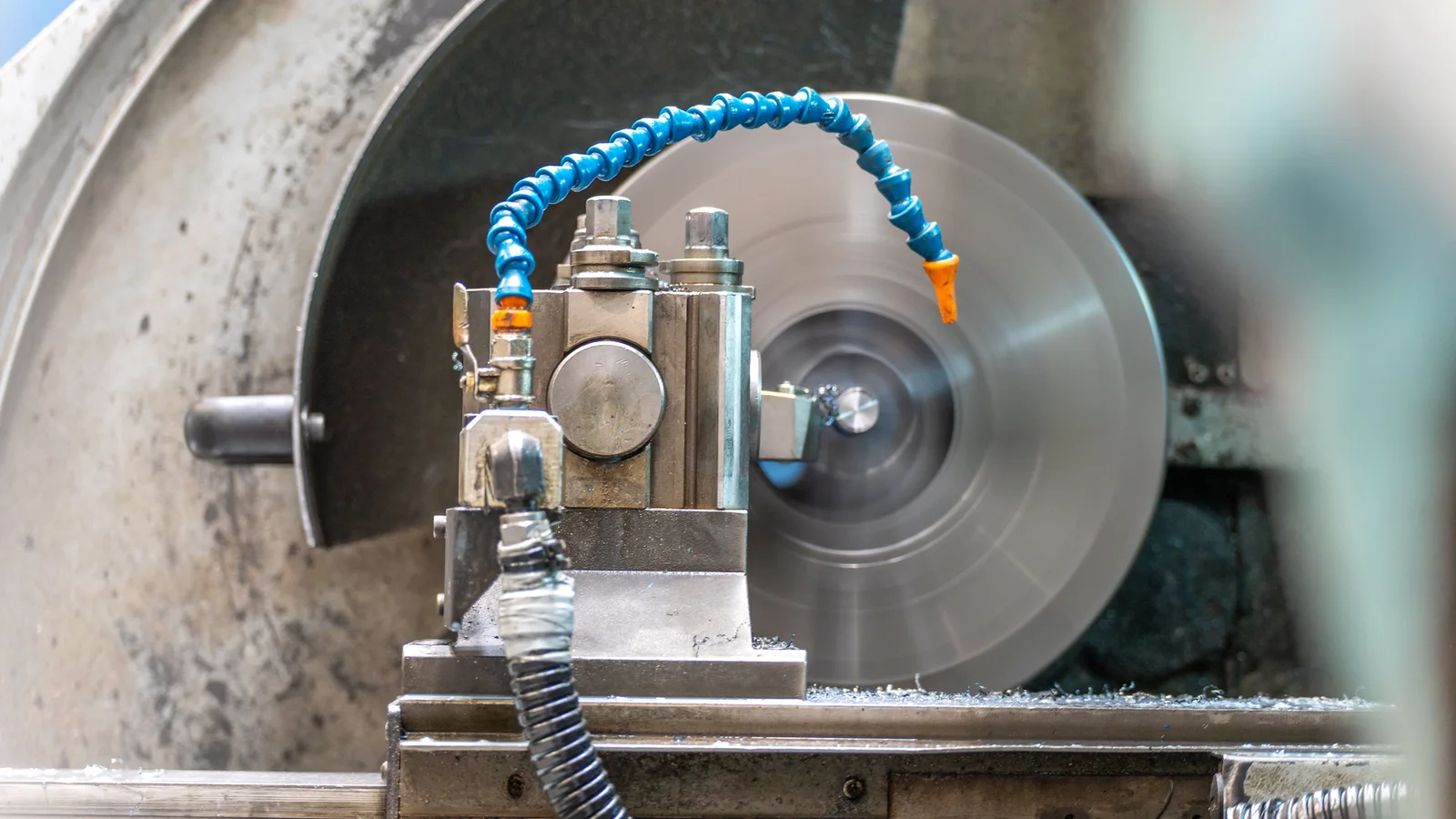
Pneumatic cylinder manufacturing is one of the most critical needs of Izmir industry, because a pneumatic cylinder sits at the heart of every machine that runs on compressed air — from packaging lines to assembly automation, from food equipment to textile looms. At ÇevikSan we build pneumatic cylinders in our own Mersinli workshop, in both standard and custom sizes. If you can't find the stroke, bore or connection type you need in a catalogue, you don't have to wait for one: we take the measurements, design the part, machine it, and test and deliver it ourselves.
In Izmir, "pneumatic cylinder manufacturing" is often confused with simply reselling imported ready-made products. Real manufacturing is different — it takes workshop skill all the way from measuring and material selection through honing and leak testing. That's exactly where we're different: your cylinder is built here, tested here, and delivered with a workshop standing behind it. That shortens lead times, removes shipping risk, and, most importantly, means that if something ever goes wrong, you're talking to the person who actually machined your cylinder — not a reseller on the other end of a phone line. If what you need is repair rather than a new part, take a look at our pneumatic cylinder repair and overhaul page — the two services are run out of the same workshop and complement each other.
What Is a Pneumatic Cylinder, and Where Is It Used?
A pneumatic cylinder is an actuator that converts the energy of compressed air into linear motion. Air at roughly 6–8 bar from the compressor pushes a piston inside the cylinder tube; the mechanism attached to the piston rod then does the machine's work — pushing, pulling, clamping, lifting or positioning. Compared with hydraulic systems, pneumatics are cleaner, faster and easier to maintain, which makes them the first choice for moderate force requirements.
In Izmir, pneumatic cylinders see the heaviest use in:
- Packaging and filling lines — pusher, diverter and stop cylinders
- Food and beverage machinery — fast-cycling, clean-running actuators
- Textile and garment machines — presser feet, tensioning systems
- Assembly and automation stations — press, clamp and positioning units
- Plastics and packaging machinery — in-mould movements, ejectors
- Foundry and metalworking — mould shake-out, part separation, and special applications like ceramic cluster breaking
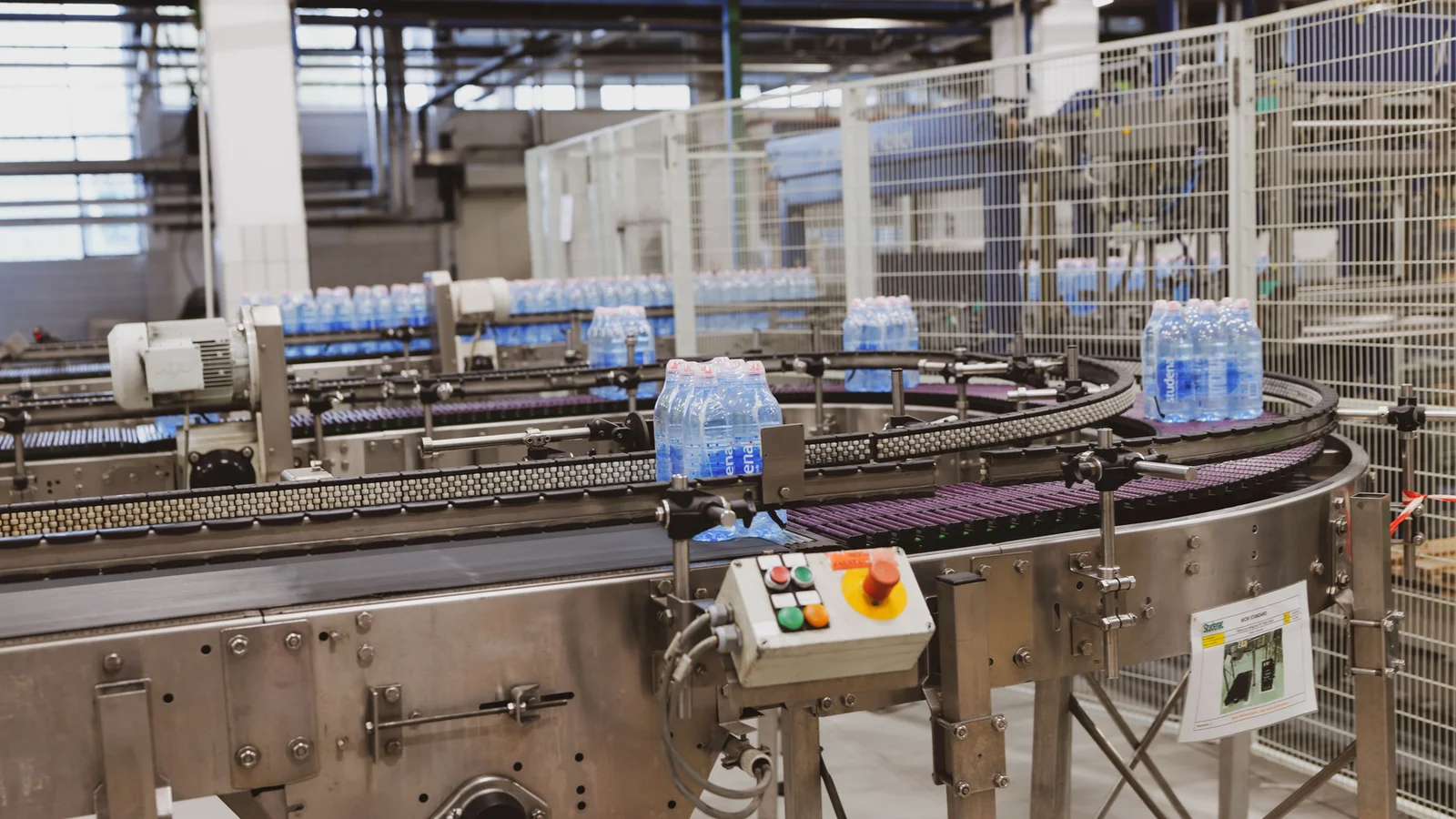
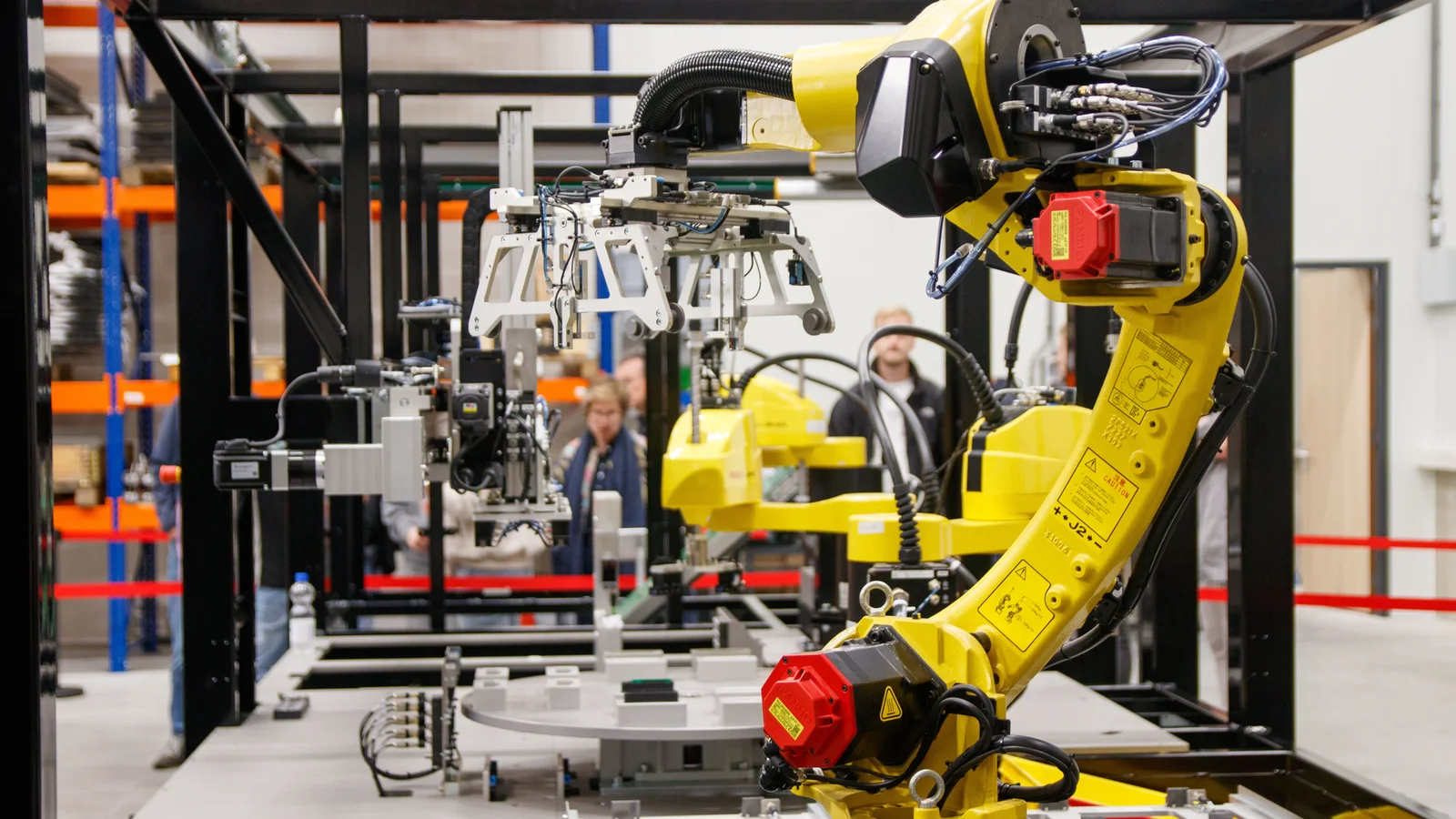
That variety means no single off-the-shelf product can cover every need. Depending on the machine's age, layout and job, a custom size is often required — which is where custom pneumatic cylinder manufacturing comes in.
Pneumatic Cylinder Types We Manufacture
Our workshop covers a wide range — from single- and double-acting cylinders to cushioned and stainless-bodied models. Which type is right depends on the force needed, cycle speed, mounting space and operating environment. Here's a summary of the types we compare most often when helping customers decide:
| Cylinder Type | How It Works | Typical Use |
|---|---|---|
| Single-acting cylinder | Air pushes in one direction, a spring returns it | Simple push/pull, clamping, low cycle rates |
| Double-acting cylinder | Air drives motion in both directions | Automation lines, controlled back-and-forth motion |
| Cushioned cylinder | Speed is damped at the end of stroke | Shock-free stopping on high-speed lines |
| Compact cylinder | Short body for tight installation spaces | Space-constrained stations, fixtures |
| Guided (bearing) cylinder | Rod is supported against rotation and side load | Precise positioning, side-loaded applications |
| Stainless-bodied cylinder | Corrosion-resistant material | Food, chemical, washdown stations |
| Tandem / multi-position | Stepped force/position via successive pistons | Multiple stopping points on the same axis |
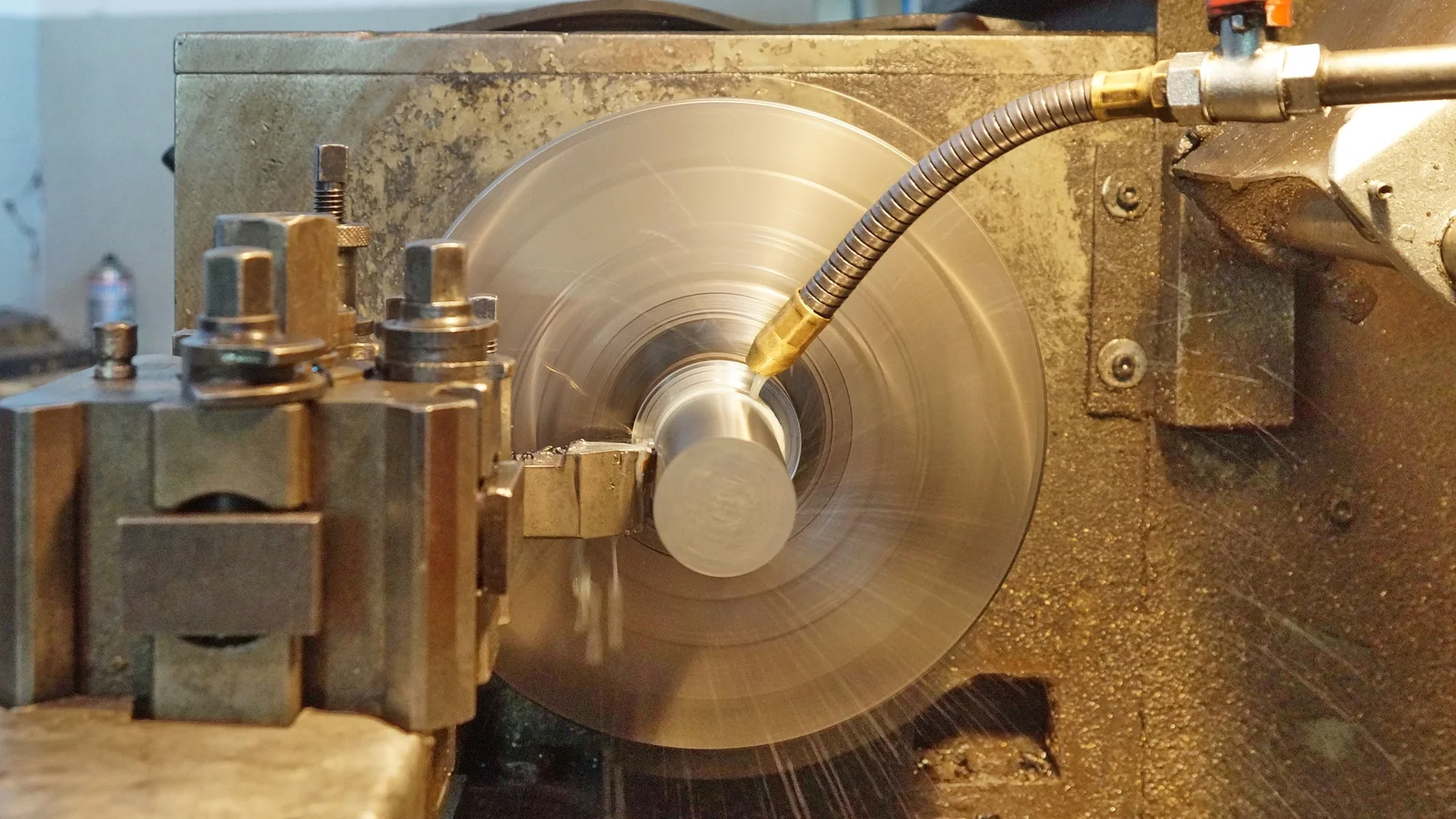
When a standard type doesn't fit your application, we design the body, shaft, connections and stroke entirely to your specification. Building an exact equivalent of a foreign-made cylinder pulled from an existing machine is also common work for us — it eliminates the "waiting on a part from abroad" downtime that would otherwise keep the machine idle.
How Does Custom Pneumatic Cylinder Manufacturing Work?
Custom pneumatic cylinder manufacturing is work that most Izmir firms outsource; at ÇevikSan the entire process is completed in a single workshop. Here's what happens between the moment you place an order and the moment you take delivery:
- Needs analysis and measurement: You bring in a sample cylinder, or we take measurements at the machine. Bore, stroke, connection type (flange, foot, clevis), port sizes and working pressure are all established.
- Design and material selection: Tube, shaft and seal set are chosen to suit the job. Side loads, humidity, temperature and cycle count are all factored in at this stage.
- Machining: The body tube is honed, the caps and piston are turned, and the shaft is ground. Every part's tolerances are checked as it's made.
- Assembly: Seals and bearings are fitted, the cylinder is assembled, and mounting hardware is prepared.
- Testing: Leak and function testing is carried out at working pressure; stroke length and smoothness of motion are verified.
- Delivery: Your cylinder is delivered working and tested; on-site installation is available if you'd like it.
For urgent cases we speed up the process: equivalent-cylinder manufacturing for a business with a stopped line gets priority. Your downtime cost is our priority too — call us and let's talk lead time straight away: 0553 608 69 10
Pneumatic Piston Manufacturing
Pneumatic piston manufacturing is one of the most requested items among our Izmir customers, because most failures don't damage the whole cylinder — just the piston, shaft or seal group inside it. Remanufacturing a worn piston to its exact original dimensions is far more economical than replacing the entire cylinder.
In piston manufacturing, we produce and renew:
- Piston body: Machined in aluminium or steel to fit the tube bore exactly.
- Piston rod: Induction-hardened, ground and, where needed, hard-chrome-plated; bent or scored rods are remade as new.
- Seal group: The right lip seal, oil seal, wiper and O-ring set for the job is selected and fitted.
- Bearing and guide elements: Bushings and guide bands are renewed so the rod runs true.
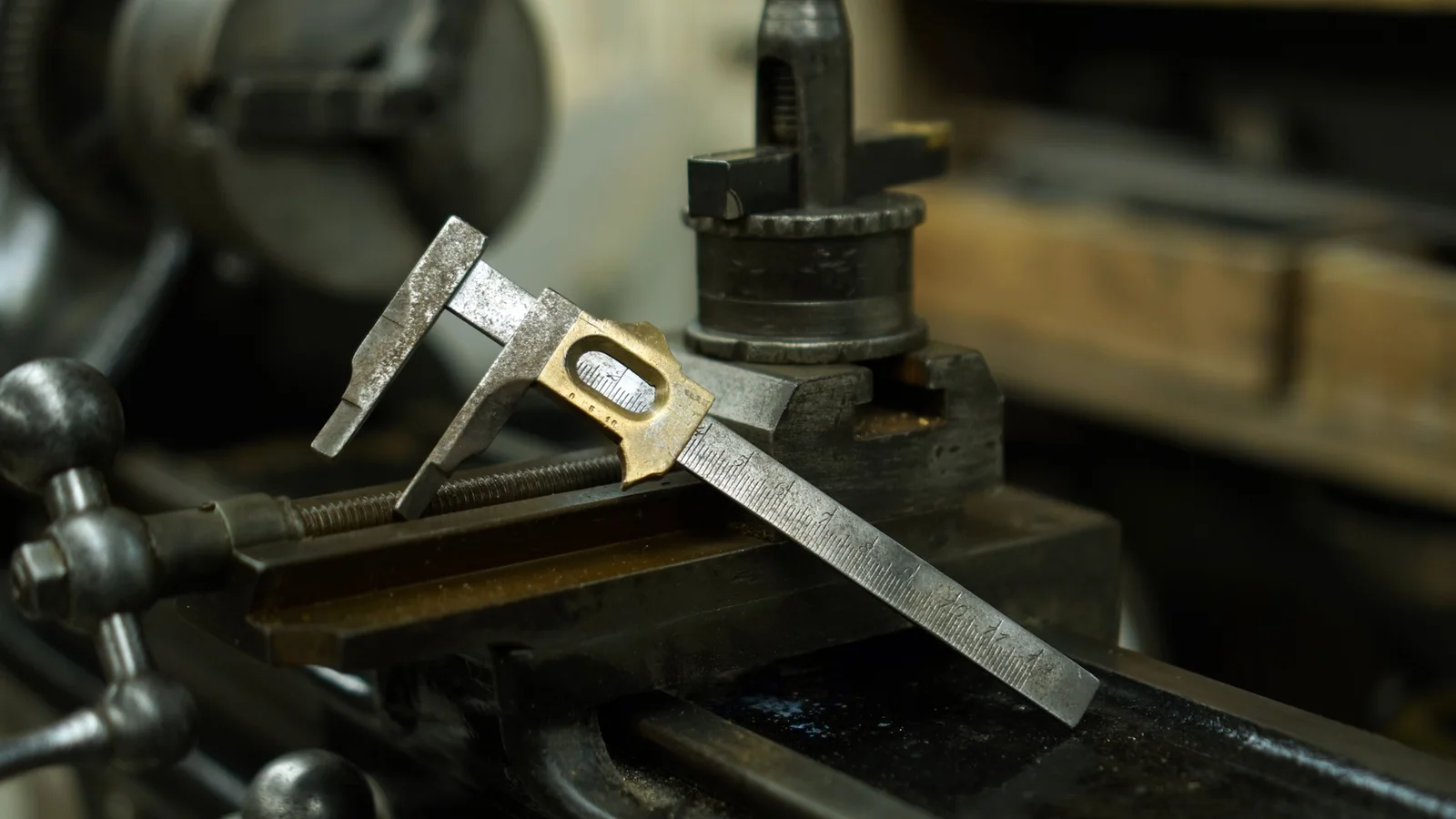
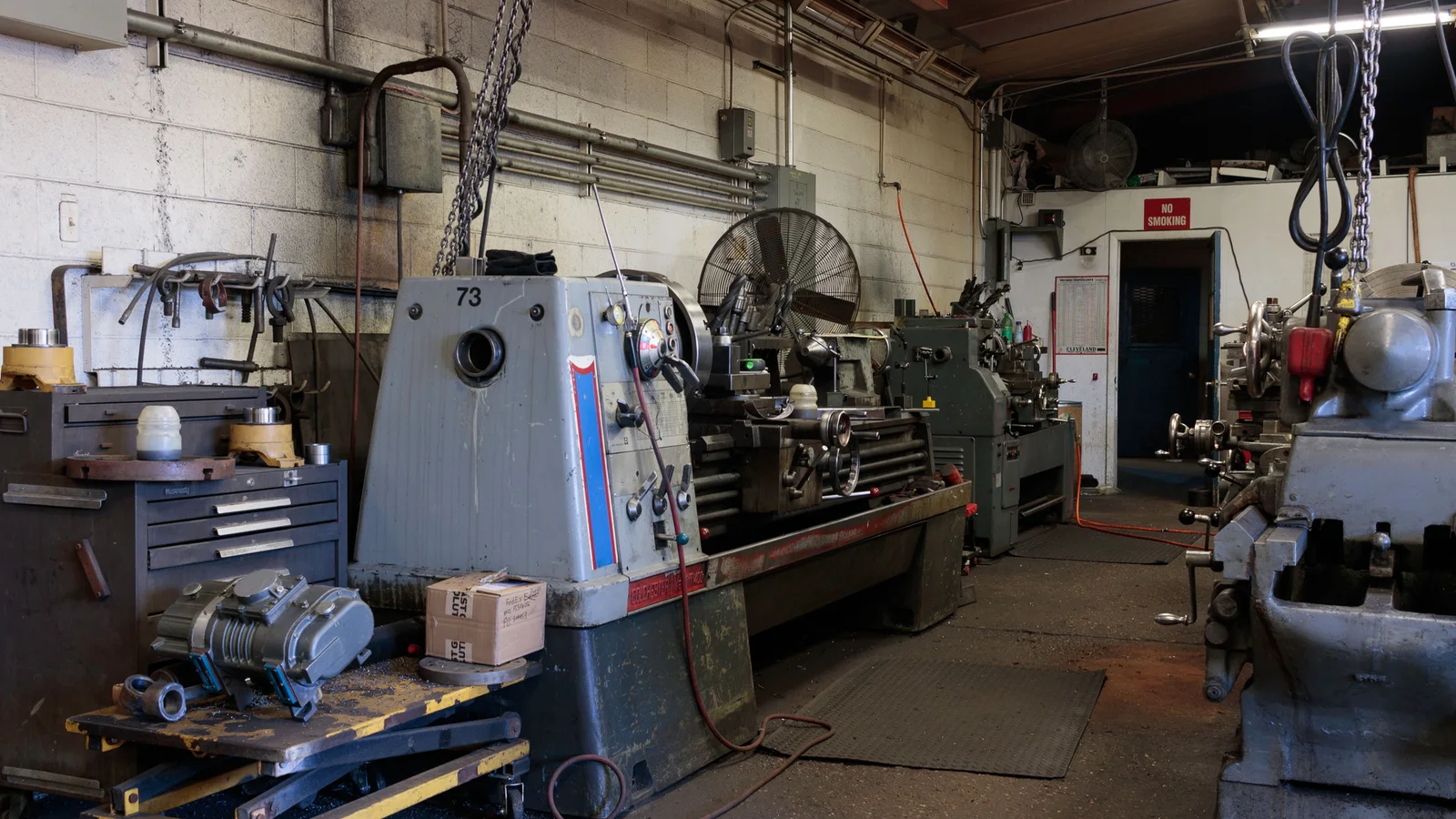
Piston manufacturing is often bound up with an overhaul: the cylinder is stripped, damage is assessed, the needed parts are made, and the cylinder is reassembled and tested. For the full picture of that integrated approach, see our pneumatic cylinder repair and overhaul service.
Material, Workmanship and Quality Control
Three things decide how long a pneumatic cylinder lasts: the right material, the right machining, and the right assembly. If any one of the three falls short, the result is the same — premature wear, air leaks and unplanned downtime. Here's what we pay close attention to in manufacturing:
| Manufacturing Item | What We Do | What It Prevents |
|---|---|---|
| Honed tube | Bore surface is precision-honed | Seal wear, internal leaks, lost efficiency |
| Ground / chrome-plated shaft | Shaft surface ground, hard-chrome-plated if needed | Seal-cutting scratches, corrosion |
| Correct seal selection | Seal matched to speed, temperature and lubrication | Premature hardening, leaks, sticky motion |
| Tolerance checking | Every part measured; tube-piston-rod fit verified | Run-out, noise, breakage |
| Final testing | Leak and function testing at working pressure | Surprise failure in the field |
The two core inputs behind every cylinder — the tube and the shaft — aren't just used in our own builds; we also supply them as material to other workshops. See the details on our chrome-plated shafts and honed tubes page.
Choosing the Right Cylinder: Bore, Stroke and Force
The most common mistake in ordering a pneumatic cylinder is picking a bore "by eye." The force a cylinder produces is piston area multiplied by working pressure, and a cylinder chosen without a safety margin either can't handle the job or is needlessly oversized — both cost you money. As a rough guide, here are the approximate theoretical thrust forces for common bores at 6 bar working pressure:
| Piston Bore | Approx. Thrust at 6 Bar | Typical Duty |
|---|---|---|
| Ø32 mm | ~48 kgf | Light pushing, separating, stopping |
| Ø40 mm | ~75 kgf | Assembly stations, light pressing |
| Ø50 mm | ~118 kgf | Medium-load push/pull, clamping |
| Ø63 mm | ~187 kgf | Heavy clamping, lift assist |
| Ø80 mm | ~301 kgf | Press applications, heavy pushing |
| Ø100 mm | ~471 kgf | Heavy-duty work, large mould movements |
Force drops somewhat on the pull stroke, since the rod's cross-section is subtracted from the piston area, and cushioning becomes necessary at higher cycle speeds. Rod buckling also needs to be calculated separately for long strokes. We take care of all these calculations for you — just describe your application, and we'll size and recommend the cylinder for the job. If your force requirement goes beyond what's economical for pneumatics, we'll say so honestly rather than push you into an unsuitable solution, and point you toward a hydraulic cylinder instead.
Pneumatic or Hydraulic?
Both systems produce linear motion, but they're tools for different jobs. Choosing wrong means either insufficient force or an unnecessary investment. This comparison helps guide the decision:
| Criterion | Pneumatic Cylinder | Hydraulic Cylinder |
|---|---|---|
| Force range | Low–medium (typically 6–10 bar) | Very high (100–350+ bar) |
| Speed | Very fast cycling | Controlled, powerful motion |
| Cleanliness | Runs on air, leaks don't contaminate | Oil leaks carry real risk |
| Precision positioning | Limited (intermediate positions are hard) | Precise via valve control |
| Setup cost | Low — most plants already have a compressor | Requires a power unit investment |
| Maintenance | Simple: seals, lubrication, air quality | Oil, filter and pump maintenance |
| Typical use | Packaging, assembly, food, textiles | Presses, heavy equipment, lifting |
If your plant runs both systems, you're in a good position: ÇevikSan is one of the few workshops that manufactures and services both sides. While we're building a cylinder for your pneumatic line, we can also run an overhaul on your hydraulic press — one point of contact keeping both systems running.
What Information Do You Need for an Order?
Preparing the information below will speed up your quote. You don't need to know all of it — a sample part or even a photo works just as well; we'll fill in any missing measurements during the site survey:
- Piston bore and stroke: The code on the cylinder's label if there is one; otherwise, the outer diameter and travel distance measured with calipers.
- Connection type: Foot-mounted, flanged, or rear-clevis? Is the rod end female, male or forked?
- Air connections: Fitting size and port locations.
- Operating environment: Moisture, dust, chemicals, washdown, food contact? (A stainless body may be required.)
- Cycle information: How many movements per minute, at what speed? (Affects cushioning and seal choice.)
- Load conditions: Purely axial thrust, or is there side load or a moment involved?
The most practical route: send us a WhatsApp photo of your failing or ageing cylinder. In most cases a photo plus two measurements is enough for a preliminary quote: our WhatsApp line.
Getting a Long Service Life From the Cylinders We Build
A well-built pneumatic cylinder can run through millions of cycles under the right conditions. Almost everything that shortens that life originates outside the cylinder itself — and it's preventable:
- Air quality: Use a conditioning group (filter-regulator-lubricator). Damp, dirty air is the number-one cause of seal and bore wear.
- Pressure discipline: Set the regulator to what the job actually needs; running "wide open" both wastes energy and shortens service life.
- Alignment: Loading that isn't square to the cylinder axis wears out the rod bearing and seal early. Use clevis and pivot connections correctly at installation.
- Leak tracking: An air leak you can hear means a higher energy bill, lower efficiency and faster compressor wear. Early action is cheap.
- Periodic seal maintenance: On heavily used cylinders, renewing the seal set before it fails is cheap insurance against unplanned downtime.
We're here for the maintenance and repair side too: for leak detection, seal replacement and full overhauls, see our pneumatic cylinder service page, or just call us directly.
How Does a Pneumatic Cylinder Work? The Technical Basics
Knowing what's happening inside a cylinder helps you choose the right one and read a fault correctly. The working principle of a pneumatic cylinder is this: a piston sits inside a closed tube, sealed tightly against the bore. When compressed air is applied to one side of the piston, that air pressure acts on the piston face and pushes it forward. The rod attached to the piston carries that motion outside.
A double-acting cylinder has two air ports. One takes pressure while the other vents to exhaust, driving the piston forward; when the ports swap roles, the piston returns. In a single-acting cylinder, air only pushes in one direction — a spring, or the weight of the load itself, provides the return.
Behind this seemingly simple mechanism, a handful of details determine performance:
- Sealing: The piston seal has to fully separate the two chambers. If it doesn't, air leaks from one side to the other and force is lost.
- Surface quality: The bore's inner surface needs the right finish both for the seal to seat properly and to keep friction low.
- Bearing support: The rod must stay centred in its bearing. If it runs out of true, the seal doesn't press evenly.
- Exhaust cross-section: If the air can't get out fast enough, the piston can't speed up — the cylinder runs slow even if it's plenty strong.
These four points are what we focus on both in manufacturing and in overhaul work. A cylinder being "good" isn't just about having the right dimensions — it's about getting these details right too.
Air Preparation: The Invisible Factor Behind Cylinder Life
The most overlooked subject in pneumatic cylinder discussions is the quality of the air reaching the cylinder. Air leaving the compressor carries three things: moisture, particulates, and usually some oil vapour. If these reach the cylinder unconditioned, the outcome is inevitable.
A conditioning group (FRL) consists of three elements:
| Element | Function | What Happens Without It? |
|---|---|---|
| Filter | Separates out moisture and particulates | Dirt cuts the seal, moisture starts corrosion |
| Regulator | Sets pressure to the value the job needs | Excess pressure shortens service life and wastes energy |
| Lubricator | Adds a fine oil mist where required | Dry friction and rapid wear in designs that need lubrication |
If a plant has no conditioning group, or it isn't maintained, cylinder overhaul work is like filling a leaking bucket. That's why during service we also assess the line and recommend what's missing. The cost of a conditioning group is small next to the seals and energy it saves.
Condensate drainage is another thing that's often skipped. If the water that collects in the filter bowl isn't drained regularly, it eventually gets carried back into the system. Auto-drain filters remove this risk; manual ones need a check-at-shift-start habit instead.
Speed, Flow and Exhaust: Why Is the Cylinder Running Slow?
"The cylinder has plenty of force but it's very slow" is a line we hear often in the field. Force is about pressure; speed is about flow rate — they're different things and call for different fixes.
Points that limit a cylinder's speed:
- Valve port size: A small valve can't fill a large cylinder quickly. The valve has to be matched to the cylinder.
- Hose diameter and length: A narrow, long hose restricts flow. Longer runs need a larger cross-section.
- Fittings and connectors: Some fittings have an internal bore that's much narrower than they look from the outside.
- Muffler (exhaust): A clogged or undersized muffler restricts the air's exit. The piston wants to advance, but the air in the opposite chamber can't get out.
- Speed control valve: If misadjusted, it restricts flow more than it should.
Here's the interesting part: in a large share of "it's slow" complaints, the cylinder itself is perfectly sound. The problem is a bottleneck somewhere else on the line. That's why, when we get a slowness complaint, we check the line first and run a flow calculation if needed.
The same logic applies when manufacturing a new cylinder: we need to know not just the bore and stroke, but also the target cycle time. That information determines port sizes and the valve size we'll recommend.
Special Solutions: Non-Standard Requests
The biggest advantage of being a manufacturing workshop is being able to answer non-standard requests. Special solutions we build regularly:
- Long-stroke cylinders: Strokes beyond catalogue limits; rod diameter is calculated against buckling.
- Through-rod cylinders: For applications needing symmetric force, where the rod exits both ends.
- Custom rod-end machining: Forked, clevis, threaded or specially profiled ends built to match your mechanism exactly.
- Non-standard port positions: Air ports placed at the angle and position needed on machines with tight layout constraints.
- High-temperature applications: Heat-resistant sealing materials for furnace surrounds, foundry and glass industries.
- Stainless-bodied cylinders: For food, chemical and washdown lines.
- Multi-position designs: For applications needing more than one stopping point.
- Bodies with sensor slots: A magnetic sensor channel for automation applications that need position sensing.
What these requests have in common is this: off-the-shelf catalogues either don't cover them, or sourcing them takes weeks. For a workshop that manufactures in-house, they're routine work. Describe your need, and we'll tell you honestly whether it's feasible.
Testing and Quality Control: Before It Leaves the Workshop
A manufactured cylinder isn't "done" just because it works — it has to be verified. Every cylinder that leaves our workshop goes through the following checks:
- Dimensional verification: Bore, rod diameter, stroke and connection dimensions are checked with calipers and a micrometre.
- Assembly check: Seals are inspected to confirm the right orientation and seating. A single seal fitted wrong undoes the whole job.
- Free-movement test: With no pressure applied, the cylinder is moved by hand to check for binding, sticking or run-out.
- Leak testing: Both external and internal leakage are assessed at working pressure.
- Function testing: The cylinder is cycled through the full stroke; smoothness of motion and end-of-stroke behaviour are observed.
- Cushioning check: On cushioned types, the adjustment is set and shock damping is verified.
These checks take extra time, but they keep a cylinder from causing trouble the moment it hits the field. Sending an untested part to a customer wastes everyone's time.
After Delivery: Installation and Commissioning
Even a perfectly manufactured cylinder can fail quickly if it's installed wrong. Here are the installation rules we share on delivery — and apply ourselves, if you'd like us to:
- Alignment: The cylinder axis must line up with the load axis. Misalignment puts a constant side load on the rod. Clevis-type connections reduce this risk.
- Fastener torque: Bolts should be tightened to the correct torque; over-tightening can deform the body.
- Hose slack: Connections shouldn't be taut through the range of motion — they need room to move freely.
- First run: Start at low pressure, observe the motion, then step up to working pressure.
- End-of-stroke check: Make sure the cylinder isn't striking mechanical limits.
- Speed adjustment: Flow control valves should be opened gradually; opening one fully at once causes a shock.
These steps take a few minutes on day one but add years to the cylinder's life. We provide installation and commissioning support within Izmir — we'd rather hand over a system that's already running.
Why ÇevikSan?
Few workshops in Izmir manufacture pneumatic cylinders; most of the market runs on imported ready-made products or orders sent off to Istanbul. What sets ÇevikSan apart:
- Local, on-site manufacturing: Measuring, machining, testing and delivery all happen in one workshop — in Mersinli, at the heart of Izmir's industrial zone.
- No survey fee: We come to your machine and assess the need on site; we don't charge for the survey.
- Manufacturing and repair together: We also repair and overhaul every cylinder we build; you'll never hear "ask the manufacturer" from us about your own part.
- A firm quote: Scope, materials and lead time are set out in writing; no work starts without your approval.
- Guaranteed workmanship: Every cylinder we manufacture is delivered with a workmanship guarantee.
We're also here for your pneumatic system as a whole — air-leak detection, valve and conditioning-group selection, line layout, and more. For your hydraulic needs, see our hydraulic cylinder manufacturing page.
Pneumatic Cylinder Needs by Industry
Two cylinders of the same bore can have very different service lives in different industries. Here are the main sectors we serve in Izmir and what stands out in each:
| Industry | Typical Use | Key Requirement |
|---|---|---|
| Food and beverage | Filling, capping, sorting | Stainless body, wash-resistant seals, hygienic layout |
| Packaging and printing | Pushing, cutting, transfer | High cycle rate, cushioning, low noise |
| Textile and garment | Presser feet, tensioning | Small bore, precise motion, resistance to yarn dust |
| Plastic injection | In-mould movement, ejection | Heat resistance, repeatability |
| Marble and natural stone | Clamping, positioning | Water and dust resistance, robust wiper |
| Foundry and metalworking | Mould shake-out, separation, breaking | Heat and dust resistance, rugged body |
| Automation and assembly | Positioning, clamping, pressing | Guided type, sensor slot, precision |
| Agricultural machinery | Lifting, hatch opening | Outdoor exposure, corrosion resistance |
Telling us your industry is the shortest route to the right design. In a cylinder destined for a food line, for instance, your cleaning procedure matters as much as material choice: which chemical, at what temperature, how often? That information turns seal-material selection from a guess into a fact.
In dusty environments like foundry or marble work, the priority is the wiper. A standard wiper wears out fast in these settings; a reinforced wiper or a bellows guard extends the cylinder's life several times over.
Cost: What Determines the Price?
Let's be transparent about the line items that determine price in pneumatic cylinder manufacturing — knowing what you're looking at makes reading a quote easier:
- Bore and stroke: The larger the size, the more material and machine time it takes. This is the single biggest cost driver.
- Material choice: Standard aluminium/steel, or stainless? Stainless costs more in both material and labour.
- Seal group: There's a clear price gap between standard NBR and special high-temperature or chemical-resistant materials.
- Surface treatments: Honing, grinding and chrome plating widen the scope of the job.
- Special machining: Requests like a sensor channel, a custom rod end or a non-standard port position add machine time.
- Quantity: Unit cost drops on a production run; for a single part, the setup time falls entirely on that one unit.
- Urgency: A business with a stopped line may require work outside normal hours.
We break these items out separately in our quotes. If your budget is tight, the answer isn't cutting the material — it's scoping the job correctly: what's actually needed, and what's just "nice to have"? We work through that distinction together.
What We Need From You During the Ordering Process
Let's gather the information we need to speed up your quote and build the right product. You don't need to know all of it — we'll fill in the gaps during the survey or from a sample part:
- What job will it do? Push, pull, clamp or lift? This determines force direction and mounting type.
- How much force? The approximate weight of the load it'll lift or push. Even a rough figure is useful.
- How many mm of travel? The stroke length. If you have an existing cylinder, it can be measured directly.
- In how much time? How long the motion should take to complete. This affects port sizing and valve choice.
- How will it mount? Foot, flange, clevis — a photo of the connection on the existing machine works well.
- What does the rod end look like? Threaded, forked, clevis-pinned or custom. An old part can be copied exactly.
- What environment? Moisture, chemicals, temperature, dust, washdown?
- How many movements a day? Cycle count affects cushioning and seal choice.
You don't have to fill in this whole list. Describing your application in a few sentences, and sending a photo if you can, is usually enough. We'll ask about anything missing, and if needed we'll come to you for a free on-site survey within Izmir and take the measurements ourselves.
If you have a sample cylinder, the job is even easier: bring the part to our workshop and we'll strip it down and pull every measurement off it. We don't need a brand, model, catalogue or technical drawing — in most jobs, the only thing that reaches us is the failed cylinder itself, and that's enough.
Pneumatic Terms Glossary
Let's explain the terms that come up in quotes, catalogues and technical conversations. You don't need to know these — but we find them useful for anyone who wants to see what's what:
| Term | What It Means |
|---|---|
| Stroke | The distance the cylinder travels |
| Piston bore | The internal diameter that determines force; the larger it is, the more force |
| Rod diameter | Affects pull force and resistance to buckling |
| Single-acting | Air pushes in one direction; return is by spring or load |
| Double-acting | Air drives motion in both directions |
| Cushioning | Damping of speed at the end of stroke; prevents impact |
| Guided cylinder | A type that prevents rod rotation and carries side load |
| Conditioning group (FRL) | Filter-regulator-lubricator group; ensures air quality |
| Condensate | Water condensing out of the air; must be drained regularly |
| Muffler | Reduces the noise of exhaust air; a blockage slows the cylinder |
| Flow control valve | Adjusts speed by restricting air flow |
| Wiper | Prevents the rod from carrying dirt in from outside |
| Guide band | A wear element that centres the piston inside the tube |
| Equivalent manufacturing | New production built to exactly match an existing part's dimensions |
If you come across a term in a quote that isn't clear, don't hesitate to ask — we're happy to explain. Speaking the same language also makes it easier to compare quotes from different suppliers.
For more detail on this subject, take a look at our guide articles: pneumatic cylinder selection and why pneumatic cylinders leak air.
Serving Every Industrial District of Izmir
Our workshop is at Mersinli Mah. 2843 Sk. No:15, Konak / İzmir — in the Mersinli industrial area of Konak district. That's not a coincidence: from here we can reach every production facility in Bornova, Işıkkent, Pınarbaşı, Çiğli Organized Industrial Zone, Kemalpaşa, Torbalı, Menemen and Aliağa quickly. For pneumatic cylinder manufacturing you can bring your machine or part to us, or call our team out to your facility to take measurements — the on-site survey is free anywhere in Izmir.
The main industries we serve include food and beverage filling plants, packaging and printing, plastic injection workshops, textiles and garment manufacturing, marble and ceramic processing, foundries and agricultural machinery manufacturers. Every industry's pneumatic needs are different: food plants call for stainless bodies and wash-resistant seals, while foundries need dust-resistant wiper designs. Tell us your industry, and we'll design the cylinder around your environment.
Don't we sell outside Izmir? Izmir and its surroundings are always our priority, because on-site surveys, fast delivery and after-sales support are a core part of how we work. That closeness is a guarantee a distant supplier who just ships a box can't offer.
Frequently Asked Questions
How long does it take to manufacture a custom-size pneumatic cylinder?
It depends on bore, stroke and material availability. A simple equivalent build is usually completed within a few working days; jobs needing a custom design get a firm lead time after the site survey. Businesses with a stopped line are prioritised.
I only have the failed cylinder, no technical drawing. Can you still manufacture one?
Yes. Just bring the sample cylinder to our workshop; we'll strip it down, take every measurement, and build an exact equivalent. No drawing, brand or catalogue reference is required.
Can you make an equivalent of a foreign-brand cylinder?
Yes. Instead of waiting weeks for a part from abroad, we manufacture an equivalent cylinder built exactly to the existing one's dimensions and connection type. Mounting dimensions are preserved, so nothing on your machine needs to change.
What's the maximum pressure your pneumatic cylinders are rated for?
Pneumatic systems typically run between 6 and 10 bar; our cylinders are designed for that range and tested at working pressure. Applications needing higher pressure generally call for a hydraulic solution — that's where our hydraulic cylinder manufacturing comes in.
Do you guarantee the cylinders you manufacture?
Yes, our manufacturing is covered by a workmanship guarantee. Workmanship-related issues that arise under correct installation and operating conditions are fixed free of charge.
Do you only manufacture, or do you install as well?
Either way works. You can take delivery and fit the cylinder yourself, or our team can carry out on-site installation within Izmir and hand over a working system.
Can the cylinder you build include a sensor slot?
Yes. For automation applications that need position sensing, we machine a magnetic sensor channel into the body. Tell us which sensor type you're using and we'll size the slot accordingly.
My cylinder has enough force but runs very slowly — what's wrong?
Force is about pressure; speed is about flow rate. The most common causes of slowness are an undersized valve, a narrow or long hose, a clogged muffler, or a misadjusted speed valve. The cylinder is often completely sound — the problem is usually a bottleneck somewhere on the line.
Do you manufacture through-rod cylinders?
Yes. We build them for applications where the rod exits both ends — needed for equal force in both directions, or where there's a mechanism on each side.
Can you build a cylinder for high-temperature service?
Yes. For hot environments like furnace surrounds, foundries and the glass industry, we use heat-resistant sealing materials (such as FKM). Just tell us the operating temperature.
Do you test the cylinder before delivery?
Yes, without exception. Every cylinder goes through dimensional verification, leak testing and function testing; cushioned types have their cushioning adjusted. No untested part leaves our workshop.
Will a cylinder run without a conditioning group (FRL)?
It will, but its service life drops noticeably. Moisture starts corrosion, particulates cut the seal. The cost of a conditioning group is small next to the seals and energy you'd otherwise lose — which is why we assess the line during service too.
Do you only manufacture single parts, or do you run production batches too?
We do both. One-off custom manufacturing is our routine work, and we also run production batches for machine builders. Unit cost drops as quantity rises, because setup time is spread across the batch rather than a single part.
Do you install the cylinder as well?
You can take the part and fit it yourself, or our team can install it on-site within Izmir, check the alignment, and hand over a working system. Correct installation directly affects how long the cylinder lasts.
How can I get a price?
Just send us the measurements by phone or WhatsApp; if you have a sample, a photo helps too. The site survey and quoting are free, and you'll get a clear, firm quote.

İsmail Çevik is the founding partner of ÇevikSan. This content was prepared based on our workshop's hands-on manufacturing, repair and overhaul experience with hydraulic and pneumatic cylinders.
Last updated: August 27, 2026