
In Short
- A table that sinks on its own under load isn't a production problem — it's a safety problem. How do you find the cause, and how do you fix it?
- Topics covered in this article: Safety First: This Is Not a Symptom You Work Around, Why Does the Table Sink? 4 Main Causes, How Do We Tell the Cause Apart?, Fixes and How Lasting They Are, Working Safely with a Press: The Basics.
- Our services related to this topic: Hidrolik Pres ve Enjeksiyon Tamiri, Hidrolik Silindir Tamiri ve Revizyonu, Hidrolik Güç Ünitesi Tamiri.
- On-site inspection is free within and around Izmir; a firm quote follows measurement.
In This Article8 sections
Safety First: This Is Not a Symptom You Work Around
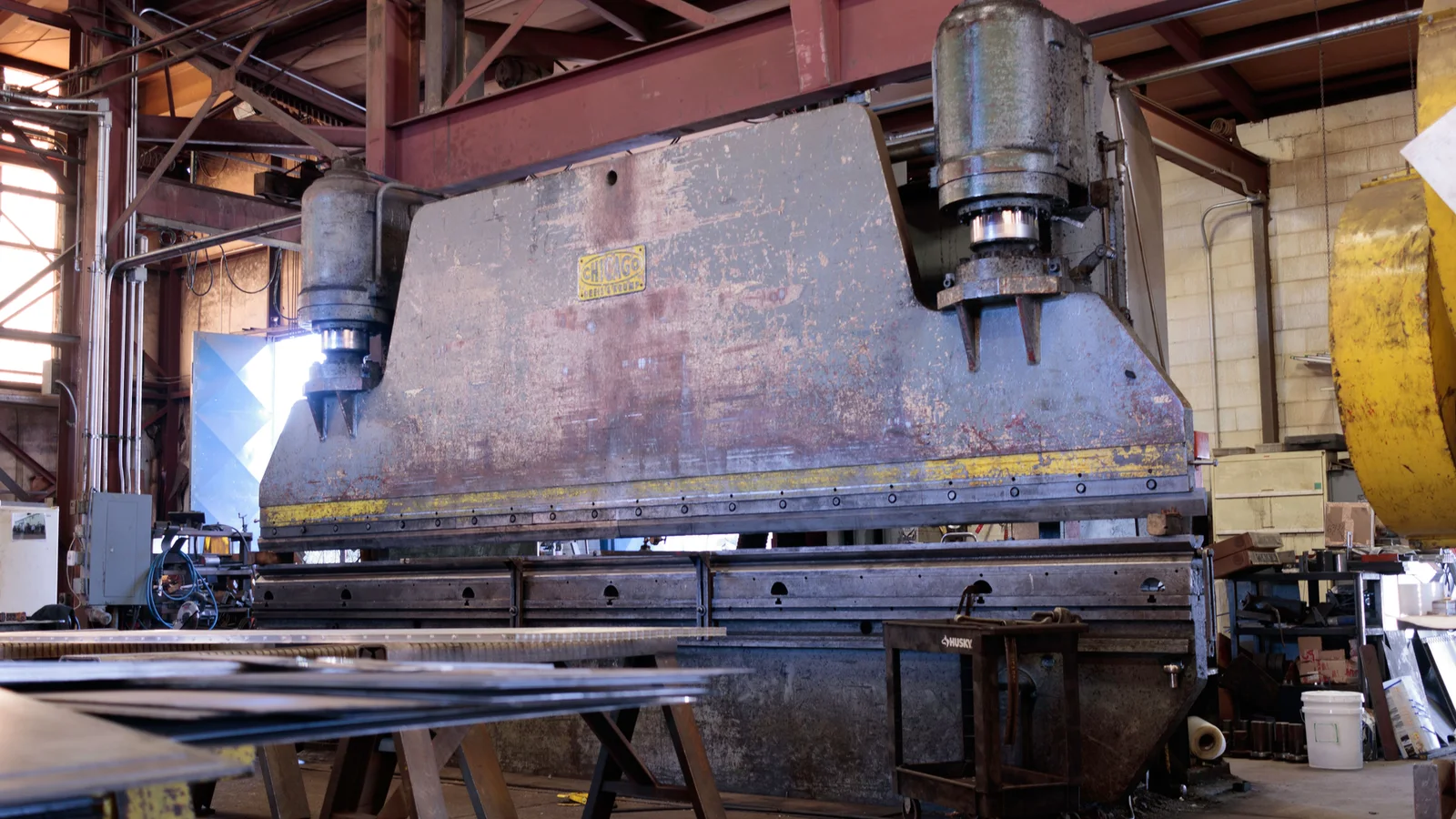
If a hydraulic press table sinks on its own under load, that's not a "it'll do for now" situation. If a hand, an arm or any part of a body is underneath, the outcome is severe.
What to do if you see this symptom:
- Take the press out of service and tag it.
- Secure the table with mechanical safety (a block, a support).
- Safely remove the die or workpiece.
- Make sure no one operates the machine before service arrives.
Regardless of the press's age, having working safety elements is not negotiable. We report any safety risks we find during a rebuild in writing; removing the risk is your decision, but we can't turn a blind eye to you working with a danger you don't know about.
Why Does the Table Sink? 4 Main Causes
Failing to hold a load means oil is escaping somewhere in the hydraulic circuit. There are four points where that leak can occur:
- Cylinder piston seal (internal leak): the most common cause. Oil passes from one side of the piston to the other; nothing shows from outside, but the load can't be held.
- Holding valve (load-holding valve): its whole job is to hold the load in position. A worn, contaminated or stuck holding valve can't do that job.
- Directional valve internal leakage: if the valve spool is worn, it lets oil pass even in the closed position.
- Pipe, hose or fitting leak: an external leak; usually visible, but can go unnoticed if it's in a hidden spot.
All four produce the same symptom; telling them apart requires measurement and systematic testing.
How Do We Tell the Cause Apart?
The diagnostic order we follow on site:
| Step | What's Done | What the Result Tells You |
|---|---|---|
| 1 | Visual check: hose, fitting, cylinder exterior | An external leak would already show up here |
| 2 | Move the valve to neutral and observe | If sinking continues, the problem is the cylinder or the holding valve |
| 3 | Isolate the holding valve | If sinking stops once isolated, the valve is the culprit |
| 4 | Close off the cylinder lines | If it's still sinking with lines closed, the piston seal has an internal leak |
| 5 | Watch flow from the return line | Continuous flow under pressure = internal leak |
| 6 | Measure pressure | Are system pressure and holding pressure at expected values? |
This sequence identifies the cause with certainty in most cases. Swapping parts to test is both expensive and misleading: if a new valve is fitted but the problem is really the cylinder, the fault continues and the customer has paid for nothing.
Fixes and How Lasting They Are
The fixes applied once the cause is identified:
- Piston seal internal leak: the cylinder is stripped, the entire sealing group is renewed, and the bore's inner surface and piston dimension are checked. If the bore is scored, honing; if the dimension is out of tolerance, a new body.
- Holding valve fault: cleaning and adjustment are sometimes enough; if worn, the valve is renewed. Whether it's the right type for the application is also checked.
- Directional valve leakage: valve rebuild or replacement with a suitable equivalent.
- Line leak: worn hoses and fittings are renewed; the line routing is rearranged to avoid friction.
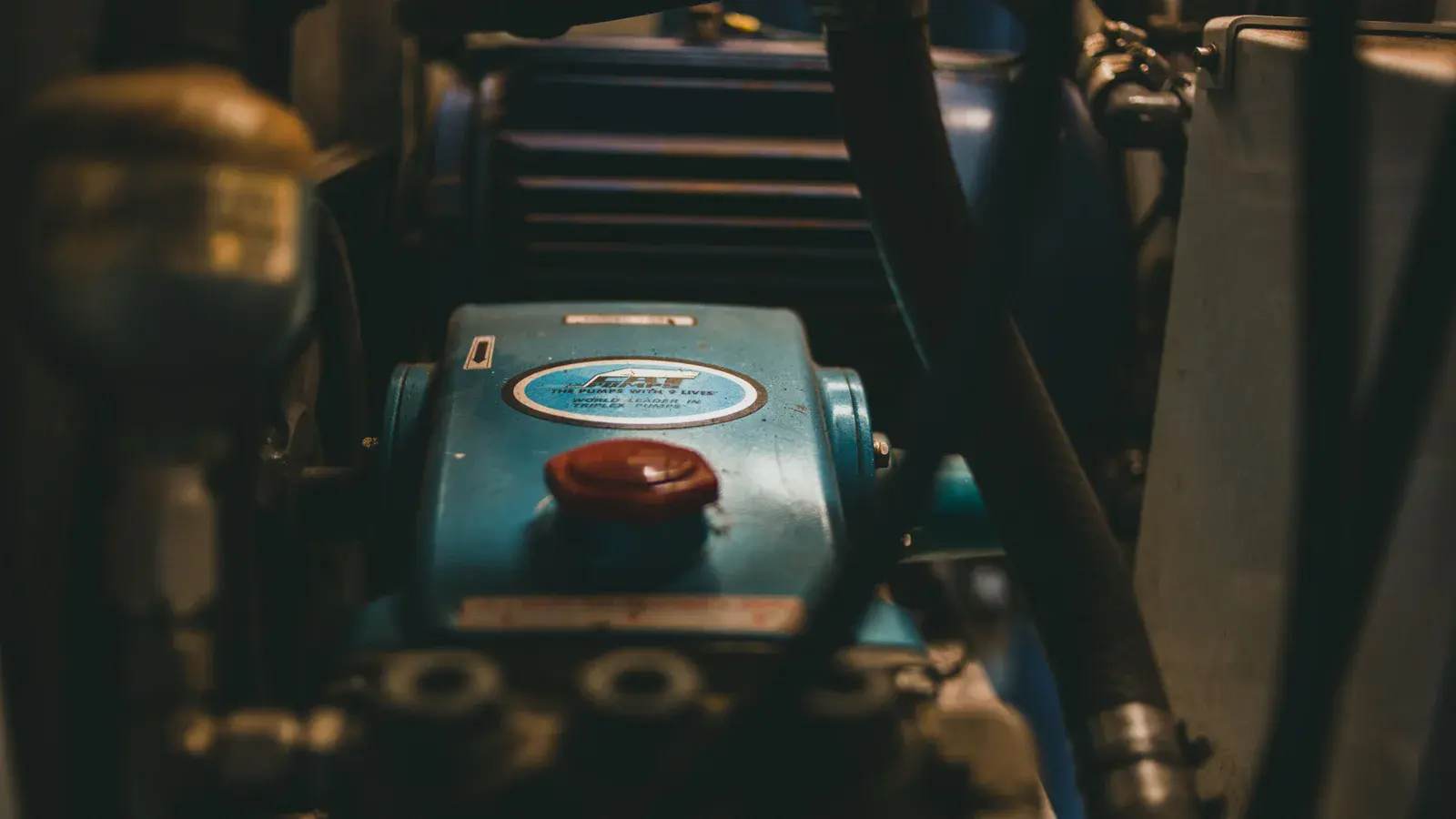
For a lasting fix, the root cause is also examined: is contaminated oil gumming up valves, is the system overheating, is the pressure setting correct? A repair made without answering these questions brings the same fault back a few months later.
Working Safely with a Press: The Basics
A hydraulic press is one of the most powerful and most dangerous machines on the shop floor. Basic rules to follow, fault or no fault:
- Mechanical safety before maintenance: if work will be done under the table, it must be mechanically supported (a block, a safety pin). Hydraulic pressure alone can't be trusted.
- Energy isolation: power should be cut, system pressure released, and any accumulator safely discharged.
- Tagging: a faulty or in-maintenance press must be tagged so no one else can operate it.
- Guarding: light curtains, two-hand controls or guard cages must never be disabled. A guard bypassed "to work faster" is the single most common cause of accidents.
- Emergency stop testing: the e-stop should be tested regularly; one that doesn't work when needed is no different from having none at all.
- Operator training: everyone who runs the machine should know the risks and the emergency procedures.
- Stop at the first symptom: drift under load, erratic motion or unexpected behaviour — don't keep working through any of these.
We report any safety risks we find during a rebuild in writing. Removing the risk is the business's decision, but we can't turn a blind eye to you working with a danger you don't know about. Regardless of the press's age, having working safety elements is not negotiable.
Keeping a Press Healthy: Maintenance Items
Most press faults can be seen coming. Our regular checklist:
- Oil and filter tracking: contaminated oil is the number-one cause of sticking valves.
- Temperature observation: a system running above normal is a warning sign.
- Pressure logging: pressure that drops over time is the clearest indicator of wear.
- Hose checks: cracks, bulging and friction marks are caught before a fault occurs.
- Cylinder sealing: a leak caught early is a small seal job; postponed, it turns into rod and bore damage.
- Safety elements: the holding valve, relief valve and emergency stop need regular testing.
- Cycle time tracking: a lengthening cycle is a warning sign of flow loss.
In plants running shift work, scheduling maintenance into planned downtime cuts production loss to nearly zero.
An Old Press: Replace It or Rebuild It?
For a press whose frame and mechanical structure are still sound, overhauling the hydraulics is usually far more economical than buying a new machine. Decision criteria:
| Situation | Our Recommendation | Reasoning |
|---|---|---|
| A single component is faulty | Targeted repair | Fastest and most economical; the machine is back quickly |
| Multiple components are worn | Full rebuild | Overhauling the whole system is more lasting |
| Frequent faults, rising downtime | Rebuild + root-cause analysis | Repair without a fix for the cause just repeats |
| High energy consumption | Modernisation | An efficient pump/control investment pays for itself |
| Control system outdated | Control and valve renewal | Improves repeatability, reduces scrap |
| Frame sound, hydraulics worn out | Hydraulic renewal | Extends machine life, defers new investment |
In jobs like this we can rebuild the whole system, from cylinder to power unit, valve to hose; the result is a machine with an old frame but new hydraulics. Being able to defer a new machine purchase is also a meaningful cash-flow advantage for most businesses.
Frequently Asked Questions
My press table sinks slowly but the job still gets done. Can it wait?
No. This is a safety issue; if someone is underneath the table when it happens, the outcome can be severe. On top of that, the leak grows over time and repair cost climbs. Have it checked as soon as possible.
We replaced the holding valve but it's still sinking — why?
The problem was probably the cylinder's piston seal, not the valve. Both produce the same symptom; telling them apart needs systematic testing. Swapping parts to test is both expensive and misleading — which is why we measure first.
My press isn't hitting full force — what could it be?
The most common causes: a cylinder internal leak, flow/pressure loss from a worn pump, or a drifted relief-valve setting. Pressure measurement tells us clearly where the loss is.
My machine is very old and I can't find parts — can it still be repaired?
Usually, yes. Machines with unavailable parts are among the jobs we solve most often: we manufacture the cylinder, rod, piston or a custom fitting in-house, to match exactly. For valves and pumps, we find suitable equivalents.
Do I need to remove the press from my facility?
No. Presses don't get moved; most of the work is done on site. If the cylinder, pump or power unit needs shop work, it's removed, taken in, rebuilt and refitted. We manage the removal, transport and reinstallation.
Our Services on This Topic
More From the Guide

İsmail Çevik is the founding partner of ÇevikSan. This content was prepared based on our workshop's hands-on manufacturing, repair and overhaul experience with hydraulic and pneumatic cylinders.
Last updated: August 27, 2026